

The Solana Foundation unveiled on October 6, 2026 an open-source delivery-versus-payment (DvP) settlement program for financial institutions, designed with advisory input from JPMorgan. Dubbed Solana DvP, the program compresses a process that traditionally involves clearing houses, custodians, and agents over one to two days into a single atomic transaction executed in seconds on the public Solana blockchain.
🔑 Key Takeaways
- October 6, 2026 launch of Solana DvP, an open-source atomic settlement program
- JPMorgan contributed securities clearing requirements, without formal endorsement
- Finality measured in seconds versus 1-2 days on traditional rails
- Compatible with SPL tokens, Token-2022, and regulated issuer extensions
- Code released under MIT license, external security audits completed
What Is Solana DvP?
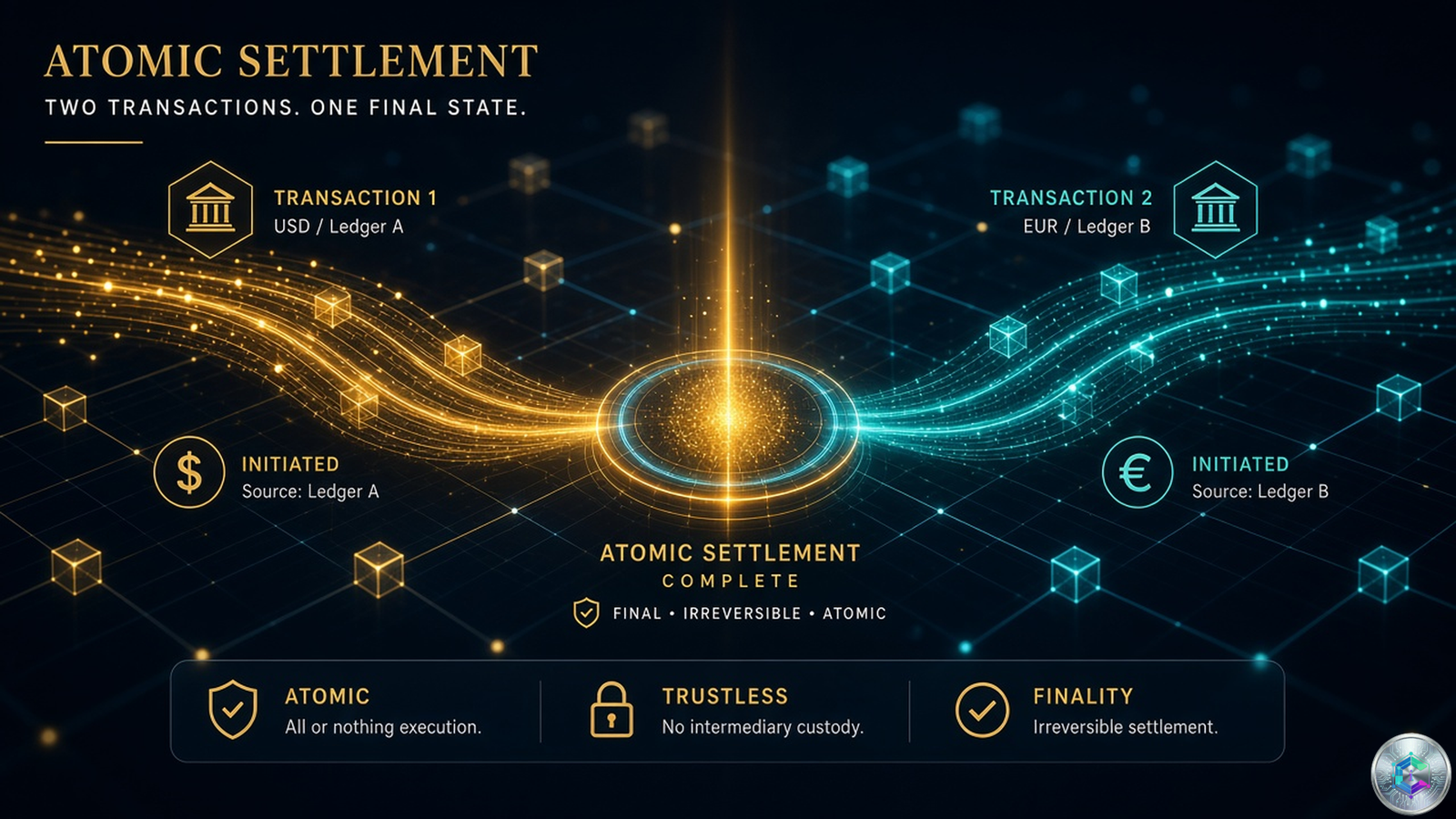
Solana DvP is a reference program that standardizes the simultaneous settlement of an asset and its payment on the Solana blockchain. Where traditional markets force participants to lock up capital for 24 to 48 hours waiting for bilateral clearing, the program executes both legs (token transfer and cash or stablecoin movement) in a single atomic transaction: both operations settle together, or neither settles at all.
According to Catherine Gu, head of digital asset product at the Solana Foundation, this mechanism eliminates the counterparty risk at the heart of traditional finance and offers institutions a single open standard, deployed on public infrastructure, with finality in seconds rather than days.
An Architecture Built for Regulated Markets
The program supports SPL tokens as well as the newer Token-2022 standard, including the extensions relied on by regulated issuers: pausable tokens, transfer hooks, and escrow fund isolation mechanisms. Solana DvP works with any settlement agent — bank, custodian, or exchange — and is not limited to a closed network.
The foundation reports that the program has passed external security audits and is ready for use with real funds. Confidentiality features, designed to preserve commercial opacity of settlements, are on the roadmap.
| Feature | Traditional Finance | Solana DvP |
|---|---|---|
| Settlement finality | 1 to 2 days (T+1 / T+2) | A few seconds |
| Counterparty risk | Present, covered by CCPs | Eliminated by atomicity |
| Locked capital | High (margin, collateral) | Minimal |
| Intermediaries | Custodians, depositaries, CCPs | Single on-chain program |
| Token standard | Variable (CSD, registrars) | SPL and Token-2022 |
| License | Proprietary | MIT (open source) |
JPMorgan in an Advisory, Not Endorsing, Role
JPMorgan contributed its expertise in institutional clearing practices: decades of market requirements around timing, escrow fund isolation, transfer hooks, and extensions used by regulated issuers. But the foundation stressed that this involvement remained strictly advisory.
Rhodel D’souza, head of digital assets at JPMorgan, nonetheless highlighted the value of a shared open standard for atomic settlement. The foundation reiterated that his comments should not be read as approval, certification, or performance guarantee of the program.
“A shared open standard for atomic delivery-versus-payment settlement is exactly the type of foundational infrastructure market participants need to operate at scale without introducing settlement risk and counterparty exposure.”
Rhodel D’souza, Head of Digital Assets at JPMorgan
Solana’s Bet on Traditional Finance
The launch fits a broader Solana strategy to court institutional finance. In August, BlackRock — the world’s largest asset manager — launched a tokenized money market fund dedicated to stablecoin reserves, with ownership recorded on Solana alongside Ethereum, under the GENIUS Act. Kraken also uses the network to offer tokenized US stocks to foreign clients via its xStocks product.
The network has already served as a rail for flagship tokenization deals, including a commercial paper issuance arranged by JPMorgan for Galaxy Digital, settled in USDC. With daily volume typically between 3,000 and 40,000 transactions, Solana processes a modest volume compared with payment-focused blockchains, but its throughput-to-finality ratio remains its main argument against Ethereum for institutional use cases.
The upcoming Alpenglow upgrade is expected to further cut protocol latency from around 12.8 seconds to roughly 150 milliseconds — a threshold that would make on-chain settlement competitive with the best traditional CLOBs (Central Limit Order Books).
A Now-Aligned Regulatory Framework
The regulatory ground is also clearing. The SEC recently classified SOL, Solana’s native token, as a digital commodity rather than a security, lifting a major legal uncertainty. The GENIUS Act, enacted earlier in the year, additionally created a dedicated framework for stablecoins with clear rules on structure, liquidity, and reserve asset portfolios.
Solana DvP is released under the MIT license and its code is available on GitHub. The foundation, based in Zug, Switzerland, is now inviting design partners and early participants to join the production version. However, no specific deployment timeline has been communicated, and no committed institutional partners have been named beyond JPMorgan’s advisory role.
Conclusion
With Solana DvP, the foundation is not offering a proprietary product but an open standard meant to replace the bespoke smart contracts institutional desks had been deploying on a case-by-case basis. If the promise of finality in seconds and zero counterparty risk is technically credible — and already proven by on-chain DEXs — adoption will depend less on code than on the trust of custodians, banks, and regulators.
Two scenarios are taking shape: a gradual adoption driven by stablecoin issuers and asset managers looking to cut collateral costs; or a status quo dominated by private networks such as Hyperledger and Ethereum-based RWA initiatives. The arrival of Alpenglow, the evolution of the GENIUS Act, and the first production pilots will be the true arbiters through 2027.
Sources
This article is published for informational and educational purposes only. It does not constitute investment advice. Do your own research (DYOR) before making any decision.

