


Nearly 400 of 558 blockchains generated no fees in a single day, according to DefiLlama. The figure captures an extreme concentration of crypto activity and marks the end of an abundance cycle for layer-2 networks and alternative chains — with Blast as its clinical illustration.
🔑 Key takeaways
- 399 of 558 blockchains tracked by DefiLlama recorded $0 in fees over 24 hours (October 2, 2026)
- 514 networks remain below the $1,000 daily-fees threshold, and 443 below $10
- Blast, the layer-2 star of 2024, announced its closure: its TVL collapsed from $2.2B to $32M in 18 months
- 14 blockchains have shut down or pivoted since the start of 2026, according to Chain INK
- 17 blockchains raised $7.5B in venture capital for just $1,306/day in combined revenue
The crypto market boils down to a handful of blockchains
Transaction fees are the most immediate indicator of a blockchain’s economic activity: they measure what users are willing to pay to use the network. The DefiLlama snapshot dated October 2, 2026 paints an unflattering picture of market concentration.
| Indicator (24 hours, October 2, 2026) | Number of blockchains |
|---|---|
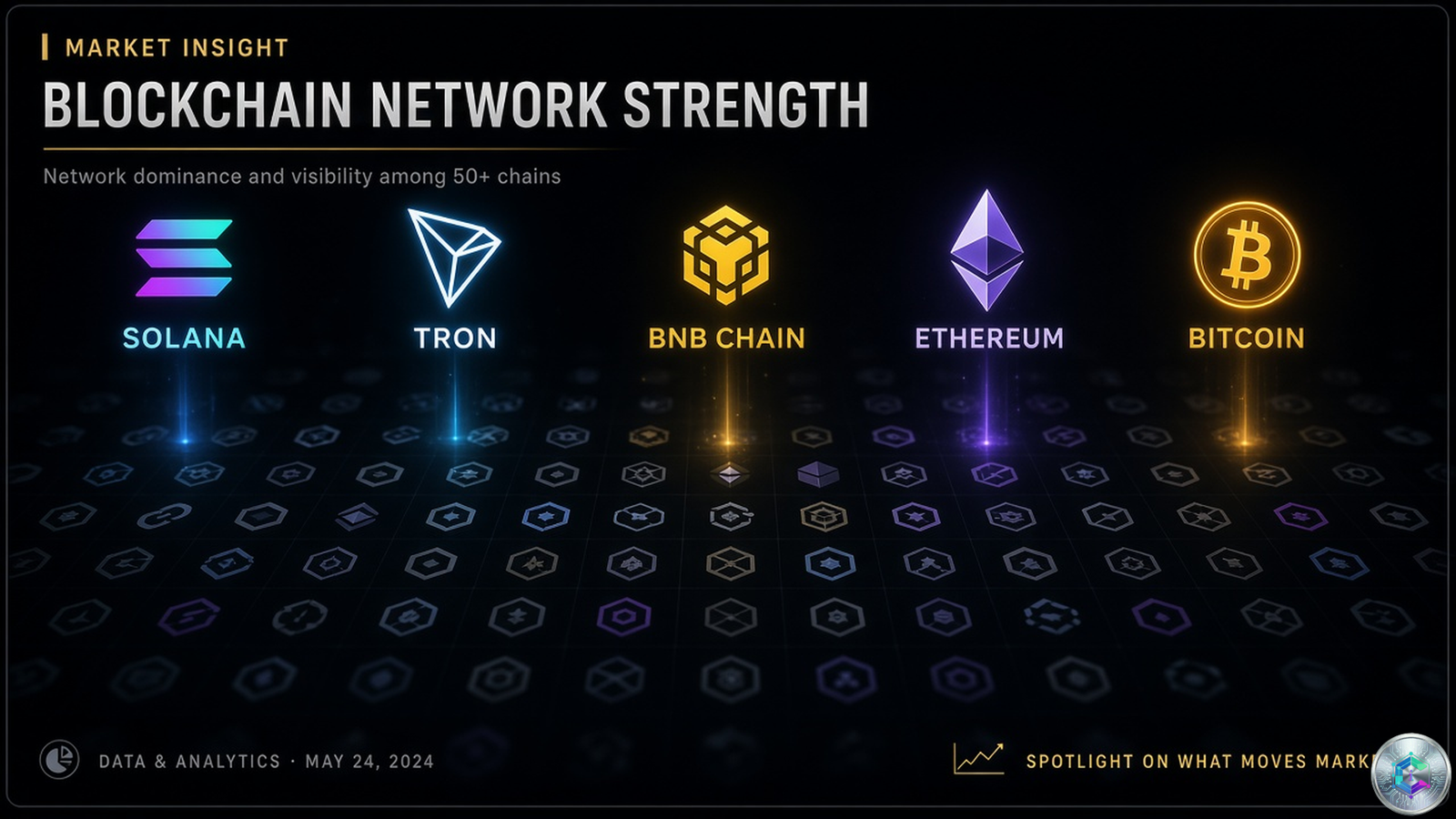
| Fees above $100,000 | 5 (Solana, Tron, BNB Chain, Ethereum, Bitcoin) |
| Fees above $1,000 | 44 |
| Fees below $1,000 | 514 |
| Fees below $10 | 443 |
| Fees at $0 | 399 out of 558 |
That means roughly 71.5% of the ecosystem tracked by DefiLlama had no measurable economic activity over a full day. This is not an outlier snapshot: blockchains that capture neither users nor transaction volume route that absence straight into operating losses.
“The market now rewards the user who pays today rather than the promise of a future product.”
Lorenzo Valente, analyst at ARK Invest
Blast: a symptom of a broken economic model
In a post on X on October 2, 2026, the Blast team confirmed the end of the layer-2: “Blast will be shutting down. We launched Blast with the goal of building a self-sustaining chain for users and developers. Unfortunately, the economics of operating the chain no longer make sense: the ongoing costs of maintaining Blast exceed the revenue generated by the L2.”
Launched in November 2023 by Tieshun “Pacman” Roquerre — also the founder of the NFT marketplace Blur — Blast had captured market attention by promising automatic yield on deposited Ether and stablecoins, at a time when most layer-2s offered nothing comparable. At its peak in June 2024, its TVL (total value locked, i.e., funds deposited on the network) had exceeded $2.2 billion. By early October 2026, it had collapsed to roughly $32 million — a -98.5% drawdown.
| Blast metric | June 2024 (peak) | October 2026 |
|---|---|---|
| TVL (total value locked) | $2.2B | $32M |
| Monthly revenue | ~$3.5M | a few thousand $ |
| Status | layer-2 leader of the restaking narrative | shutdown announced |
Users have until October 26, 2026 to bridge their assets back to Ethereum through the standard interface. After that date, they will need to use the Blast bridge directly — a more technical and riskier procedure. Blast is not an isolated case: according to a tally by the Chain INK account on October 2, 14 blockchains have announced closures or major pivots in 2026.
$7.5 billion raised, $1,306 in daily revenue
A table posted on X on July 28, 2026 by @bandosei documented the gap between venture capital injected and actual economic activity. Across 17 blockchains and protocols that collectively raised $7.5 billion from investors, combined daily revenue totaled $1,306. The table was viewed more than 650,000 times within days.
| Project | Capital raised | 24-hour revenue |
|---|---|---|
| EOS | $4.2B | $0 |
| Flow (Dapper Labs) | $746M | $4 |
| Polkadot (ICO 2017) | $145M | $0 |
| Tempo | $500M | $0 |
| Total 17 projects | $7.5B | $1,306 |
EOS, which as early as 2018 vowed to rival Ethereum, is the most striking case: $4.2 billion sunk for zero daily revenue. Tempo, more recent, illustrates that the pattern persists: $500 million raised against no measurable activity. These figures represent a 24-hour snapshot — necessarily volatile — but their order of magnitude is enough to characterize a structural imbalance.
Several distinct situations sit behind the shutdowns. Polygon zkEVM reportedly lost roughly $1 million per year. Sophon had raised $70 million for activity generating only tens of dollars of daily fees. Other networks are not disappearing but pivoting: Moonbeam has left the Polkadot ecosystem to join Base, Swellchain has redirected its project, and Harmony, Router Protocol and Orionx announced their shutdowns in September 2026.
Capital concentrates as the economy pivots toward product
Lorenzo Valente’s research at ARK Invest shows that the money has not vanished — it has moved. According to his analyses, Hyperliquid, Pump.fun, and Ethena together account for nearly 80% of the revenue generated by all crypto applications. CoinGecko’s 2026 revenue ranking confirms the concentration: out of the $3.4 billion in revenue generated by non-stablecoin projects over the first eight and a half months of the year, the top 15 projects capture 56%.
| Project | 2026 annualized revenue | Share of ecosystem |
|---|---|---|
| Hyperliquid | $429M | ~12.6% |
| Pump.fun | $322M | ~9.5% |
| Ethena | not detailed | part of top-3 capturing ~57.9% combined |
| Top 15 combined | — | 56% of $3.4B total |
Hyperliquid (a decentralized perpetual-contract exchange) and Pump.fun (a memecoin launchpad on Solana) alone account for 22.1% of total ecosystem revenue. This polarization is not only technical — it reflects a shift in allocation criteria. Crypto venture capital now reportedly examines the same indicators as traditional investors — real revenue, user retention, model viability — rather than narrative quality.
Several observers describe a gradual shift from a narrative economy to a product economy, a turn that many projects have failed to negotiate. Networks with massive TVL but derisory fees embody precisely that mismatch: attention was won, capital deployed, yet durable usage never followed.
Conclusion: a selective protocol winter
The October 2, 2026 DefiLlama snapshot does not mark the end of crypto, but the end of a phase of indiscriminate expansion. Protocols that monetize real user demand — Hyperliquid, Pump.fun, Ethena — concentrate the bulk of revenue, while hundreds of blockchains live on credit, funded by their treasury or by the patience of investors who never recovered their stake. The closure of Blast — a layer-2 once envied for its record TVL — symbolically marks the end of a cycle where the promise alone was enough.
In the short term, more shutdowns can be expected among networks sitting below the $10 daily-fees threshold, lacking the treasury to absorb infrastructure costs. Over the longer term, two scenarios compete: a Darwinian consolidation in which only 10 to 20 networks capture the bulk of activity, or a cyclical rebound carried by a new narrative capable of reallocating attention — and fees — to the networks written off.
Sources
- Cryptoast — Blast shutdown, blockchains without revenue DefiLlama
- Journal du Coin — $7.5B raised, $1,306 in revenue: ghost blockchain graveyard
- TechFlowPost — Article 34159
- NBER — Working Paper w22952
This article is published for informational and educational purposes only. It does not constitute investment advice. Do your own research (DYOR) before making any decision.

