


Exein, an Italian startup founded in Rome in 2018, has crossed the symbolic one-billion-dollar valuation threshold thanks to a $270 million funding round. Led by Headline, the deal reflects strong investor appetite for embedded cybersecurity — a market directly boosted by the rise of physical AI and the rapid proliferation of connected devices worldwide.
🔑 Key takeaways
- Exein reaches unicorn status at a $1.7 billion valuation
- $270 million Series E round led by Headline, oversubscribed
- More than 2 billion connected devices already protected across industries
- Multi-year partnership signed with Haas F1 Team starting in 2026
- Foundational model for physical AI security targeted for Q1 2027
An oversized round in European deep tech
Exein has closed a $270 million Series E round, valuing the company at $1.7 billion and officially granting it unicorn status. The deal was led by Headline, with participation from existing backers including Blue Cloud Ventures, HV Capital, Intrepid Growth Partners, Geodesic Capital and J.P. Morgan. According to Exein, the round was “considerably oversubscribed” — a clear signal that the embedded cybersecurity segment currently favors sellers.
The new mark represents a 30x markup from the Series B closed roughly two years ago, and more than a doubling versus the mixed equity-debt facility secured in December 2025 that followed the Series C earlier the same year. In total, the company raised the equivalent of €170 million in 2025 alone, including a €100 million round combining an equity investment and a debt facility arranged by J.P. Morgan.
| Round | Amount | Year | Lead investor | Implied valuation |
|---|---|---|---|---|
| Series B | n/d | ~2024 | n/d | ~$57M (implied) |
| Series C + debt | n/d | 2025 | Blue Cloud Ventures / J.P. Morgan | ~$800M (implied) |
| Series E | $270M | Q3 2026 | Headline | $1.7B |
Proceeds will fund an ambitious playbook: targeted M&A to expand the product portfolio, an aggressive recruitment push, and accelerated expansion in the United States and Asia-Pacific, a region that already generates half of the company’s revenue. According to founder Gianni Cuozzo, Exein is delivering “400% year-over-year growth” — a curve that fully justifies the unicorn label.
Runtime security, Exein’s DNA
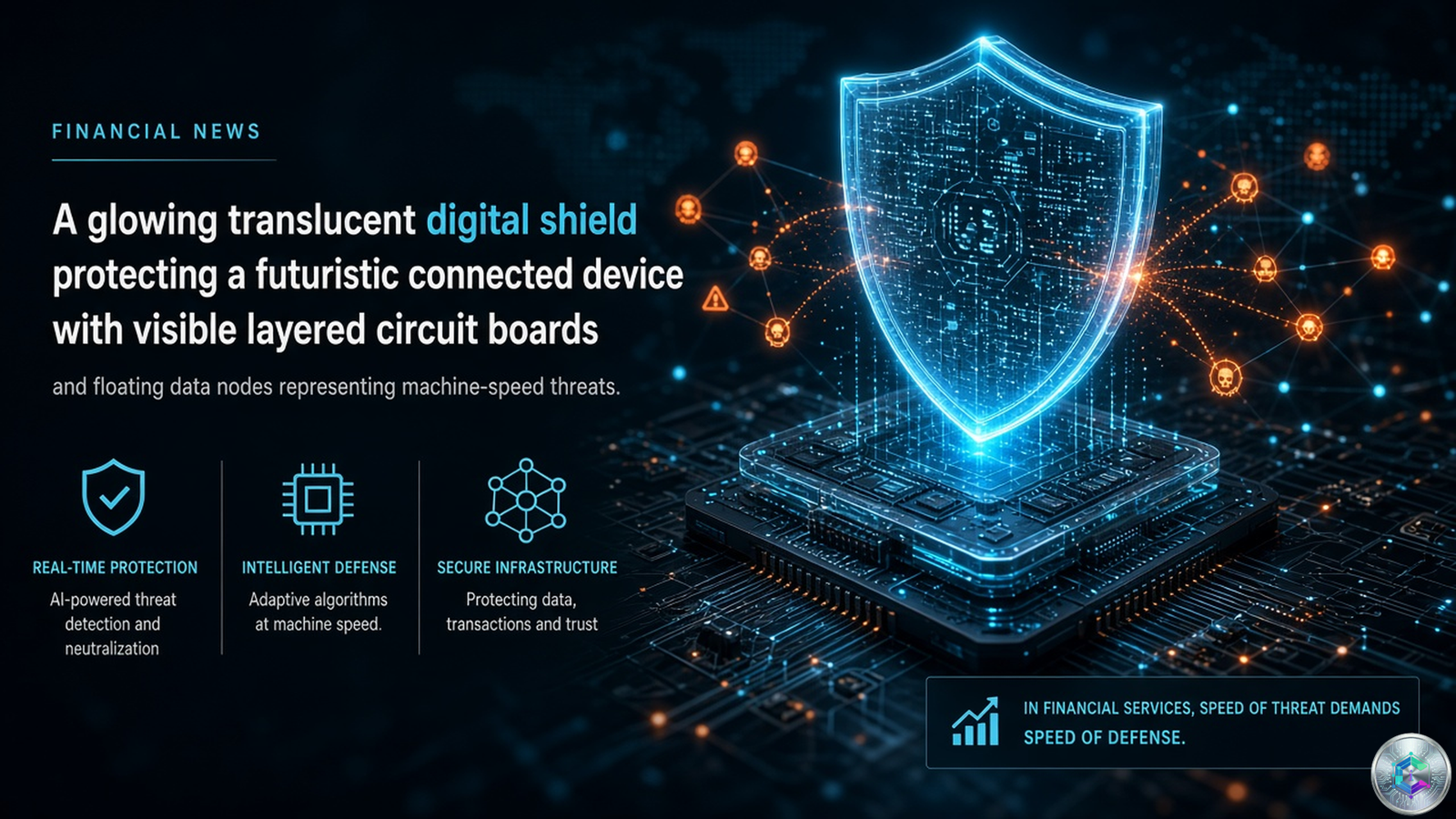
Founded in Rome in 2018, Exein defends a simple but demanding thesis: every connected device must be able to defend itself, regardless of its network connection state. This approach breaks with the traditional centralized cloud-security model by embedding the protection agent as close as possible to the kernel of the operating system. The goal: detect, isolate and neutralize a threat before it can exfiltrate data or compromise a critical service.
“The Exein concept is that every device should be able to defend itself, whether it is connected to a secure network or not.”
Gianni Cuozzo, Founder and CEO of Exein
The product lineup is built around two complementary offerings, recently joined by Photon, the new runtime solution:
- Exein Runtime — a threat-prevention engine running directly on the device and blocking attacks at the kernel level.
- Exein Analyzer — a health-monitoring tool that detects vulnerabilities and recommends remediation actions.
- Photon — a next-generation runtime solution co-designed with manufacturers to prevent kernel-level attacks.
This hardware-agnostic architecture, designed for Linux and compatible with the major SoCs on the market, lets Exein address heterogeneous fleets of connected devices without forcing costly hardware redesigns on the customer side.
Physical AI, the new battleground
The most visible growth narrative Exein is pushing is the rise of physical AI — that is, the embedding of AI models inside physical objects: humanoid robots, drones, autonomous vehicles, smart sensors, connected home appliances and medical devices. All of these products rely on the same supply chain as classical connected devices, mechanically expanding Exein’s addressable market.
The company now claims more than 2 billion protected devices across sectors where a cyberattack can have severe physical consequences:
- Aerospace and defense
- Industrial automation and robotics
- Automotive manufacturing and autonomous vehicles
- Energy and critical infrastructure
- Healthcare and medical devices
- Semiconductors and assembly lines
The risk, however, is intensifying fast. Gianni Cuozzo warns about the rise of “machine-speed attacks“, made easier and cheaper by the spread of open-source models run without proper guardrails, which drastically cut the cost and time needed to build a targeted attack against physical systems. To flip the asymmetry, Exein is building a foundational model dedicated to physical AI security, trained on machine and telemetry data. Its release is scheduled for Q1 2027, a window that will coincide with the full entry into force of the European Cyber Resilience Act.
Global visibility and premium partnerships
The signature of a multi-year partnership with Haas F1 Team — naming Exein as the team’s “Official Physical AI Security Partner” from the 2026 Belgian Grand Prix — gives the startup a global showcase in a sport where real-time telemetry, data integrity and system reliability are competitive assets. The sponsorship works both as a B2B marketing tool and as an industrial stress test.
“Formula 1 is built on innovation, precision and the trust that every system performs exactly as intended. As our sport continues to embrace increasingly advanced technologies, cybersecurity has become an integral part of that landscape.”
Ayao Komatsu, Team Principal of Haas F1 Team
In parallel, Exein is consolidating its physical footprint: beyond Rome, the company already operates offices in Germany, Taiwan and the United States, spanning three continents. The Asia-Pacific region now accounts for 50% of revenue, a balance that demands disciplined operational execution but also provides direct access to key Asian OEMs.
The EU Cyber Resilience Act, a regulatory tailwind
The other exogenous accelerator is regulatory. The European Union’s Cyber Resilience Act (CRA), whose reporting obligations kicked off last week and which will fully come into force in December 2027, will require manufacturers to “ensure that all digital products are protected against cyber threats” throughout the product lifecycle.
Exein’s technology stack targets several major standards at once:
- CRA (EU) — security-by-design and security-by-default obligations
- Cyber Trust Mark (US) — compliance label for connected devices
- RED 3.3 and ETSI EN 303-645 — radio and consumer-grade standards
- IEC 62443 — industrial automation security
This regulatory portability is a meaningful commercial differentiator: OEMs and semiconductor makers are actively looking to minimize the cost of multi-jurisdiction compliance, and a single vendor able to cover the full design-stage checklist shortens their time-to-market accordingly.
Conclusion: execution to deliver in 2026-2027
By crossing the one-billion-dollar valuation line, Exein joins a very small club of Italian deep tech unicorns. The combination of physical AI’s growth, tighter regulations — from the EU CRA to the US Cyber Trust Mark — and a rapidly industrializing cyber-threat landscape paints a structurally favorable scenario for the 2026-2027 window.
Gianni Cuozzo and his team’s bet rests on three simultaneous executions: shipping the foundational model for physical AI security in Q1 2027, smoothly integrating M&A targets, and converting Asian OEM and semiconductor relationships into recurring contracts. If these three workstreams move at the announced pace — using the 400% growth curve as a yardstick — Exein could emerge as one of Europe’s flagship champions of embedded AI security by the next EU regulatory cycle.
Sources
- TechCrunch — New Italian unicorn Exein rides the physical AI wave (September 15, 2026)
- Tech Funding News — Exein raises $100M to secure connected devices
- Haas F1 Team — Exein announced as official physical AI security partner
- Yahoo Finance — Italian cybersecurity firm Exein sees valuation surge
- Vestbee — Exein secures €100M
This article is published for informational and educational purposes only. It does not constitute investment advice. Do your own research (DYOR) before making any decision.

