


Bitcoin failed to break above $80,000 after Jackson Hole, while stablecoins, DeFi and regulation dominated crypto headlines at the end of August 2026. Here are the six key stories that defined the week of Aug 28-30, between US monetary pressure, Russian bank adoption and the collapse of promotional tokens.
🔑 Key takeaways
- BTC fell back under $78,400 after failing to decisively break above $80,000
- US spot Bitcoin ETFs recorded $201.8M in net outflows on Friday, ending a 9-day inflow streak
- Russia’s largest bank Sber plans to accept USDT and ETH as loan collateral
- Solana doubles its annual disinflation rate, from 15% to 30%
- BIS chair says stablecoins are “not credible for payments at scale”
Bitcoin retreats after Jackson Hole
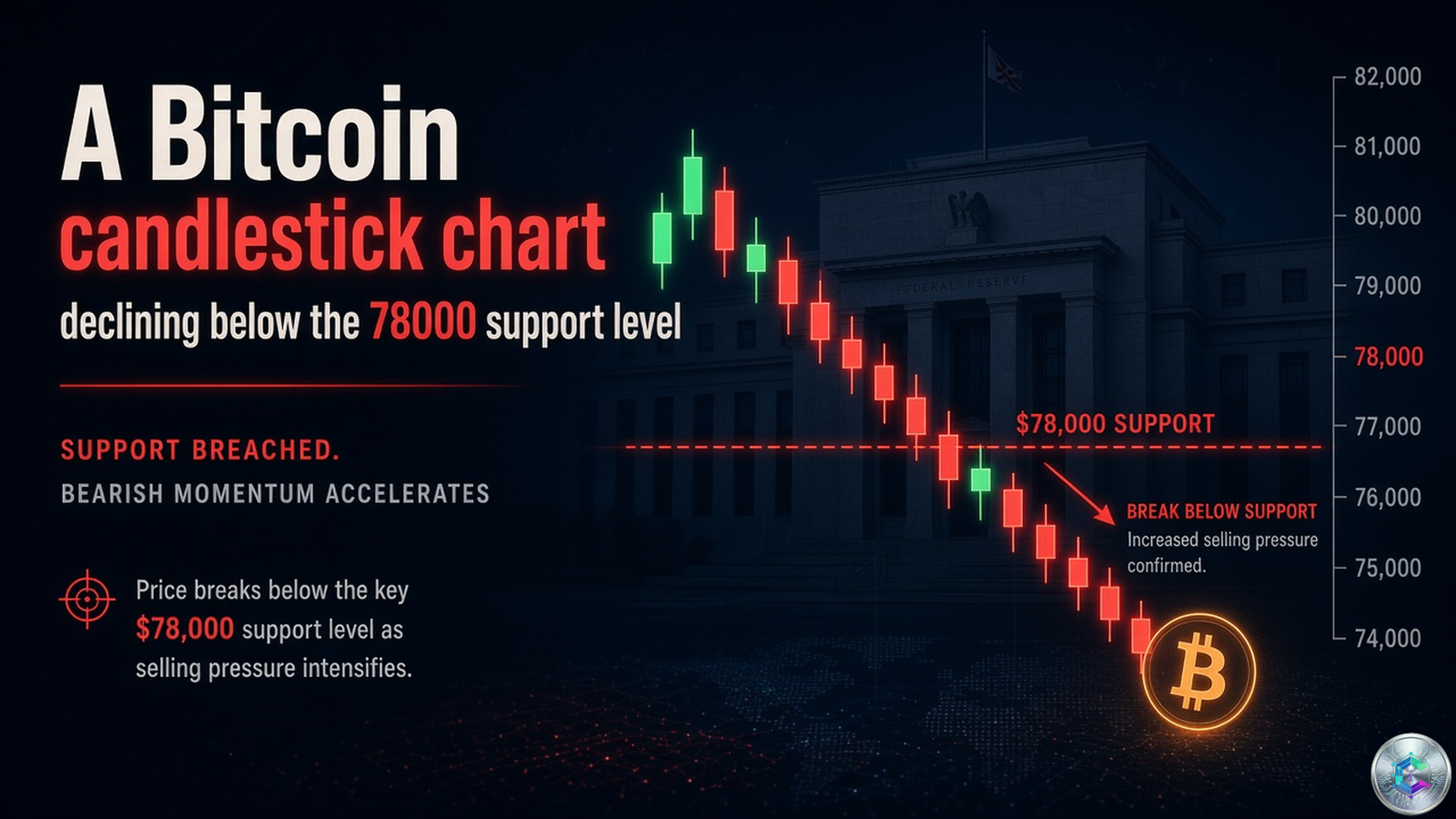
Bitcoin’s price dropped to $78,400 on Friday, August 28, after failing to sustain a breakout above $80,000. The move followed remarks by Fed Chair Kevin Warsh at the Jackson Hole symposium, who downplayed the impact of softer recent inflation prints and maintained a cautious stance on the US rate path.
On the spot Bitcoin ETF segment (exchange-traded funds that mirror BTC’s price), Friday’s session saw $201.8M in net outflows, led by ARK 21Shares. The red day ended a nine-session streak of inflows and pushed total fund assets back below the $100 billion mark. The selling pressure highlights crypto’s sensitivity to monetary policy expectations.
Stablecoins under pressure: BIS, football clubs and Russian banks
Stablecoins (crypto tokens pegged to stable assets such as the US dollar) dominated the week’s headlines, caught between institutional criticism and concrete use cases. Pablo Hernández de Cos, Chair of the Bank for International Settlements (BIS), publicly reiterated that stablecoins lack the credibility required to operate at payments-scale.
“Stablecoins are not credible for payments at scale.”
Pablo Hernández de Cos, Chair of the BIS
His remarks come alongside an FSI (Financial Stability Institute) study highlighting sharp differences in issuer rules across jurisdictions. Against this backdrop, two announcements illustrate the sector’s duality: on one side, UK regulator FCA warns football clubs against crypto sponsorships; on the other, Chelsea FC confirms a partnership with Circle to feature USDC on its jerseys. Meanwhile, Russia’s Sber bank announced plans to accept USDT and Ether alongside Bitcoin as loan collateral under the country’s new regulated crypto trading framework.
DeFi and protocols: Solana tightens its monetary policy
Among layer-1 networks (primary blockchains), Solana made the week’s biggest governance move: validators approved a proposal accelerating SOL’s annual disinflation (the reduction of new token issuance). The pace jumps from 15% to 30%, reducing future SOL issuance while leaving the long-term inflation target unchanged.
Polygon disclosed several security flaws fixed in recent hard forks (major protocol upgrades). According to the team, the vulnerabilities exposed the network to denial-of-service (DoS) risks and validator resource exhaustion. They were patched before public disclosure, the protocol confirmed. Stellar posted notable momentum, with its real-world asset (RWA) market more than quadrupling to nearly $4 billion, driven by institutional adoption and growing tokenization activity.
Trump Coins: GOLD token collapses by 99%
The “Real Trump Coins” saga turned contentious as the organization issued an official denial, claiming it never authorized the launch of the GOLD token and blaming “bad actors.” On-chain data (information traced on the blockchain) shows that team-linked wallets sold 224.5 million tokens while the asset’s market value plunged by approximately 99%. Promotional posts about GOLD on the official X account were subsequently deleted.
Tokenization and institutional markets
Tokenization continues to gather pace. Transfer volume for tokenized stocks jumped 415% in 30 days to $29.5 billion, while the number of active addresses and holders more than doubled over the same period. Separately, institutional exchange Bullish set up a $100 million stablecoin facility for USD.AI, designed to fund loans backed by AI computing infrastructure (GPUs, specialized graphics processors).
| Event | Date | Main impact |
|---|---|---|
| BTC under $78,400 | Aug 28 | Post-Jackson Hole drop |
| BTC ETF: -$201.8M | Aug 29 | End of 9-day inflow streak |
| Sber accepts USDT/ETH | Aug 30 | Russian bank adoption |
| Solana disinflation x2 | Aug 28 | 15% to 30% annually |
| Real Trump GOLD | Aug 29 | Market cap -99% |
| Stellar RWA ~$4B | Aug 29 | More than quadrupled in 2026 |
Conclusion: a market torn between the Fed and real adoption
Late August 2026 illustrates the structural duality of the crypto market: on one side, US macroeconomic pressure weighing on risk assets (Bitcoin, ETFs); on the other, on-chain fundamentals that keep strengthening (tokenization, RWA, bank adoption). The next sessions will reveal whether BTC can reclaim $80,000 or whether selling pressure intensifies toward $75,000. On the stablecoin front, BIS criticism contrasts with multiplying real-world use cases. Worth watching: market reaction to the next Fed meeting and progress on the Sber file within Russia’s regulatory framework.
Sources
This article is for informational and educational purposes only. It does not constitute investment advice. Do your own research (DYOR) before making any decision.

