


Tether is shutting down its Uruguay Bitcoin mining venture after a costly electricity dispute with state utility UTE, walking away from roughly $120 million deployed across two sites. The failure underscores operational risks tied to power procurement as the USDT issuer pivots to a new Brazilian partnership with Adecoagro.
🔑 Key takeaways
- Tether spent about $60M per site in Uruguay, totaling roughly $120M.
- UTE cut power on July 25, 2025 over unpaid bills (~$5M).
- The dispute centered on contract interpretation: minimum allocation vs. hard cap.
- Tether signed an MoU with Adecoagro in July 2025 for a ~10 MW pilot in Brazil.
- The April 2024 halving and the subsequent BTC slide compressed miner margins globally.
A 2023 launch built on Uruguay’s green grid
Tether unveiled its Uruguay mining foray in May 2023, citing the country’s renewable-heavy grid, reliable networks, and political stability as core attractions. The two sites, located in the rural department of Florida, were meant to act as a proving ground before a broader push into Brazil, Paraguay, and Argentina.
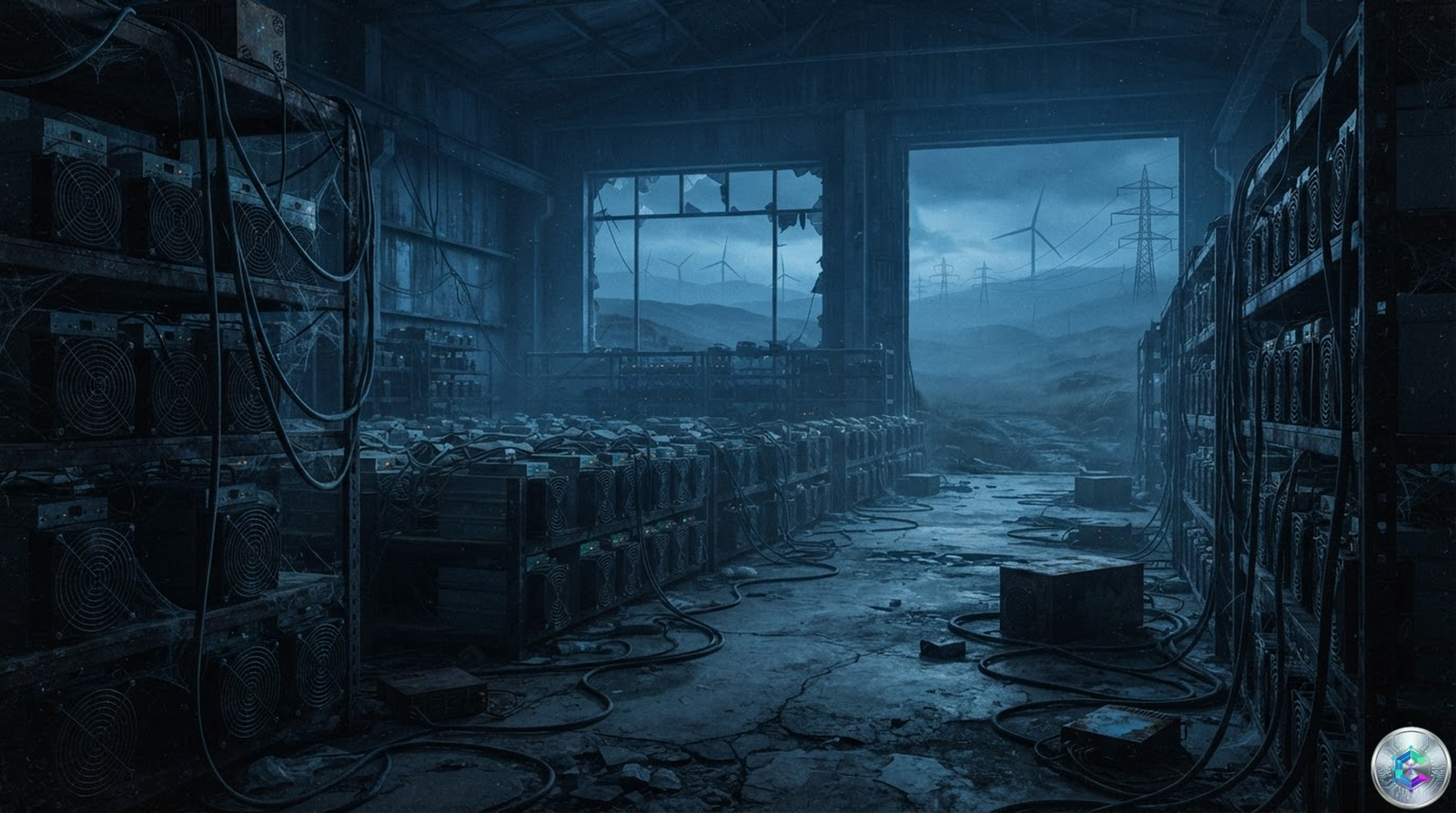
A February 2024 promotional video showed mining halls surrounded by farmland and wind turbines, with road names like “Memepool Avenue” and “Halving Street.” CEO Paolo Ardoino and chairman Giancarlo Devasini were regular visitors to Punta del Este, the resort town popular with the crypto elite.
A former contractor estimated capex at roughly $60 million per site, putting total investment near $120 million — a sizeable commitment for a country whose annual foreign direct investment hovers around $2 billion.
The electricity contract that broke the project
At the core of the breakdown sat a fundamental disagreement over how to read a single figure in Tether’s power supply contract with UTE. Tether treated it as a minimum allocation that could rise with operational growth. UTE read the same figure as an absolute cap that could not be exceeded.
While the sites stayed small, the gap barely mattered. As mining operations scaled and demanded more power, the dispute became an operational crisis — with stretches of several days where the mines lacked enough electricity to run, according to a former contractor. Internal UTE briefings seen by Reuters show both sides had already diverged by November 2024.
Tensions escalated after Uruguay’s new left-wing administration took office in March 2025, installing a more uncompromising leadership at UTE. By May 2025, Microfin — Tether’s local entity — had stopped paying its electricity bills and notified UTE of its intent to terminate the contracts the following month.
Timeline of a $120 million collapse
| Date | Event |
|---|---|
| May 2023 | Tether officially announces Uruguay mining project |
| Feb 2024 | Promotional video released from Florida sites |
| April 2024 | Bitcoin halving — block rewards cut in half |
| Nov 2024 | Contract dispute already documented internally at UTE |
| Mar 2025 | New Uruguayan administration, UTE takes harder line |
| May 2025 | Microfin stops paying electricity bills |
| June 2025 | Microfin notifies UTE of contract termination |
| July 25, 2025 | UTE cuts power to both sites |
| July 2025 | Tether signs MoU with Adecoagro in Brazil |
| Dec 2025 | Outstanding UTE debts settled |
A last-ditch rescue, in which UTE’s board approved a memorandum of understanding and revised paperwork, collapsed when Tether’s representatives failed to show up for signing, per the UTE briefing minutes. Without a signed deal and roughly $5 million in unpaid bills, UTE cut the power on July 25, 2025. Microfin then notified Uruguayan labor authorities of the shutdown and mass layoffs. Outstanding debts were cleared in December.
“Uruguay is not viable for mining — that’s the reality.”
Nicolas Ribeiro, crypto mining specialist
“This plug-and-play infrastructure is very easy to do — literally unplug and then move it elsewhere.”
Pete Howson, Assistant Professor at Northumbria University
A mining sector under pressure
The Uruguayan project imploded during a punishing stretch for Bitcoin miners globally. The April 2024 halving halved block rewards, and the subsequent retreat of BTC from its 2025 high further squeezed industry margins.
Uruguay presented a specific headwind: despite a renewable-heavy and reliable grid, its power costs sit well above the rates enjoyed by major mining hubs in Texas, Kazakhstan, or parts of Ethiopia. For Nicolas Ribeiro, the country’s energy and connectivity infrastructure could be “better suited to AI data centers than to Bitcoin mining.”
The Brazilian bet with Adecoagro
The Uruguay failure did not slow Tether’s regional ambitions. In July 2025 — the same month UTE severed the partnership — Tether signed an MoU with Adecoagro, a publicly listed South American agribusiness, to mine Bitcoin using surplus renewable energy in Brazil. The pilot would draw around 10 MW, far smaller than the 230 MW sometimes cited — a figure that refers to Adecoagro’s broader renewable generation capacity across South America rather than energy allocated to mining.
Adecoagro representatives had visited Tether’s Uruguayan facility in February 2025 as both sides explored renewable-powered mining. No public disclosure suggests the Brazilian project was redesigned because of what happened in Uruguay, but the precedent underlines that renewable access alone does not guarantee a viable operation — clear contractual terms, reliable capacity, and sustainable economics matter just as much.
Tether controls roughly $183 billion in USDT and ranks among the world’s largest holders of US Treasuries. Yields on those reserves have funded over $2 billion in energy production and Bitcoin mining globally, part of a broader ~$20 billion investment portfolio spanning data centers, Rumble, brain-implant ventures, and Italian football club Juventus.
Conclusion
The Uruguayan episode is a reminder that in Bitcoin mining, access to cheap renewable power is not enough: contractual security and regulatory stability carry equal weight in the economic equation. For Tether, the Brazilian test with Adecoagro will be closely watched — not just on profitability, but on whether the firm can avoid the contractual pitfalls that cost it $120 million in Uruguay.
Across the industry, the fallout may push other miners to weigh legal and operational risks more heavily when selecting host jurisdictions, and could undermine Uruguay’s standing as a destination for crypto mining investment going forward.
Sources
This article is published for informational and educational purposes only. It does not constitute investment advice. Do your own research (DYOR) before making any decision.

