


Nvidia is deepening its footprint in the AI infrastructure stack by taking a minority stake in Cloverleaf Infrastructure. The deal, paired with an investment estimated at several hundred million dollars, aims to accelerate the rollout of Nvidia’s AI factories across the United States.
🔑 Key takeaways
- Nvidia announces a strategic partnership with Cloverleaf Infrastructure, a data center site developer
- The deal includes a minority stake, with an investment worth several hundred million dollars per the Wall Street Journal
- Projects will be built on the Nvidia DSX platform, combining accelerated compute, Spectrum-X networking and storage
- Cloverleaf has a pipeline of more than 10 GW, including sites in Wisconsin for Oracle and OpenAI
- The move extends a broader direct-investment strategy: 1.5 billion dollars into SB Energy and a 20% stake in Lancium
A bridge between utilities and hyperscalers
Cloverleaf Infrastructure operates as an intermediary between electric utilities and data center developers. Founded in 2024, the company closed a 300 million dollars funding round the same year and says it has sold projects representing more than 7 GW of capacity to clients including Oracle and OpenAI, notably in Wisconsin.
Cloverleaf’s business model is to scout land, negotiate grid interconnections and deliver shovel-ready sites tailored to the massive loads of compute farms. Like other players in the sector, the company faces local resistance in several markets, where community pushback or grid constraints slow down project timelines.
Nvidia DSX as the design backbone
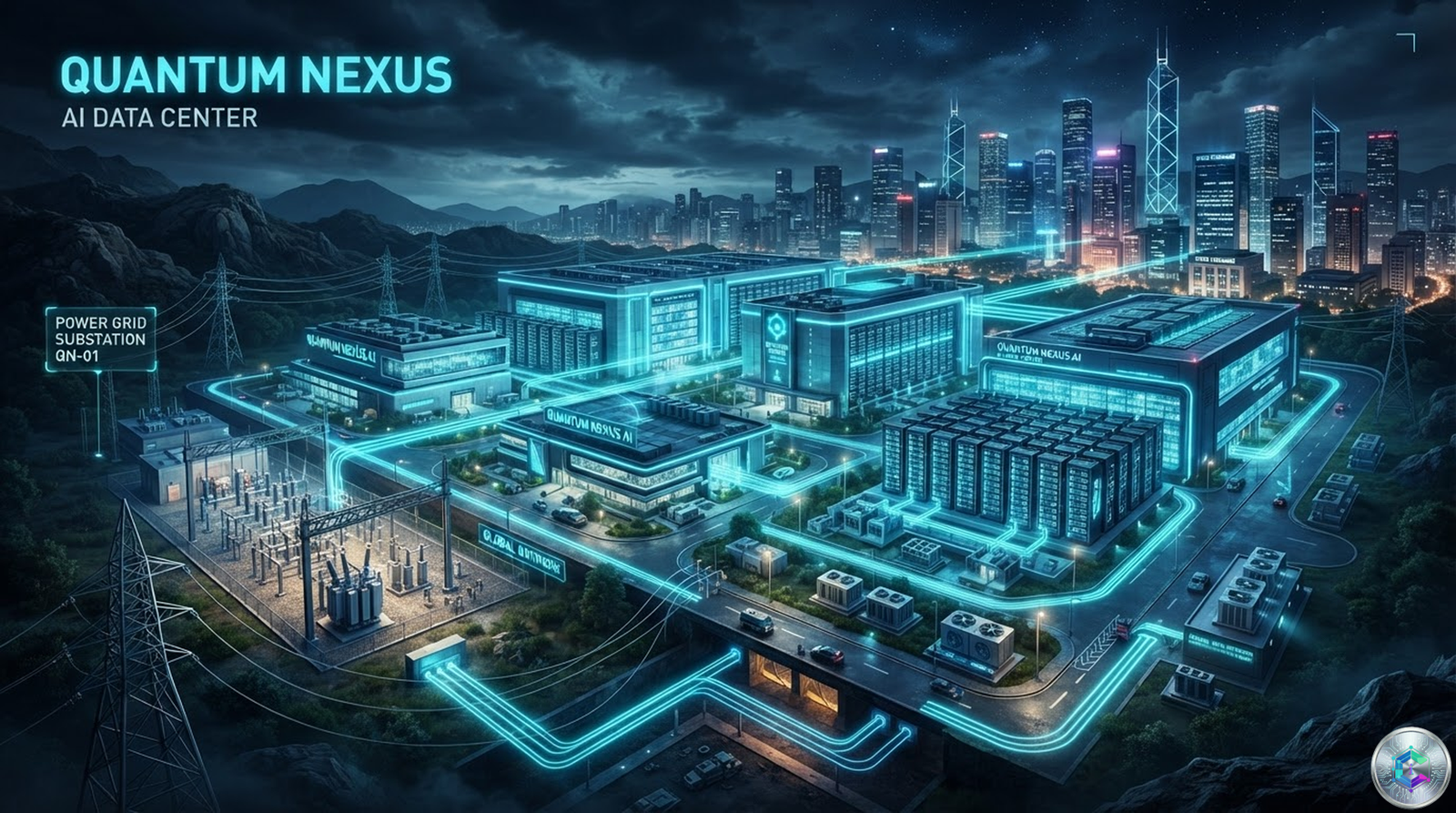
Projects developed under the partnership will be designed on the Nvidia DSX platform, Nvidia’s reference blueprint for building data centers compatible with its CPU-GPU racks, Spectrum-X Ethernet networking and storage stack. Cloverleaf will fold site, power, cooling, compute and facility decisions into the design phase earlier than usual.
The goal is to let clients evaluate infrastructure trade-offs and build AI factories optimized within their available power, water and network envelopes. Once the sites are live, the DSX software layer will help customers optimize energy use and compute utilization, a critical lever at a time when demand for compute still outstrips supply.
A vertical investment strategy
The Cloverleaf agreement sits inside a wider Nvidia strategy: directly funding and developing the AI data centers that will eventually buy its systems. In the same week of August 21, 2026, Nvidia disclosed a 1.5 billion dollars investment in SB Energy, an OpenAI-linked data center project in Ohio. Earlier in the year, it also took a 20% stake in Lancium, the power developer behind the Abilene campus in Texas that Crusoe runs for Oracle and OpenAI.
| Investment | Date | Financial vehicle | End-client link |
|---|---|---|---|
| Cloverleaf Infrastructure | August 2026 | Minority stake, several hundred M$ | Multi-client (Oracle, OpenAI) |
| SB Energy | August 2026 | 1.5 billion dollars | OpenAI (Ohio) |
| Lancium | 2026 | 20% equity stake | Abilene campus, Crusoe, Oracle, OpenAI |
“AI factories are the infrastructure of the intelligence era, and land, power and structure are their foundations. Cloverleaf brings deep expertise in energy and site development to create exceptional, sustainable sites for the next generations of accelerated computing.”
Nico Caprez, VP of global AI infrastructure development, Nvidia
Local challenges and outlook
Demand for compute keeps climbing, yet power supply and buildable land are now the main bottlenecks. In the United States, several multi-gigawatt projects have been delayed by local opposition or saturated regional grids. Cloverleaf, like Lancium or SB Energy, tries to ease those frictions by securing permits, interconnections and community agreements earlier in the process.
By weaving site design together with Nvidia’s hardware and software stack, the group hopes to compress deployment timelines and raise output per megawatt, a metric that has become central for AI factory operators. For Nvidia, it is also a way to lock in a competitive edge against AMD and the hyperscalers that want to internalize more of the value chain.
Conclusion
By investing directly into infrastructure developers, Nvidia is reshaping its model: beyond selling GPUs, the group is taking equity stakes in the digital real estate that will host the next generation of compute. The bet pays off twice if those sites come online ahead of rivals and if every deployed megawatt reliably feeds Nvidia GPUs.
Execution speed remains the key risk. The combined pipeline of Cloverleaf, Lancium and SB Energy now exceeds 15 GW of announced projects, but only a fraction is actually connected to the grid. The coming quarters will show whether Nvidia can convert those gigawatts into productive compute capacity, or whether local constraints blunt the strategy.
Sources
- TechCrunch
- Yahoo Finance
- Nvidia Data Center Partners
- Data Center Dynamics
- Wall Street Journal
- Reuters via TradingView
This article is for informational and educational purposes only. It does not constitute investment advice. Do your own research (DYOR) before making any decision.

