


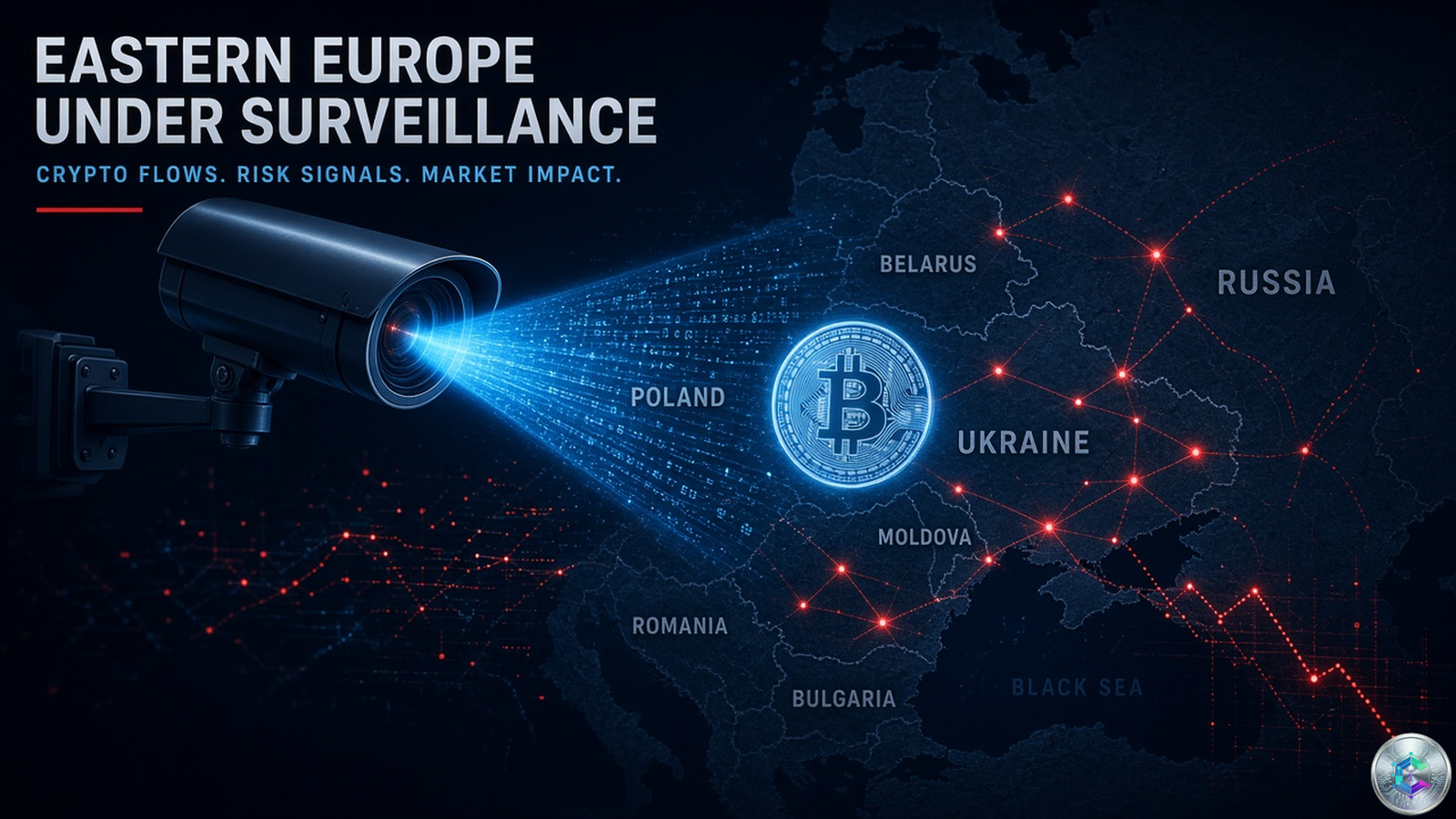
Binance handed Russian authorities the complete personal details of one of its users whose transfers, exceeding $700, were earmarked for the Ukrainian army. The case, revealed by Reuters in mid-August 2026, highlights the delicate trade-offs a major crypto exchange must navigate between judicial cooperation and user privacy.
🔑 Key takeaways
- Yuri Belenkiy, a Russian IT specialist residing in Bulgaria, was arrested in September 2025 and charged with terrorism financing.
- Binance shared his address, date of birth, phone number, passport number and copies of identity documents with Russian investigators.
- Payments to Ukraine, totaling over $700, were made through the platform between January 2023 and March 2024.
- Before the war, Binance controlled roughly 80% of Russia’s cryptocurrency trading volumes.
- The exchange sold its Russian business to CommEX in September 2023, citing its compliance strategy.
Belenkiy’s arrest and Binance’s cooperation with Moscow
According to court documents obtained by Reuters, Yuri Belenkiy was detained in September 2025 and remains in pre-trial custody awaiting trial on terrorism financing charges. Russia’s Investigative Committee claims his transfers, totaling more than $700, were made between January 2023 and March 2024 following a call by Kremlin critic-in-exile Arkady Babchenko.
The funds were earmarked for the Ukrainian army and a group linked to the Azov brigade, which Moscow designates as a terrorist organization. To trace the source of the payments, Russian investigators contacted Binance through the dedicated address case@binanceholdings.ru, the inbox to which the exchange’s website directed Russian and Belarusian law enforcement.
Binance responded twice with a detailed file: postal address, date of birth, phone number, Russian passport number, and copies of his Russian passport and Bulgarian residence permit. The First Department Bureau, an NGO supporting defendants in Russian political cases, obtained the documents from a relative of the suspect.
“If Binance wanted to protect its clients, the exchange should never do anything with the Russian government.”
Leonid Volkov, chief of staff to Alexei Navalny
Cooperation with FSB-linked agencies documented since 2021
The case fits into a broader history. In April 2021, Binance’s head of Eastern Europe and Russia, Gleb Kostarev, met in Moscow with representatives of Rosfinmonitoring, Russia’s financial monitoring service affiliated with the FSB (domestic intelligence). At the time, the agency was seeking to trace the millions of dollars in bitcoin raised by Alexei Navalny’s network, freshly added to the list of terrorist organizations.
According to text messages reviewed by Reuters, Kostarev agreed to provide the names and addresses of the relevant clients. He reportedly told an associate he had “no real choice” in the matter. Binance, for its part, denied in 2022 any formal agreement to share user data with FSB-controlled agencies, while acknowledging that it cooperates with law enforcement requests “subject to applicable legal, confidentiality and regulatory requirements.”
The Navalny network is estimated to have collected more than 670 bitcoins, roughly $28 million, through cryptocurrency donations processed in part via Binance, according to figures relayed by web3isgoinggreat.com.
Timeline of key events
| Date | Event |
|---|---|
| April 2021 | Kostarev meets Rosfinmonitoring in Moscow; Navalny network added to terrorist list |
| February 24, 2022 | Russia invades Ukraine; Binance remains operational in Russia |
| Jan 2023 – Mar 2024 | Belenkiy transfers over $700 to Ukraine through Binance |
| September 2023 | Binance sells its Russian business to CommEX |
| September 2025 | Yuri Belenkiy arrested by Russian authorities |
| August 17, 2026 | Reuters reveals Binance’s transmission of user data |
Binance’s dominant footprint in pre-war Russia
Before February 24, 2022, Binance controlled about 80% of cryptocurrency trading volumes in Russia, according to industry data cited by Reuters. This dominance gave it detailed knowledge of the Russian crypto ecosystem but also exposed it to extensive demands from local authorities.
After the conflict broke out, trading volumes on the platform surged as Russians turned to cryptocurrencies to shield their assets from Western sanctions and ruble devaluation. Despite repeated Ukrainian government calls to block Russian users, Binance kept its services running for several months.
Russia exit and the gray zones of compliance
In September 2023, Binance announced the sale of its Russian business to CommEX, specifying that it would retain neither a buyback option nor a revenue-sharing agreement. The exchange’s legal representatives told Reuters that “active engagement with the Russian government has now ceased due to the conflict.”
Binance’s current law enforcement guidelines require a valid court order, a police decision or a warrant before any user information can be shared in a criminal investigation. Yet the Belenkiy case shows that the line between legitimate cooperation and compromising privacy remains blurred, particularly for jurisdictions under sanctions or considered hostile by Western regulators.
Asked about a potential breach of European data protection rules (GDPR), Binance declined to comment. The exchange simply reiterated its policy of conditional cooperation with law enforcement, without detailing the safeguards applied to users residing outside the requesting jurisdiction.
Conclusion: between stated compliance and geopolitical trade-offs
The Belenkiy affair highlights the uncomfortable position of major crypto exchanges, forced to navigate conflicting regulatory obligations across jurisdictions. For Binance, the transmission of data to Rosfinmonitoring in 2021 and then to Russian investigators in 2024-2025 illustrates the difficulty of reconciling local compliance, international sanctions and user privacy.
In the short term, the exchange will need to clarify its internal procedures and the exact scope of its past cooperation with Russian agencies, at the risk of eroding its credibility in the European market. Over the longer term, the case could accelerate the adoption of common international standards on user data sharing, similar to those in force for traditional financial institutions.
Sources
- CoinDesk – Binance handed user data to Russia that led to a Ukrainian donor’s arrest
- Investing.com – Binance pushes back against report it supplied customer data
- Web3 is Going Great – Binance gave Putin regime information on users
- The Block – Binance denies report it agreed to share user data with Russian FSB
- Reuters – How crypto giant Binance built ties to a Russian FSB-linked agency
- Gazette NGR – Binance leaked client information to Russian intelligence agency
This article is published for informational and educational purposes only. It does not constitute investment advice. Do your own research (DYOR) before making any decision.

