


POSCO International, South Korea’s largest trading group, has launched a tokenization pilot of trade receivables on the Injective blockchain, in partnership with LG CNS, the technology arm of LG Group. The initiative seeks to accelerate settlements between the group’s international subsidiaries and modernize a segment of trade finance long bogged down by manual reconciliation.
🔑 Key takeaways
- POSCO International is tokenizing real trade receivables on Injective with LG CNS.
- The pilot covers exchanges between the group’s overseas operations and their counterparties.
- The tokenization market stands at $35 billion, with Citi projecting $5.5 trillion by 2030.
- LG CNS brings experience from the Korean CBDC pilot, KOSCOM, and Mirae Asset Securities.
- The project joins a wider blockchain adoption wave involving Hyundai, Circle, Kakao, and Toss Bank.
A pilot built on real receivables, not synthetic data
Unlike many proofs of concept (PoCs) that rely on artificial data, the pilot leverages trade receivables actually generated by POSCO International’s overseas operations and their counterparties. These receivables represent sums owed to a company after goods have shipped but before payment is collected. In the traditional model, they are tracked separately by buyers, sellers, and banks, with reconciliation cycles that can stretch several days before funds are released.
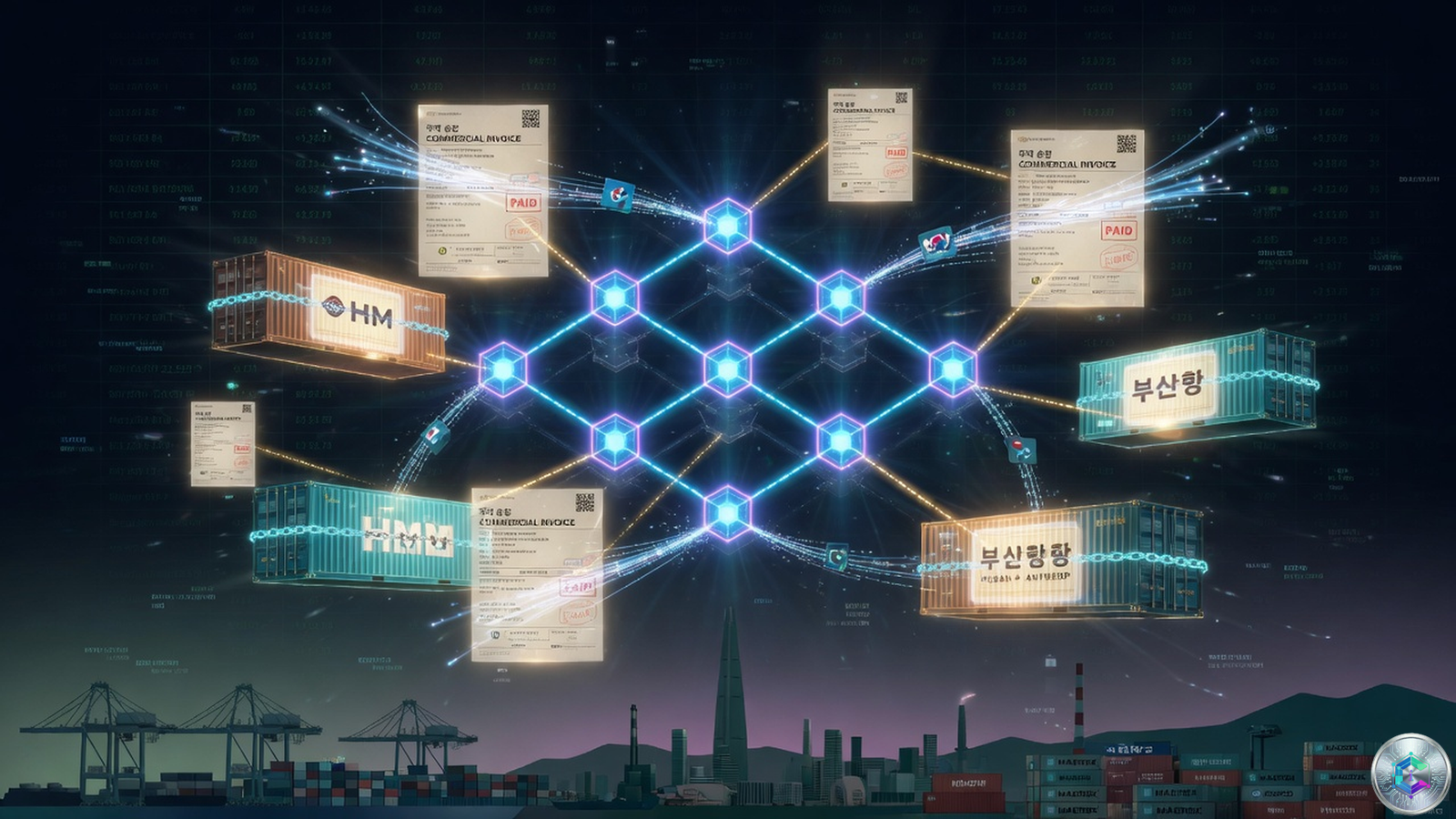
By placing these receivables on a shared blockchain ledger, the involved parties create a single, transferable record where compliance rules are embedded directly with the asset. This architecture reduces the fragmentation of sources of truth, shortens settlement cycles, and gives banks and financing partners a unified view.
POSCO International: a systemic player in Korean trade
POSCO International generated $22.2 billion in revenue over the previous fiscal year, with activities spanning steel, energy, and battery materials. By committing transaction volumes of that magnitude to a blockchain pilot, the group signals that tokenization is moving beyond experimentation into mission-critical business processes.
A POSCO International spokesperson called the milestone « significant »:
« This proof of concept is significant because it validated the applicability of AI and blockchain technology on the basis of real business data and processes. »
POSCO International spokesperson
The stated objective is to transition to live production once the pilot is validated later this year. Such a move would position POSCO International among the first major global traders to leverage blockchain infrastructure for international trade finance.
The tokenization market: $35 billion today, $5.5 trillion by 2030?
The global asset tokenization market has grown rapidly in recent years, now estimated at $35 billion. Projections are even more dramatic: Citi forecasts the market could reach $5,500 billion by 2030, a structural transformation of traditional finance.
| Indicator | Value | Horizon |
|---|---|---|
| POSCO International revenue | $22.2 billion | Previous fiscal year |
| Current tokenization market size | $35 billion | 2025 |
| Citi forecast for tokenization market | $5,500 billion | 2030 |
| Underlying blockchain | Injective (Layer 1) | 2025 |
The table above summarizes the key figures framing the pilot and its market context.
LG CNS: a tech partner experienced in blockchain infrastructure
LG CNS, the technology arm of LG Group, is no stranger to this terrain. The firm previously participated in South Korea’s central bank digital currency (CBDC) pilot and operates tokenization platforms for KOSCOM, the country’s stock-market infrastructure provider, as well as for Mirae Asset Securities. That diversified experience reinforces the technical credibility of the project, especially on compliance, digital identity, and integration with existing banking systems.
The choice of Injective, a Layer 1 blockchain, also reflects an intent to rely on infrastructure with performance characteristics suited to international commercial transactions, rather than depending on a Layer 2 or a closed solution.
A wave of blockchain adoption across Korean corporates
The POSCO International pilot fits into a broader trend. Carmaker Hyundai already uses stablecoins for internal treasury transfers between its U.S. and Mexican operations. Meanwhile, stablecoin issuer Circle has partnered with Kakao Group and Toss Bank to explore stablecoin payment infrastructure in the domestic market.
These initiatives trace a trajectory in which major Korean companies no longer merely experiment with blockchain; they integrate it into operational workflows. Trade finance, long overlooked by financial innovation, has become a prime application area given the meaningful efficiency gains it promises.
Trade receivables as the next frontier of institutional DeFi
Industry attention has largely concentrated on the tokenization of funds and equities in recent months. Asset managers such as BlackRock, Franklin Templeton, Apollo, Fidelity, Janus Henderson, and Mubadala Capital have all launched blockchain-based funds, betting that decentralized infrastructure can streamline issuance, settlement, and collateral management.
The POSCO International / LG CNS pilot extends that momentum into international trade finance, where receivables constitute real intercompany obligations. By moving working capital onto blockchain rails, firms can optimize their cash conversion cycle while giving banks and financing partners a shared view of the asset, a key lever for lowering the cost of credit.
Conclusion: a precedent for trade finance tokenization
By combining the commercial expertise of an industrial leader, the technological capabilities of LG CNS, and the blockchain infrastructure of Injective, this pilot could serve as a blueprint for further tokenization applications in international trade. If production rollout is confirmed, POSCO International would become one of the first major global traders operating receivables financing on-chain.
Two scenarios emerge. In an optimistic case, the pilot validates the operational thesis and triggers chain-wide adoption by other international trading players. In a cautious case, regulatory hurdles, particularly around the legal recognition of tokenized cross-border receivables, slow deployment. In either case, Injective’s positioning as a Layer 1 infrastructure adapted to these use cases will be reinforced.
Sources
This article is for informational and educational purposes only. It does not constitute investment advice. Do your own research (DYOR) before making any decision.

