


Confidential information made public on November 19 shows the US Commerce Department approved, as of May 11, the sale of more than 800,000 advanced AI chips to Chinese companies, several of them on the Pentagon’s list of Chinese military companies. Approval and delivery must not be conflated: the available data cannot precisely measure how many chips actually reached China.
🔑 Key takeaways
- Commerce approved more than 800,000 advanced AI chips for Chinese buyers, out of more than 3.4 million requested.
- Several beneficiaries appear on the Pentagon’s Chinese military companies list, including Alibaba, Tencent, Baidu and BYD.
- Sources disagree on delivered volumes: The Register and Reuters point to small quantities, BroadVision to a higher figure.
- Donald Trump announced a conditional opening for H200 sales, with a 25% government take.
Large approvals against a much bigger demand pool
As of May 11, the Commerce Department had cleared the sale of more than 800,000 chips for AI workloads to Chinese companies for the current year. It had received requests covering more than 3.4 million chips, an approval rate of roughly 23.5% of the volume sought. The approvals included several firms listed as Chinese military companies by the Pentagon.
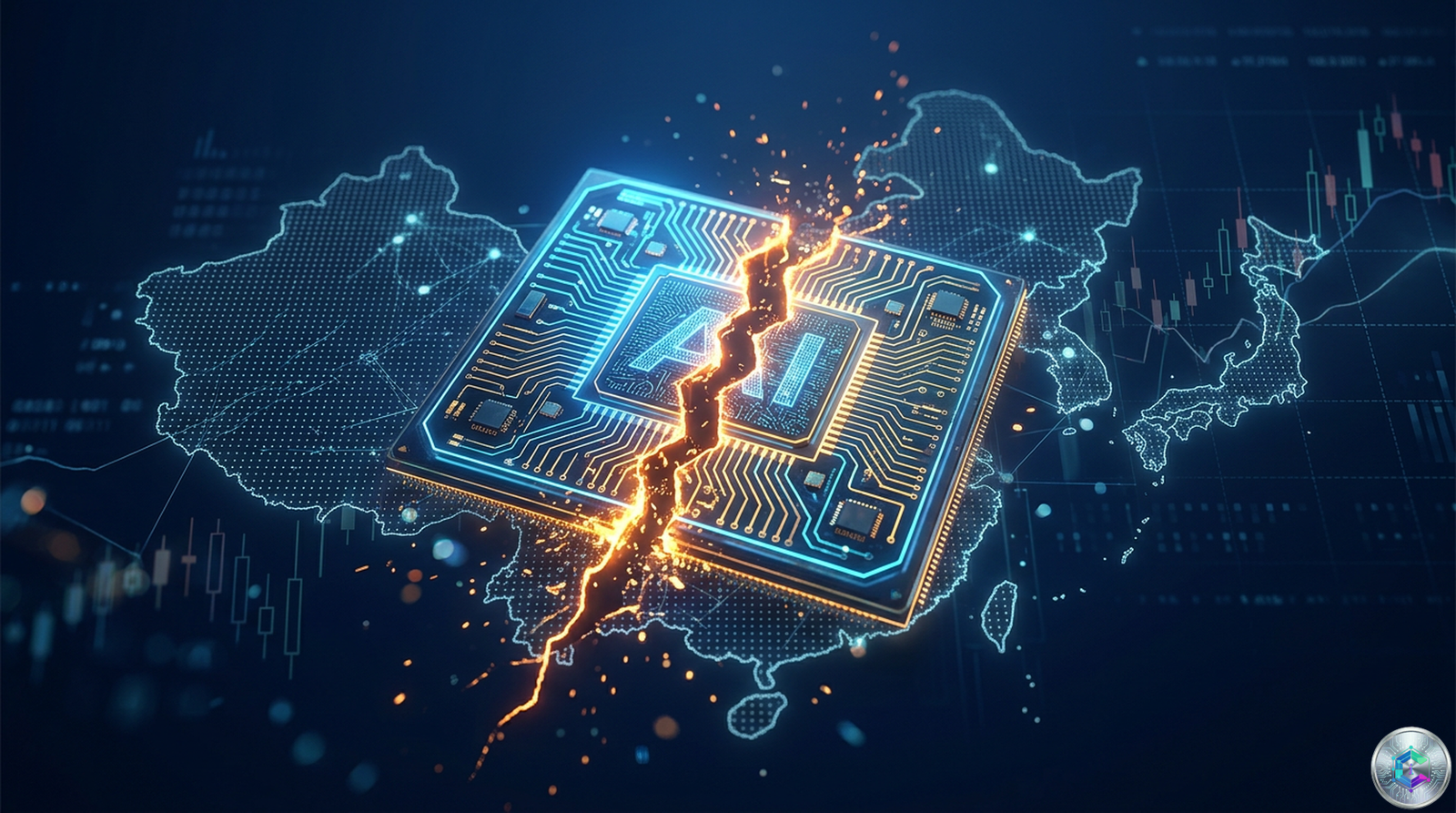
According to The New York Times, the approvals covered Nvidia H200 chips and AMD’s equivalent, the MI325X. The table below lists the named volumes mentioned in the documents.
| Company | Chips approved |
|---|---|
| Alibaba | 75,000 |
| Tencent and subsidiaries | 150,000 |
| Baidu | 43,000 |
| BYD | 4,000 |
The available passage does not specify which approved companies were on the Pentagon list. Alibaba was described as having ties to a laboratory linked to the army, based on a separate New York Times article.
The New Century Lettall Data Service case
In April, Nvidia sought approval to sell more than 40,000 H200 chips to New Century Lettall Data Service, a company in a network of firms linked to Megaspeed and Alice Huang. US intelligence agencies had concluded that Alice Huang was a « Chinese asset », and press reports describe a relationship with a former Nvidia executive.
The company’s ownership history partly traces back to an investment fund controlled by Alice Huang’s sister. Kang Wei, often presented by Huang as her husband, was also its general manager. The sources do not say whether the request for more than 40,000 H200 was ultimately approved.
Approval is not delivery
The gap between approval and effective delivery is critical, and sources diverge. A summary from The Register, relayed by Crayon, says the approvals also covered AMD but that few chips had actually reached China. Reuters likewise points to small quantities actually delivered.
BroadVision, in an unquantified overview, argues the opposite: volumes reaching end users were higher than previously acknowledged. In its reading, licensing exceptions and gaps in export controls enabled these transactions, and hardware stock already existed in Chinese infrastructure. It provides no common dataset that would settle the discrepancy.
BroadVision also says Chinese cloud providers leaned more on in-house hardware development and infrastructure optimisation. That would have reduced their sensitivity to future US export changes, since some available components let them keep operating without immediately depending on newer Western silicon.
Trump announces a conditional opening for H200 chips
According to CBS, Donald Trump said on Monday he would allow Nvidia to sell its H200 chips to « approved customers » in China. The US government is to take 25% of sales of chips destined for China. The deal excludes the more advanced Blackwell system and the Rubin system whose release had been announced. Details are to be finalised by the Commerce Department.
“Under conditions that maintain strong national security”
Donald Trump, President of the United States, as quoted by CBS
Trump said he had informed Xi Jinping, who reportedly responded “positively”, and that the same approach would apply to other US-based chipmakers, including AMD and Intel. A Nvidia spokesperson said the decision “strikes a thoughtful balance that is good for America”. At a press conference in Beijing, a Chinese foreign ministry representative described bilateral cooperation between the two largest economies as “essential and mutually beneficial”.
Nvidia’s market capitalisation stood at about $4.5 trillion, making it the most valuable publicly traded company in the United States. The sources provided report no quantified share-price move tied to these approvals. Earlier, the administration had planned in August to grant export licences in exchange for a 15% cut of revenues from China sales, and announced a 10% stake in Intel in return for federal subsidies.
Universities and rented compute: a wider market
Reuters separately examined purchases of hardware tied to the Chinese military. Northwestern Polytechnical University, whose close ties to the People’s Liberation Army have been documented, bought two H200 chips in October, although it sits on a US control list. According to a procurement notice published on October 21, the amount was 874,700 yuan, or about $123,000. The purchase served the school of management and was made from Shaanxi Bosuan Network Technology, not directly from Nvidia.
Based in Xi’an, the university conducts research on military aircraft, missiles and satellites. It belongs to the « Seven Sons of National Defence » group of universities under US sanctions. Placed on the Entity List in 2001 over alleged involvement in missile proliferation and military research, it faced tighter restrictions in 2019, with licence applications for controlled technologies generally refused. Because H200 chips require a licence, such a purchase would normally have been denied.
The university’s cybersecurity school awarded two seven-month contracts in January, each covering access to servers with eight H200 chips, valued at 441,700 yuan and 441,000 yuan, for fine-tuning AI models and reinforcement learning training. It also rented servers with eight A100 and eight A800 chips, models banned from export to all Chinese entities. Another university institute bought services requiring at least 24 A100 chips in April, for 375,000 yuan, used for structural and fluid simulations. The purchase records say little about the chips’ origin or where the servers are hosted. Chinese procurement law nonetheless requires agencies to verify that suppliers can fulfil orders.
Other records point to a broader market. Shenzhen University bought three H100 chips for 769,800 yuan in September. Wuhan University of Technology acquired a server with one H100 in June for 355,000 yuan, then four A100 for 344,000 yuan. Beihang, closely linked to China’s defence sectors, bought four A800 chips for 489,000 yuan in April. July and September tenders for the University of Chinese Academy of Sciences designated providers of compute services based on H800 and A800 chips, with one H800 access priced at 10 yuan per chip-hour.
Reuters reviewed 26 purchase and rental records and found that several institutions with defence or military research links bought restricted chips, or rented services built on them, from domestic suppliers. The universities did not respond to requests for comment, and neither did Northwestern Polytechnical University, Nvidia or the Bureau of Industry and Security at the Commerce Department. Reuters could not reach Shaanxi Bosuan Network Technology. Earlier reporting found that servers from Super Micro Computer, Dell and Gigabyte containing restricted chips reached China through resellers, and that an underground market operated with supply from third countries.
The case sits within heightened political scrutiny. Jensen Huang, Nvidia’s chief executive, faces congressional examination over his lobbying and reports of alleged contacts with Chinese intelligence. Huang argues that US rules have had the opposite effect of their intent, pushing Beijing to build its own AI chip industry. Three Republican committee chairs are due to receive briefings on November 18, and lawmakers from both parties are calling for stronger tracking of exported chips.
Conclusion: high approvals, uncertain deliveries
As of May 11, approvals far exceeded confirmed deliveries, and the volume that actually reached China remains unclear. The documents also show that military-linked actors were able to access restricted chips or compute services, either through direct approvals or indirect channels. A legal approval alone does not establish end use.
The central scenario is a conditional opening, with a 25% government take and exclusions on the newest models. The main point to watch is traceability of end use. Tighter controls or the publication of delivery data could significantly change how these volumes are read.
Sources
- The Register, summary relayed by Crayon (date not specified)
- BroadVision, overview of chip export controls (date not specified)
- The New York Times, November 19
- Reuters, investigation into Nvidia chip purchases by Chinese universities (date not specified)
- CBS News, Donald Trump’s announcement on H200 sales (Monday, date not specified)
Cet article est publié à titre informatif et éducatif. Il ne constitue en aucun cas un conseil en investissement. Faites vos propres recherches (DYOR) avant toute décision.

