


The SEC’s Division of Examinations has published its priorities for fiscal 2027. For the first time, “super intelligence” appears among the areas requiring heightened attention, and tokenization is treated as a risk tied to evolving market infrastructure. Crypto no longer has a standalone section. The shift says a lot about how U.S. supervisors intend to oversee new technologies.
🔑 Key takeaways
- The SEC’s 2027 priorities, published in October 2026, include super intelligence and other advanced technologies among examination areas for the first time.
- Tokenization appears in a separate category covering evolving market infrastructure, alongside reforms to Treasury clearing.
- The document contains no standalone crypto section, following an omission already seen in the 2026 priorities.
- The available sources document no market reaction directly attributable to the announcement.
Oversight widens its focus to artificial intelligence
The document contains eight points. Its main change is a category titled “emerging technologies”, which covers “super intelligence and other advanced technologies that may affect market operations, compliance, fraud prevention, and investor protection”. In practical terms, AI is no longer viewed only as a tool that investment advisers use in their business. It is now considered a technology that could alter how markets function, how compliance systems operate, how fraud is detected and how investors are protected.
Concretely, the division plans closer scrutiny of how AI is used in compliance programs and fraud detection systems at registered entities. That scope covers investment advisers, investment companies, broker-dealers, clearing agencies and transfer agents, a population of 34,000 entities or more. The document does not cite any production, transaction, valuation or loss data linked to AI. It also does not present AI as a confirmed threat. It adds AI to the emerging risks that examination teams should monitor.
An executive order reshapes the vocabulary
The shift from “artificial intelligence” to “super intelligence” sits within an executive framework. According to Cryptopolitan, Executive Order 14434, titled “Inaugurating the Era of Super Intelligence”, was signed on September 29, 2026 and published in the Federal Register on October 2, 2026. It would direct federal agencies to use “Super Intelligence” and “SI” instead of “Artificial Intelligence” and “AI” on their websites, in reports and in non-statutory guidance documents.
The order opens a 60-day window, running to the end of November 2026, for the White House to prepare federal legislation that would redefine the technology in law. Such a legal definition could eventually change how statutes referring to artificial intelligence apply. According to the same source, the National Institute of Standards and Technology has already begun using the new terminology.
The SEC anticipated the change. A page titled “Super Intelligence at the SEC”, updated on October 6, 2026, describes a Super Intelligent Task Force created in August 2025. Valerie Szczepanik is presented as Chief SI Officer, responsible for innovation, adoption and governance of super intelligence across the agency’s divisions.
| Date | Development | Status in sources |
|---|---|---|
| August 2025 | Creation of the Super Intelligent Task Force | Described on SEC page |
| September 29, 2026 | Signing of Executive Order 14434 | Reported by Cryptopolitan |
| October 2, 2026 | Federal Register publication | Reported by Cryptopolitan |
| October 6, 2026 | Update to the SEC super intelligence page | Agency page |
| Late November 2026 | End of the 60-day window for federal legislation | Deadline set by the order, per Cryptopolitan |
Tokenization moves from policy debate to operational oversight
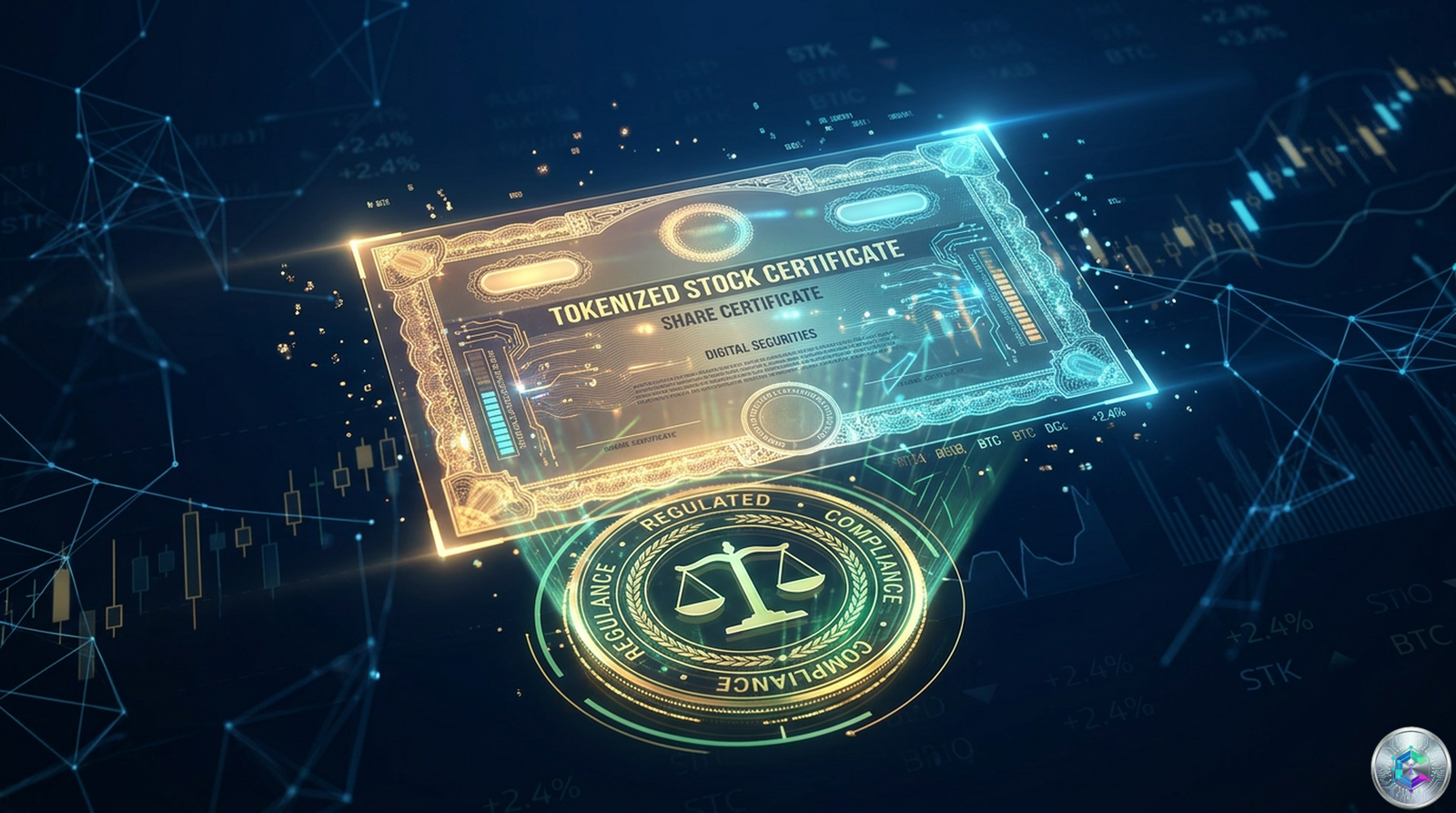
Tokenization sits in a category separate from emerging technologies. The Division of Examinations cites “risks associated with evolving market infrastructure, including Treasury clearing reforms, tokenization, and related developments”. The division therefore intends to examine risks linked to market infrastructure changes, reforms to U.S. Treasury clearing, tokenization and related developments.
For broker-dealers, investment advisers and transfer agents building tokenized products, the implication is direct: their compliance programs and internal controls may be examined. Decrypt notes that this reference marks a shift in tokenization from a mainly policy and regulatory topic to an operational concern within SEC oversight. The link is drawn to a broader easing of the regulatory approach to digital assets under SEC Chair Paul Atkins.
“Our approach enables us to adapt to changing market conditions, identify developing risk patterns, respond to emerging threats, and anticipate areas where investors and the markets may be vulnerable.”
Keith Cassidy, Director of the Division of Examinations, SEC
Reuters reports that U.S. authorities presented, in the month before the announcement, a five-year exemption allowing companies to offer blockchain-based or tokenized shares. This measure is distinct from the innovation exemption mentioned by Cryptopolitan, which it links to the tokenization taxonomy published in January 2026 and to a proposal by Chair Atkins to facilitate tokenized equity trading under the National Market System. On October 1, 2026, Atkins also presented proposed custody rules for crypto assets, which he described as “another element of a comprehensive crypto asset regulatory approach”. The sources do not present this initiative as the cause of the emphasis on tokenization.
The other priorities for fiscal 2027
The document covers more than AI and tokenization. It also lists fiduciary duties and conflicts of interest for investment advisers, retail investor protection against complex or illiquid products, private funds and private credit, the financial responsibility of broker-dealers and custodians, anti-money laundering compliance, and cybersecurity. The division stresses that the list is not exhaustive: examiners retain the power to review any other matter within federal securities law.
Reuters highlights that the Trump administration’s push to open private assets to retirement savers and retail investors is presented as a context of heightened risk. Critics argue these investors may not obtain the high returns expected, may not understand the fees charged, may struggle to value certain assets and may be unable to convert them quickly into cash.
One detail remains unclear: the exact publication date. Reuters places the announcement on Friday, October 23, 2026, at 9 a.m. Washington time, and Cryptopolitan gives the same date. Decrypt only says the document was published on a “Thursday”, without a matching date. These references cannot be reconciled with certainty based on the sources provided.
Conclusion: a framing signal rather than a break
The 2027 priorities do not create new obligations on their own. They indicate where examination teams will focus. The inclusion of super intelligence and tokenization shows that traditional markets and settlement infrastructure are now being reviewed through a technological lens. At the same time, the absence of a standalone crypto section confirms a reduction in the explicit visibility of digital assets, after the omission already seen in 2026.
Three scenarios stand out. In the first, forthcoming federal legislation clarifies the AI definition and tokenization becomes part of routine supervision. In the second, heavier scrutiny of compliance programs raises the operational burden on broker-dealers and transfer agents without changing substantive rules. In the third, the 60-day window closes without a finished text and the terminology remains more a communication matter than a legal one. For now, the sources do not settle the question, and no market reaction directly attributable to the announcement is documented.
Sources
- Decrypt, SEC Flags AI ‘Super Intelligence’ and Tokenization
- Sun Herald, Reuters syndicated report
- KuCoin News, SEC priorities flash
- CryptoPanic, news aggregator
- Cryptopolitan, SEC super intelligence and tokenization 2027
- Multikhabar, syndicated report
Cet article est publié à titre informatif et éducatif. Il ne constitue en aucun cas un conseil en investissement. Faites vos propres recherches (DYOR) avant toute décision.

