


The Securities and Exchange Commission (SEC) and the Commodity Futures Trading Commission (CFTC) jointly released a 68-page interpretive note on March 17, 2026, establishing a five-category taxonomy for crypto assets. Numbered Release Nos. 33-11412 and 34-105020, the document formally clarifies for the first time which assets fall under federal securities legislation.
🔑 Key takeaways
- Joint SEC/CFTC note dated March 17, 2026 classifying crypto into 5 categories
- Bitcoin, Ethereum, Solana, XRP, Dogecoin, Cardano and Polkadot explicitly designated as non-securities
- Mining, staking, airdrops and wrapped swaps excluded from the securities framework
- CFTC introduces a non-intervention position for passive software providers (PSP)
- CLARITY Act still stalled in the Senate; regulators act without waiting for Congress
Political context: a reversal after a decade of regulation by enforcement
This joint note caps the pro-crypto pivot initiated by the Trump administration. The SEC, long led by Gary Gensler and his so-called « regulation by enforcement » approach, had classified dozens of cryptocurrencies as securities, forcing many platforms into costly delistings. The SEC vs Ripple lawsuit over XRP embodied this repressive period.
With Paul Atkins appointed to head the SEC and Michael S. Selig at the CFTC, both agencies are shifting their doctrine toward clear rulemaking rather than case-by-case prosecution. The CLARITY Act, which would have codified this framework, remains stalled in the Senate — hence the joint initiative.
« After more than a decade of uncertainty, this interpretation will allow market participants to clearly understand how the Commission treats crypto assets under federal securities laws. »
Paul Atkins, SEC Chairman
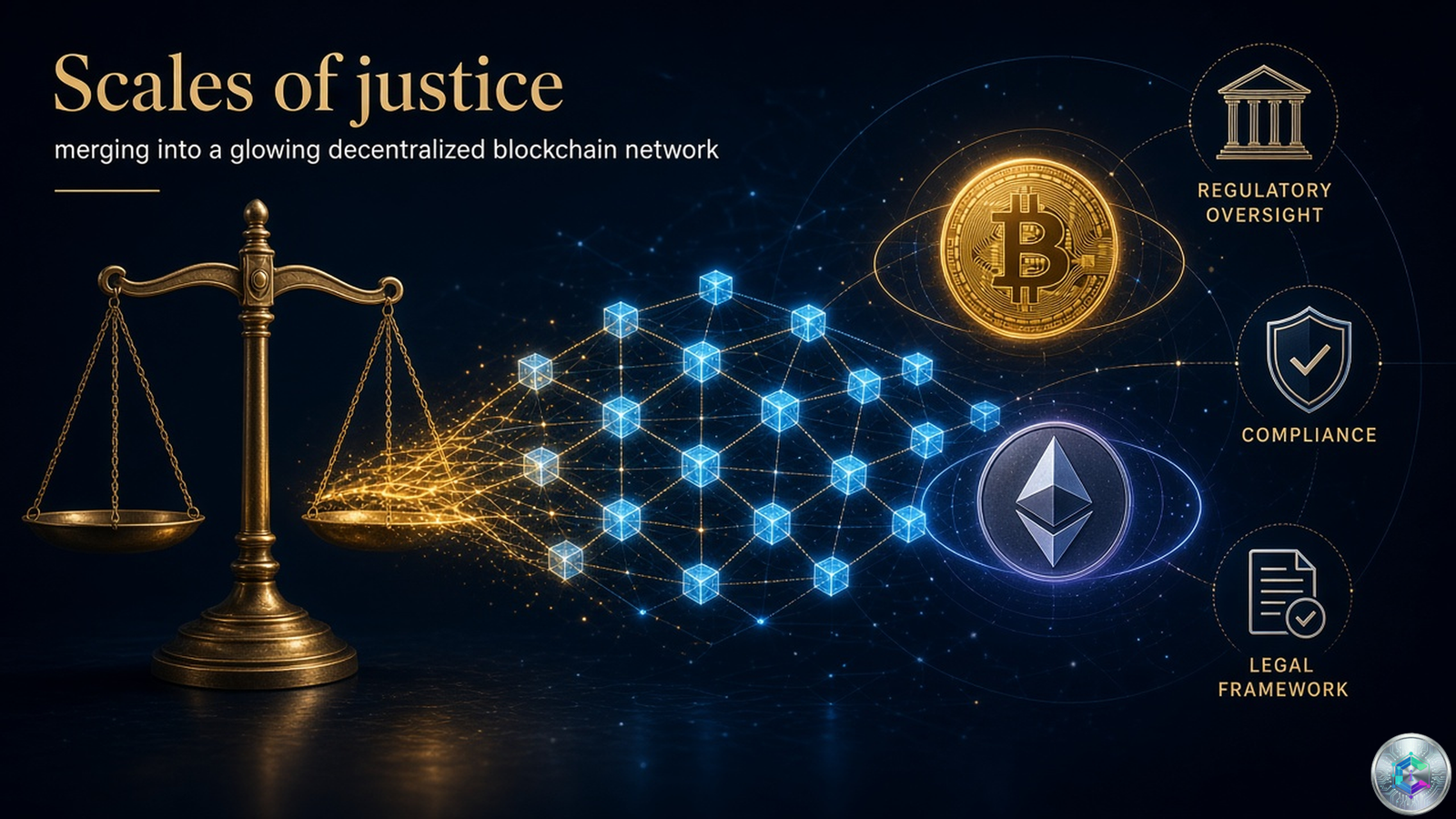
The SEC’s five asset categories
The note establishes a precise taxonomy. Four categories are not treated as securities; the fifth is by definition.
| Category | Description | Status |
|---|---|---|
| Digital commodities | Assets whose value stems from the programmatic operation of a network | Non-security |
| Digital collectibles | Unique assets valued for their singularity (NFTs, memecoins) | Non-security* |
| Digital tools | Governance tokens, access tokens, ENS domain names | Non-security* |
| Stablecoins | Assets pegged to a stable reference value | Non-security* |
| Digital securities | Tokenized versions of stocks, bonds, traditional instruments | Security |
* Unless sold under an investment contract.
The SEC explicitly names Bitcoin, Ethereum, Solana, XRP, Dogecoin, Cardano and Polkadot as digital commodities. According to the document, a purchaser cannot reasonably expect to realize profits solely through the managerial efforts of others — the central criterion of the Howey test (1946 precedent used to determine whether an asset qualifies as a security).
Stablecoins: a specific status
Stablecoins are excluded from security status provided certain conditions are met: verifiable backing, reserve transparency and a reliable redemption mechanism. Algorithmic or insufficiently backed stablecoins remain exposed to security classification.
Excluded activities and investment contract triggers
The note lists the activities that do not constitute securities transactions:
- Mining solo or in pool on proof-of-work networks
- Staking solo, custodial or liquid on proof-of-stake networks
- Crypto-for-wrapped token swaps at a 1:1 ratio
- Airdrops without required consideration
- Genuine gifts and functional use of a crypto asset
However, a non-security asset can shift into security status if it becomes subject to an investment contract. Promises must originate from the issuer, be made before the sale, and be specific: a detailed roadmap with milestones and funding is more likely to trigger security status than vague statements. The document specifies that an investment contract can end when the issuer fulfills its promises or publicly abandons the project.
The CFTC shields developers through the PSP position
Alongside the SEC note, the CFTC formalized its non-intervention position for passive software providers (PSP). The Market Participants Division (MPD) will not recommend enforcement against developers enabling users to access regulated markets via registered intermediaries: FCMs (futures commission merchants), introducing brokers and designated contract markets.
This decision follows a request from the Phantom wallet, which wanted to integrate derivatives trading features. Hayden Adams, founder of Uniswap, confirmed that the exemption will apply to permissioned pools of Uniswap v4, paving the way for AMMs (automated market makers) compliant with US regulation.
« It took eight years, but the anarchic and decentralized DeFi experiment finally becomes finance. »
Camila Russo, founder of The Defiant
Conclusion: a prospective framework, Howey test still key
The joint interpretation marks a first step toward a durable framework. For users, the main benefit is a lower delisting risk; for issuers, clarity on which communications to avoid. The Howey test remains binding precedent, and this new analytical grid applies prospectively without affecting ongoing litigation such as the Ripple case.
Market participants must now classify their assets across the five categories, audit their communications (overly precise roadmaps may trigger security status), publicly announce milestone completion to close any investment contract, and structure airdrops carefully without requiring consideration. The CFTC retains oversight of trading venues and fraud enforcement, while investor protection partly shifts to the CFTC for digital commodities.
Sources
- Cryptoast
- BFM TV Crypto
- Snell & Wilmer
- CFTC Press Release
- Congressional Research Service
- Chapman & Cutler
This article is published for informational and educational purposes only. It does not constitute investment advice. Do your own research (DYOR) before making any decision.

