


On September 29, 2026, Robinhood announced the upcoming launch of perpetual futures contracts on several major cryptocurrencies alongside the extension of stock trading to weekends on a 24-hour basis. This dual strategic push marks a turning point for the online brokerage platform and for the U.S. crypto derivatives ecosystem.
🔑 Key Takeaways
- Perps available on BTC, ETH, SOL, XRP, DOGE, ADA, LINK and HYPE, with leverage up to 10x on BTC/ETH
- Fees of 0.01% per transaction through end of 2026, infrastructure backed by Bitstamp
- Weekend stock trading extended via Bruce ATS, pending regulatory approval
- More than 150,000 active agentic accounts and 30 million daily AI tool calls
- Partnership with Cboe for prediction markets on financial indicators
Perpetual futures land in the U.S. market
In the coming months, Robinhood will allow eligible U.S. users to trade perpetual contracts on a curated set of eight cryptocurrencies. The lineup includes bitcoin (BTC), ether (ETH), Solana (SOL), XRP, Dogecoin (DOGE), ADA, LINK and HYPE, with the ability to take long or short positions. Leverage will reach up to 10x on BTC and ETH, and up to 3x on the remaining assets in the lineup.
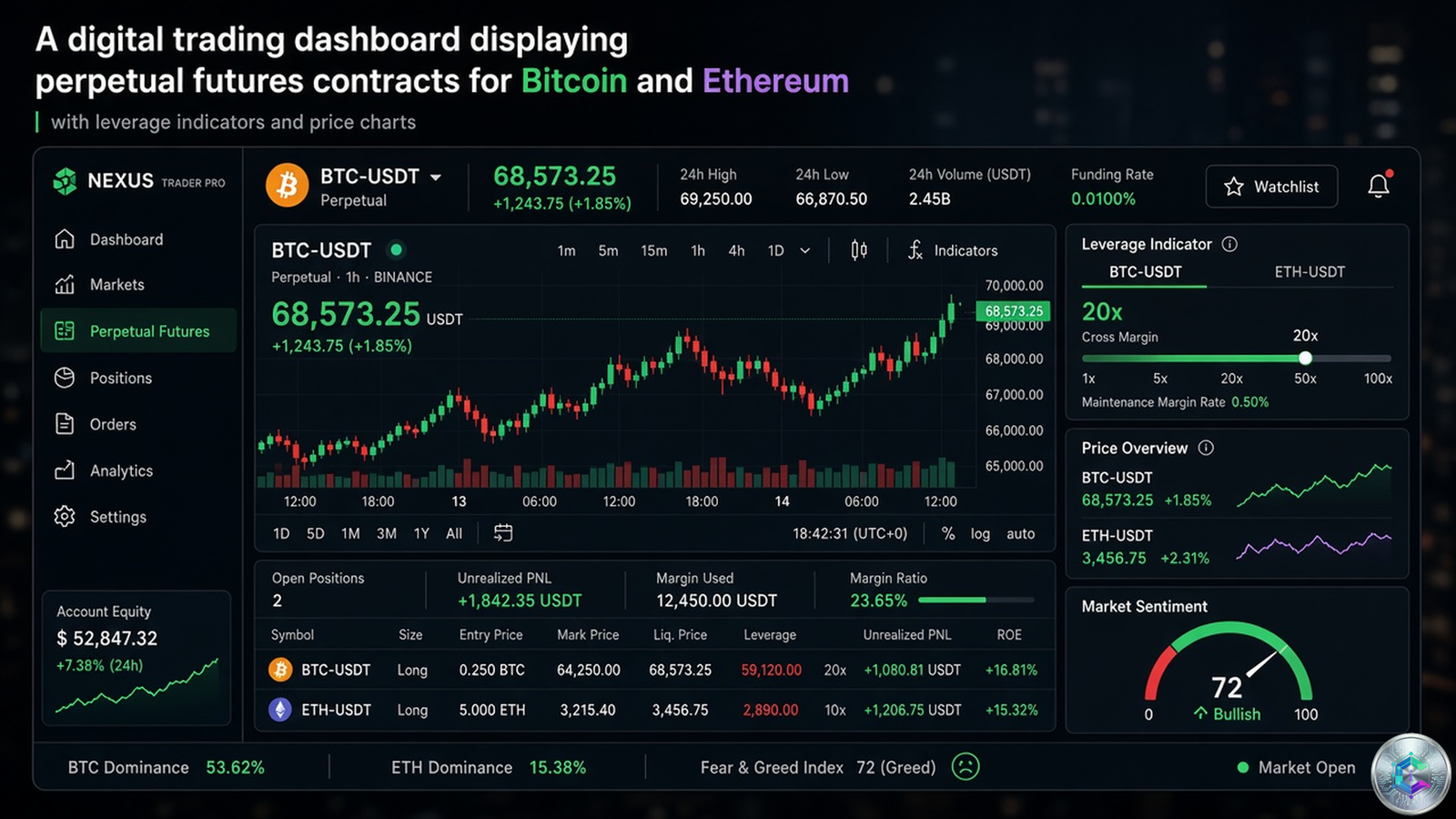
Fees will be set at 0.01% per transaction through year-end, an aggressive grid that positions Robinhood against sector leaders like Bybit, OKX, and Binance in the retail derivatives segment. P&L will be settled every 15 minutes, an unusual frequency that reduces the impact of periodic funding on open positions.
“Robinhood is bringing America its first true perps. No expiry, with P&L settled every 15 minutes”
Vlad Tenev, CEO of Robinhood
Users will also have access to stop-loss and take-profit orders, real-time liquidation price tracking, and alerts on at-risk positions. The infrastructure will be powered by Bitstamp, the European exchange acquired by Robinhood in 2024, providing a layer of institutional liquidity and regulatory compliance to the derivatives offering.
An offering calibrated by asset
| Asset | Maximum leverage | Fee per transaction | Infrastructure |
|---|---|---|---|
| Bitcoin (BTC) | 10x | 0.01% | Bitstamp |
| Ether (ETH) | 10x | 0.01% | Bitstamp |
| Solana (SOL) | 3x | 0.01% | Bitstamp |
| XRP | 3x | 0.01% | Bitstamp |
| Dogecoin (DOGE) | 3x | 0.01% | Bitstamp |
| ADA, LINK, HYPE | 3x | 0.01% | Bitstamp |
The gap between 10x leverage on BTC/ETH and 3x on altcoins reflects a differentiated risk policy typical of regulated brokers: the two most liquid assets in the market support higher leverage while imposing stricter margin calls. P&L settlement every 15 minutes constitutes a competitive edge versus rivals that usually run funding every 1 to 8 hours.
24/7 stock trading expands to weekends
Robinhood also announced the extension of its “24 Hour Market” feature to weekends. Previously available from Sunday 8:00 p.m. (ET) to Friday 8:00 p.m. (ET) since 2023, the platform will now enable continuous trading of U.S. equities and ETFs during Saturday and Sunday sessions, on a selected list of names. The setup will run on Bruce ATS, an institutional-grade alternative trading system, and remains subject to regulatory approval.
According to Robinhood, roughly 25% of daily volume on some business days already came from non-traditional hours ten months after the initial 24 Hour Market launch. This share economically justifies the weekend extension, even if critics note that liquidity could be thin outside standard hours, potentially working against traders’ execution prices.
“When the world reacts in real time to breaking news, waiting to adjust a position or rebalance a hedge until the clock strikes 9:30 on Monday morning may beget missed opportunities or additional risk, especially these days”
Paul Atkins, Chairman of the SEC
This move fits into a broader industry trend: Nasdaq and the London Stock Exchange are also pushing their own extended-hours projects. Robinhood’s arrival in the weekend slot could accelerate competitive pressure on traditional exchanges, whose liquidity windows keep shrinking against digital platforms.
The agentic ecosystem at the core of Robinhood’s strategy
Alongside perps, Robinhood unveiled its Robinhood Agents, an AI layer allowing users to create their own agents to build strategies, conduct research, or execute automated transactions. Since the rollout of agentic trading in May 2026, more than 150,000 users have opened dedicated accounts, and these agents now use Robinhood tools nearly 30 million times a day. The stated goal is to connect these agents directly to the new derivatives features over time.
“With safety and security at its core, we’re setting the standard for what agentic finance can be”
Abhishek Fatehpuria, VP Product Management at Robinhood
“Our focus this year is making Robinhood the best place for active traders by giving them the tools that are typically reserved for hedge funds, quants and a lot of big active trading firms,” the executive told Reuters. The combination of perps, 24/7 trading, and AI agents sketches a platform that explicitly targets active and semi-professional traders, traditionally served by premium brokers.
Prediction markets and social network
Robinhood also confirmed a partnership with Cboe to let traders bet on specific financial indicators, such as earnings beats or revenue targets hit by listed companies. The platform is also preparing a social network modeled on Reddit’s WallStreetBets community, following a beta phase rolled out earlier in the year. No further details were disclosed on projected revenues or volume targets for these new features.
David Wells, CEO of Ondo Perps, summed up the stakes on the crypto infrastructure side:
“Everybody’s looking at the U.S. because there are more opportunities now that were just never possible”
David Wells, CEO of Ondo Perps
Conclusion: an all-fronts offensive
With crypto perps, 24/7 equity trading, AI agents, and prediction markets, Robinhood is multiplying entry points to capture a new generation of active traders. The aggressive fee schedule and Bitstamp’s backing for derivatives signal a clear ambition to grab share in a segment historically dominated by offshore players like Bybit, OKX, and Binance. The regulatory variable remains decisive: approval for weekend equity trading and compliance of perps with U.S. requirements (position limits, anti-fraud surveillance, collateral segregation) will set the effective rollout pace.
In the short term, competition with CME, Coinbase, and Kraken is set to intensify in regulated crypto derivatives, while the SEC will need to clarify its framework for retail-facing crypto products. The coming months will show whether Robinhood’s bet — pairing aggressive derivatives, extended hours, and AI automation — can win market share among U.S. traders without triggering a sharp regulatory response.
Sources
This article is for informational and educational purposes only. It does not constitute investment advice. Do your own research (DYOR) before making any decision.

