


Circle switched on its Digital Asset-Backed Borrowing service on September 21, 2026, letting institutions with a Circle Mint account post native Bitcoin as collateral to draw USDC through decentralized lending protocol Morpho. The simultaneous rollout on Arc — Circle’s own layer 1 — and Ethereum cements the issuer’s strategy of monetizing its tokenized infrastructure without routing credit flows through a captive market.
🔑 Key takeaways
- Circle launches Digital Asset-Backed Borrowing on Arc and Ethereum, collateralized by cirBTC (1:1 wrapped BTC).
- Morpho is the first integrated lending protocol; Aave and other markets are planned.
- Liquidation loan-to-value (LLTV) is set at 86%, with utilization at 7.98% on launch day.
- Reserves sit with Circle International Bermuda Limited, custodied by Circle National Trust (OCC), verified via Chainlink Proof of Reserve.
- Liquidation risk is borne by the third-party protocol, not Circle, which positions itself as a neutral issuer.
How it works: from native BTC to USDC credit in three steps
The flow combines on-chain wrapping with a decentralized lending market. Eligible clients — exclusively institutions holding a Circle Mint account and based outside New York State — first deposit their native Bitcoin. Circle wraps it into cirBTC, then the token is posted as collateral on a third-party lending market accessible through a self-custodied wallet. Borrowed USDC lands directly on the borrower’s Circle Mint balance.
Central to the design: Circle is not the lender. The firm does not set interest rates, collateral requirements, liquidation thresholds, or available liquidity. These parameters sit entirely with the decentralized lending protocol. Morpho, the first integrated partner, alone defines the cirBTC/USDC market conditions.
« Liquidation risk is borne by the protocol, not the issuer — collateral value can collapse without the underlying BTC ever being sold. »
DeFi analyst, institutional treasury desk
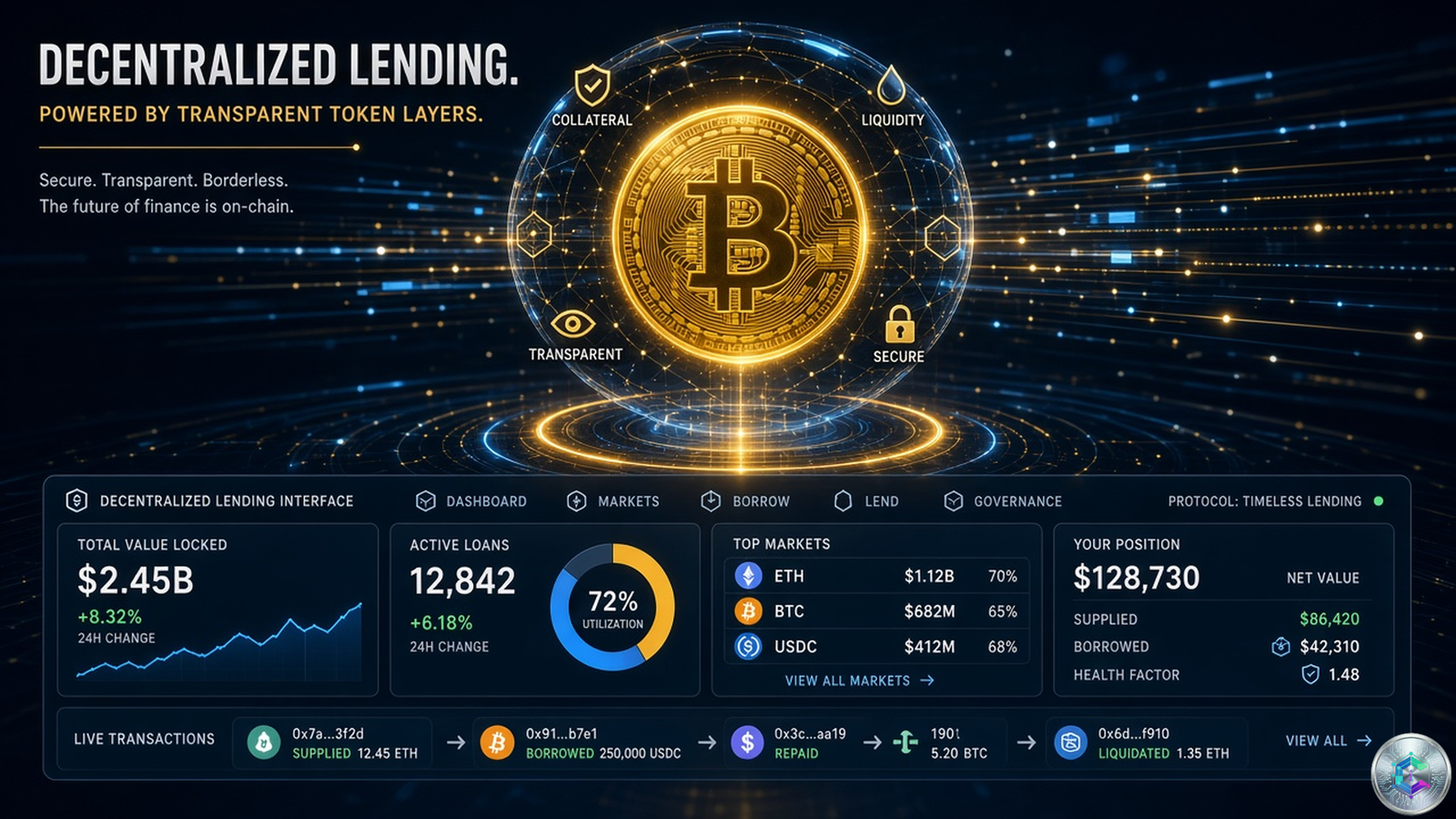
cirBTC: a 1:1 wrap backed by audited reserves
cirBTC — launched on Ethereum in June 2026 and extended to Arc — is backed by Bitcoin at a strict 1:1 ratio, with an equivalent redemption right into native BTC. Custody rests on a two-tier structure:
- Circle International Bermuda Limited: a Bermuda-regulated entity licensed by the Bermuda Monetary Authority (BMA).
- Circle National Trust: a national trust bank chartered by the OCC (Office of the Comptroller of the Currency).
Funds are isolated in segregated accounts for the exclusive benefit of cirBTC holders, never commingled with Circle’s corporate assets. On-chain transparency relies on Chainlink Proof of Reserve, a real-time feed that lets any risk desk reconcile token supply against BTC reserves without trusting the issuer’s self-reporting.
Reserve snapshot, September 20, 2026
| Metric | Value |
|---|---|
| cirBTC in circulation | 948.75 |
| BTC held in reserve | 951.26 |
| cirBTC on Arc | ~397 |
| cirBTC on Ethereum | ~552 |
Arc market snapshot: a quiet start
A snapshot of the USDC/cirBTC lending market on Arc, captured on September 21, 2026, shows a freshly launched product. The liquidation loan-to-value threshold (LLTV) is set at 86%, meaning a position is liquidated when debt reaches 86% of collateral value.
| Metric | Value (Sep 21, 2026) |
|---|---|
| LLTV (liquidation threshold) | 86% |
| Amount borrowed | $14.13M |
| Available liquidity | $162.85M |
| Total market size | $176.99M |
| Utilization rate | 7.98% |
With utilization under 8% and only $14.13M borrowed, institutional appetite remains muted at launch. At least one loan appears in the activity log. These figures do not apply to the Ethereum market, which has its own liquidity and parameters.
Circle’s neutral stance and the broader competitive landscape
By becoming neither an exchange operator nor a lending protocol, Circle assumes the role of a neutral issuer. The commercial success of cirBTC thus depends on the vitality of third-party markets — Morpho today, Aave tomorrow — rather than on captive credit routing. This architecture contrasts with vertical models where the issuer controls the entire stack.
Arc, the layer 1 blockchain developed by Circle, uses USDC as native gas and already hosts tokenized assets such as BlackRock’s BUIDL fund and Circle’s USYC. The network runs on a set of permissioned validators.
Rivals and parallel initiatives
- Lombard × Bitwise (March 2026): a wrapless Bitcoin borrowing system where BTC stays in its native form, with Morpho as lending infrastructure.
- Anchorage Digital × Kamino (February 2026): institutional borrowing against staked Solana held at Anchorage Digital Bank.
- BitGo (March 2026): expansion of its institutional lending business via a multi-asset wallet framework.
The tokenized BTC category stood at roughly $15 billion in August 2026, with supply concentrated in a few dominant products. Circle, for its part, manages more than $70 billion in USDC and EURC reserves and has processed trillions of dollars in USDC volume across multiple volatility cycles.
Conclusion: a cautious design, adoption still to be proven
Circle’s service illustrates a broader market trend: the progressive migration of credit risk management from traditional institutions (banks, brokers) toward transparent decentralized protocols, where every parameter — rates, LTV, liquidity — is readable on-chain. By outsourcing these variables to Morpho, Circle protects its issuer economics while offering institutional clients a Bermuda + OCC legal wrapper around the collateral.
The main unknown remains depth of utilization. A 7.98% utilization rate means $162.85M of liquidity sits idle — a positive capacity signal, but also an indicator of nascent demand. If the Aave integration and multi-chain expansion translate into higher borrowing volumes, cirBTC could consolidate its position among institutional BTC wrappers. Conversely, stagnation past launch day would expose the product to a structural adoption risk, independent of how solid its reserves are.
Sources
- CryptoSlate — Circle now lets institutions borrow USDC against Bitcoin
- Circle Blog — Rehypothecation vs segregated collateral
- TradersUnion — Circle institutional Bitcoin-backed USDC
- CoinMarketCap CMC AI — Morpho latest updates
- Coinbase Help — Lending introduction
- Biggo Finance — Institutional lending coverage
This article is for informational and educational purposes only. It does not constitute investment advice. Do your own research (DYOR) before making any decision.

