


Aave could enable borrowers to transfer stablecoin debt into a fixed-yield USDG position through a rollover on the X Layer network. The current yield on the replacement collateral, however, trails borrowing rates across several stablecoins, making the strategy dependent on leverage and external rewards to remain profitable.
🔑 Key Takeaways
- The annualized yield on the February PT stands at approximately 2.98%, below borrowing rates of USDT0 (4.12%), USDC (5.87%), and USDG (3.75%).
- At five times exposure, financing consumes more than the PT’s gross gain: returns of -0.56% for USDT0 and -3.11% for USDC.
- LlamaRisk recommends a new E-Mode 9 with a 91.48% loan-to-value ratio and a PT supply cap of 35 million units.
- Loop profitability relies on OKX’s Exchange Earn rewards, whose expiration could trigger position unwinding.
The Rollover Mechanism on X Layer
The proposal targets Pendle’s principal tokens, known as PT (Principal Tokens, instruments representing an asset’s nominal value at maturity), on the X Layer network. Holders of the token maturing on October 29 could migrate to a replacement expiring on February 25, 2027.
The mechanism proposed by TokenLogic would execute a flash loan (an atomic loan repaid within the same transaction) to temporarily repay the debt, replace the old PT collateral, re-borrow, and repay the flash loan. The integration would be developed separately by OKX.
In its October 8 assessment, risk service provider LlamaRisk reported that the February token’s on-chain yield sat below the borrowing rates of USDT0, USDC, and USDG. The GHO token was the exception as a cheaper option in the October 7 snapshot.
Yield Trails Borrowing Rates
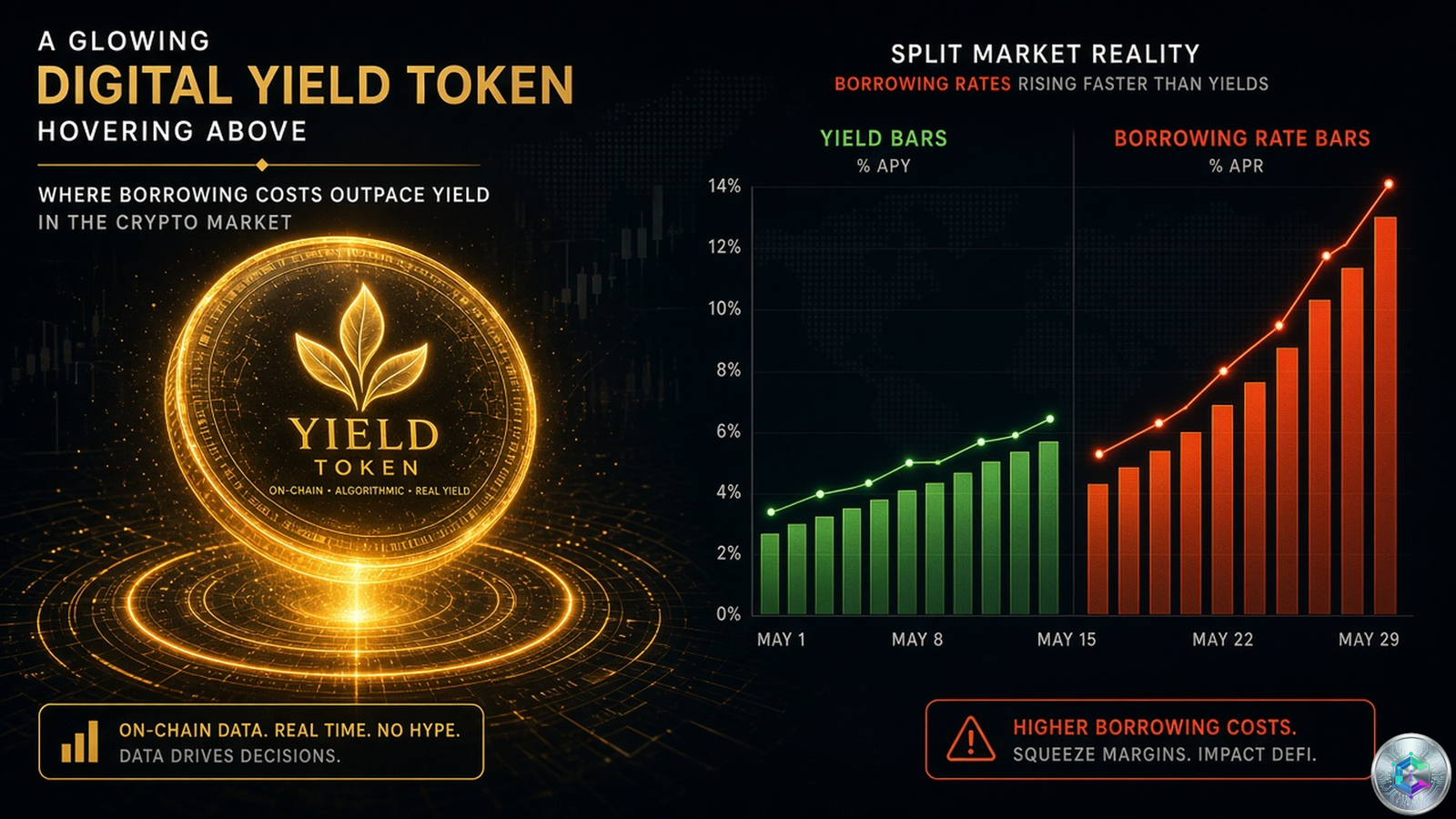
According to market data retrieved on October 10 at 21:11 UTC, variable borrowing rates on Aave’s X Layer market stood at 4.12% for USDT0, 5.87% for USDC, and 3.75% for USDG. Pendle’s market API reported an implied annualized yield of approximately 2.98% for the February PT, updated at 21:09 UTC.
The 2.98% annualized yield translates to roughly 1.11% gross appreciation over approximately 137.1 days to February 25. This annualized figure should not be confused with the cash yield available over the shorter period.
Measurable Deterioration Since August
Comparison with August data shows a significant deterioration in conditions. LlamaRisk’s August analysis recorded a 3.19% PT yield for the October maturity, against borrowing rates of 0.45% for GHO, 1.37% for USDT0, and 2.69% for USDG. The analysis then described a positive carry.
The October 7 snapshot for the February replacement showed a 2.79% PT yield against borrowing rates of 4.48% for USDT0, 4.10% for USDC, and 3.67% for USDG. GHO, at 0.93%, remained below the PT yield. Comparisons span different maturities, as current October PT holders retain their initial purchase yield.
| Parameter | PT Yield | USDT0 Borrow | USDC Borrow | USDG Borrow |
|---|---|---|---|---|
| August analysis (Oct PT) | 3.19% | 1.37% | – | 2.69% |
| Oct 7 snapshot (Feb PT) | 2.79% | 4.48% | 4.10% | 3.67% |
| Oct 10 data | 2.98% | 4.12% | 5.87% | 3.75% |
The Leverage Impact
An illustrative table shows the effect of leverage on returns, assuming displayed borrowing rates hold constant until maturity, with no rewards or transaction costs. At two times exposure, the equity return reaches +0.69% for USDT0, +0.05% for USDC, and +0.83% for USDG as a comparator.
At five times exposure, financing consumes more than the PT’s gross gain in every case, with returns of -0.56% for USDT0 and -3.11% for USDC. USDG as a comparator shows -0.02% at five times. Without borrowing, the same PT position generates approximately 1.11% before costs.
| Exposure | USDT0 | USDC | USDG |
|---|---|---|---|
| No borrowing | +1.11% | +1.11% | +1.11% |
| 2x | +0.69% | +0.05% | +0.83% |
| 5x | -0.56% | -3.11% | -0.02% |
Actual borrowing rates may fluctuate during the holding period, and effective purchase prices determine the real PT yield. LlamaRisk’s October 8 assessment listed taker fees of 0.05% for the AMM and order book on the February pool. Slippage, network fees, and potential flash loan costs further affect the transaction.
LlamaRisk Recommendation: E-Mode 9
LlamaRisk’s recommendation differs from the original plan. It calls for a new E-Mode 9 with a 91.48% loan-to-value limit, a 93.48% liquidation threshold, and a PT supply cap of 35 million units. The existing E-Mode 7 liquidation threshold cited in the assessment is 94.66%. A position transferred to the replacement configuration should meet these recommended parameters.
LlamaRisk reported 66.03 million October PT units supplied as collateral during its October 8 evaluation. Aave’s X Layer market display retrieved on October 10 showed 59.79 million October PT units supplied and $61.12 million in borrowing across the market. A September 9 borrower review found 55.1 million in USDT0 debt, representing 98.7% of the examined PT cohort’s debt, with a median health factor of 1.03 among top suppliers. This September snapshot illustrates how heavily the examined cohort depended on USDT0 and how little margin its top suppliers had before liquidation.
“The examined cohort was heavily dependent on USDT0, with a median health factor of only 1.03 among top suppliers, leaving minimal margin before liquidation.”
LlamaRisk, October 8 Assessment
The February pool reported approximately $1.42 million in declared liquidity. The executable size of a migration depends on available quotes and acceptable slippage. The proposed reduction of October PT loan-to-value to zero after maturity affects the borrowing margin available.
OKX Rewards: The Decisive External Variable
LlamaRisk attributes loop users’ profitability to external OKX Exchange Earn incentives. It also notes that ending these incentives would likely encourage users to unwind their positions.
The public OKX Wallet bonus announcement describes a separate program. It names USDG Loop or PT-USDG-29OCT2026 supplied to Aave via the designated Wallet campaign page, with a capped APY bonus of 2%. Transactions through Aave or other third-party sites are not eligible. The campaign ends on October 28 at 15:00 UTC+8 (07:00 UTC), with an announced reward pool of 490,000 USDT. Distribution depends on eligible participants’ deposit shares, and actual payout may fall short of the announced pool.
The OKX Wallet Loop FAQ also states that a PT position does not automatically renew at maturity. Promotional PT rewards cease under these Wallet rules, and subscribing to a new term depends on product availability. A rollover therefore guarantees neither rewards nor continuous borrowing access.
A distinction also exists between a cited financing comparison and an authorized borrowing path. The new borrowing category recommended by LlamaRisk, E-Mode 9, lists USDT0, GHO, and USDC as borrowable assets. USDG is absent from this proposed list, so its rate provides a cost comparison rather than proof of eligibility for the February configuration.
Conclusion: Profitability Independent of Transactional Convenience
Transactional convenience and investment profitability are separate questions. A rollover may preserve borrowing access while resetting collateral yield to the new purchase price. The choice at October maturity is therefore as much economic as operational. A borrower can preserve debt exposure through a supported migration only if the configuration and integration are available.
In the current scenario, where the February PT yield (2.98%) remains below USDT0 (4.12%) and USDC (5.87%) borrowing rates, extension only makes economic sense with controlled leverage or sufficient external rewards. If OKX incentives expire, loop positions lose their primary source of profitability. Careful case-by-case evaluation, factoring in the effective entry price, actual financing costs, and reward eligibility, remains essential.
Sources
- CryptoSlate
- Aave Blog – Stablecoin Infrastructure
- Global X ETFs – Aave: The Basics
- Talos – State of the Network
- Eco – Aave V4 GHO Yield Mechanics
- EarnPark – Aave Lending in 2026
This article is published for informational and educational purposes. It does not constitute investment advice in any way. Do your own research (DYOR) before making any decision.

