

Las Vegas-based Lowest Fee Bitcoin ATMs launched more than 400 cryptocurrency kiosks across the United States on October 2, 2026, charging a flat 5% commission on every transaction. The rollout immediately places the company among the largest US Bitcoin ATM operators, at a time when the sector is consolidating after several high-profile bankruptcies and a tightening state-level regulatory framework.
🔑 Key takeaways
- 400+ ATMs deployed on day one of operations
- Flat 5% fee versus 12% to 20% at most competitors
- Supports BTC, ETH, USDT and USDC under a non-custodial model
- Daily limits from $2,000 (tier 1) up to $50,000 (tier 2)
- Promo code LOWEST grants a 20% fee discount
A nationwide rollout from day one
Lowest Fee Bitcoin ATMs has chosen an aggressive go-to-market strategy: more than 400 machines installed simultaneously, covering key states including California, Texas, Virginia, Pennsylvania, Ohio and Tennessee. Kiosks are placed in convenience stores, gas stations and shopping centers to maximize foot traffic and accessibility.
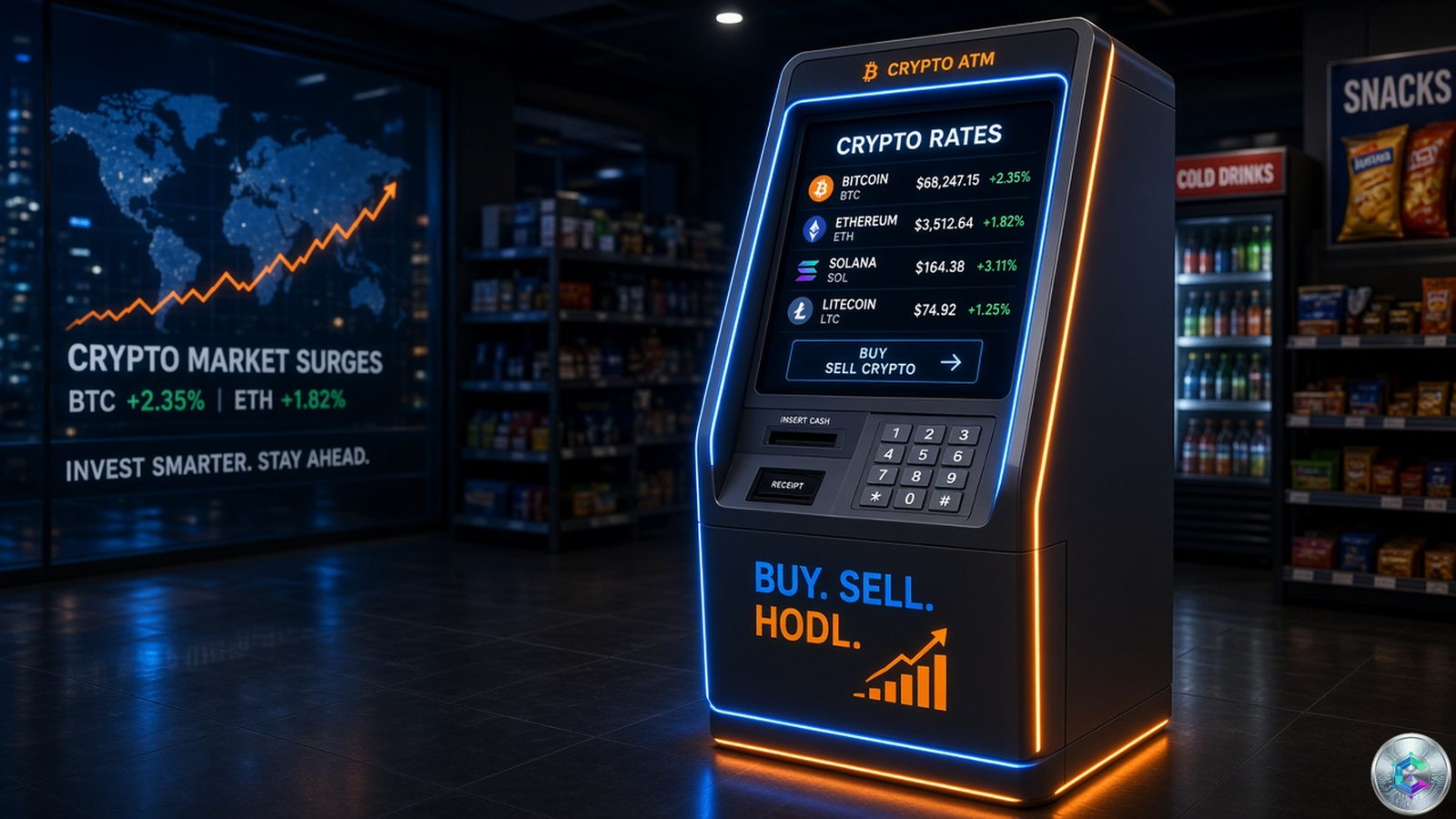
Quincy Mathis, the company’s director of operations, framed the launch in blunt terms: “Four hundred machines is not a pilot. It’s a network. We wanted to be one of the largest Bitcoin ATM operators in the country on opening day, because a low fee only matters if there’s a machine near you. This is phase one.”
Fees, supported assets and mechanics
The network supports purchases of four assets — Bitcoin (BTC), Ethereum (ETH), Tether (USDT) and USD Coin (USDC) — for cash, with a flat 5% commission. Fees and the exchange rate are displayed on-screen before transaction confirmation, a transparency feature that contrasts with many competitors that rely on variable or opaque pricing.
The company describes itself as non-custodial: it never holds customer funds, which are transferred directly to the user’s personal wallet. Two verification tiers are available, with corresponding daily limits:
| Tier | Verification required | Daily limit |
|---|---|---|
| Tier 1 | Phone number | $2,000 |
| Tier 2 | Government ID + tax ID | $50,000 |
An online pre-registration system lets new users open an account in roughly two minutes before visiting a kiosk, in order to shorten the on-site process.
“We wanted a fee people could look at on the receipt and feel good about — not a fee they have to make peace with. Five percent, shown up front, with the exchange rate right next to it. That’s the whole pitch.”
Quincy Mathis, Director of Operations at Lowest Fee Bitcoin ATMs
Pricing comparison and remittance use case
According to data released by the operator, typical US Bitcoin ATMs charge between 12% and 15% per transaction, and several national brands apply 20% or more. On a $1,000 cash purchase, the gap is substantial:
| ATM type | Fee charged | Cost on $1,000 |
|---|---|---|
| Lowest Fee Bitcoin ATMs | 5% | $50 |
| Typical US ATMs (low end) | 12% to 15% | $120 to $150 |
| Large national brands | 20% and up | $200+ |
The company is also leaning into the growing use of its machines for international money transfers, particularly through USDT and USDC stablecoins. Over a full year, a customer sending $1,000 per month pays about $600 in fees at 5% commission, compared with $1,440 to $1,800 at a typical ATM and up to $2,400 at a 20% machine.
“The people using stablecoins to help family abroad are exactly the ones who shouldn’t be paying 20% for the privilege,” Mathis added.
Market context and regulatory pressure
The launch lands in a US Bitcoin ATM market in deep restructuring. As of November 2025, the country hosted roughly 28,000 machines, with more than 16,000 operated by just three players: Bitcoin Depot, CoinFlip and Athena Bitcoin. Since then, several major operators have run into serious trouble:
- Bitcoin Depot: filed for bankruptcy in May 2026, ceased operations on more than 9,000 machines, citing a “hostile regulatory environment” and an “unsustainable business model.”
- Coinsource: filed for bankruptcy in April 2026.
- Coin Cloud: collapsed as early as February 2023.
Several states have simultaneously tightened their legal framework. Indiana banned the operation of crypto kiosks in March 2026. Tennessee enacted a law prohibiting their installation from July 1, 2026, with criminal penalties attached. Minnesota imposed a statewide ban effective August 1, 2026.
Lowest Fee Bitcoin ATMs is registered with FinCEN (Financial Crimes Enforcement Network) as a money services business. Each machine complies with applicable federal and state regulations. Customer data is encrypted and transactions are irreversible. The company also stresses that no government agency, bank or technical support line ever requests payment through a Bitcoin ATM — a message designed to counter scams that target this channel.
Conclusion
By deploying 400 machines at once and pricing transactions at two to four times below the industry average, Lowest Fee Bitcoin ATMs is going on the offensive in a consolidating segment. Whether the model holds will depend on the company’s ability to absorb rising regulatory costs and to convert first-time users into repeat customers — particularly for cross-border remittances. The bet from Mathis and his team is simple: turn a transparent fee schedule into a durable competitive edge.
Sources
This article is for informational and educational purposes only. It does not constitute investment advice. Do your own research (DYOR) before making any decision.

