


ESMA and several national regulators are examining whether Binance is exploiting the reverse solicitation clause of the MiCA regulation to keep serving European clients despite lacking a license. Nearly €400 million in assets have already left the platform.
🔑 Key takeaways
- Binance failed to obtain a MiCA license, its Greek application was rejected or withdrawn.
- ESMA, France, Germany and Greece are investigating the use of reverse solicitation.
- Around €400 million in assets have been withdrawn by European clients in a matter of days.
- Coinbase, Kraken, OKX, Bitstamp, Bitvavo and Bitpanda all hold a MiCA license.
- Bitcoin dropped below $60,000, hitting a 20-month low.
The MiCA framework and Binance’s Greek setback
Since July 1, 2026, crypto-asset service providers (CASPs) operating in the European Union must hold a MiCA license (Markets in Crypto-Assets Regulation) to continue their activities. The regulation, phased in over several years, reached full effect at the end of June 2026. European regulators refused any further extension, forcing unlicensed platforms to cease operations.
Binance, the world’s largest crypto exchange, did not obtain the required authorization. Its application to the Hellenic Capital Market Commission (HCMC) was rejected or withdrawn. Founder Changpeng Zhao (CZ) called the decision “political,” suggesting ECB President Christine Lagarde may have intervened with Greek authorities — a claim the HCMC denied earlier this week.
The platform suspended several services across the EU: new user registration, spot trading, certain deposits, as well as Earn products and staking. Withdrawals remain available and client assets stay accessible, according to official communications.
The reverse solicitation clause at the heart of the probe
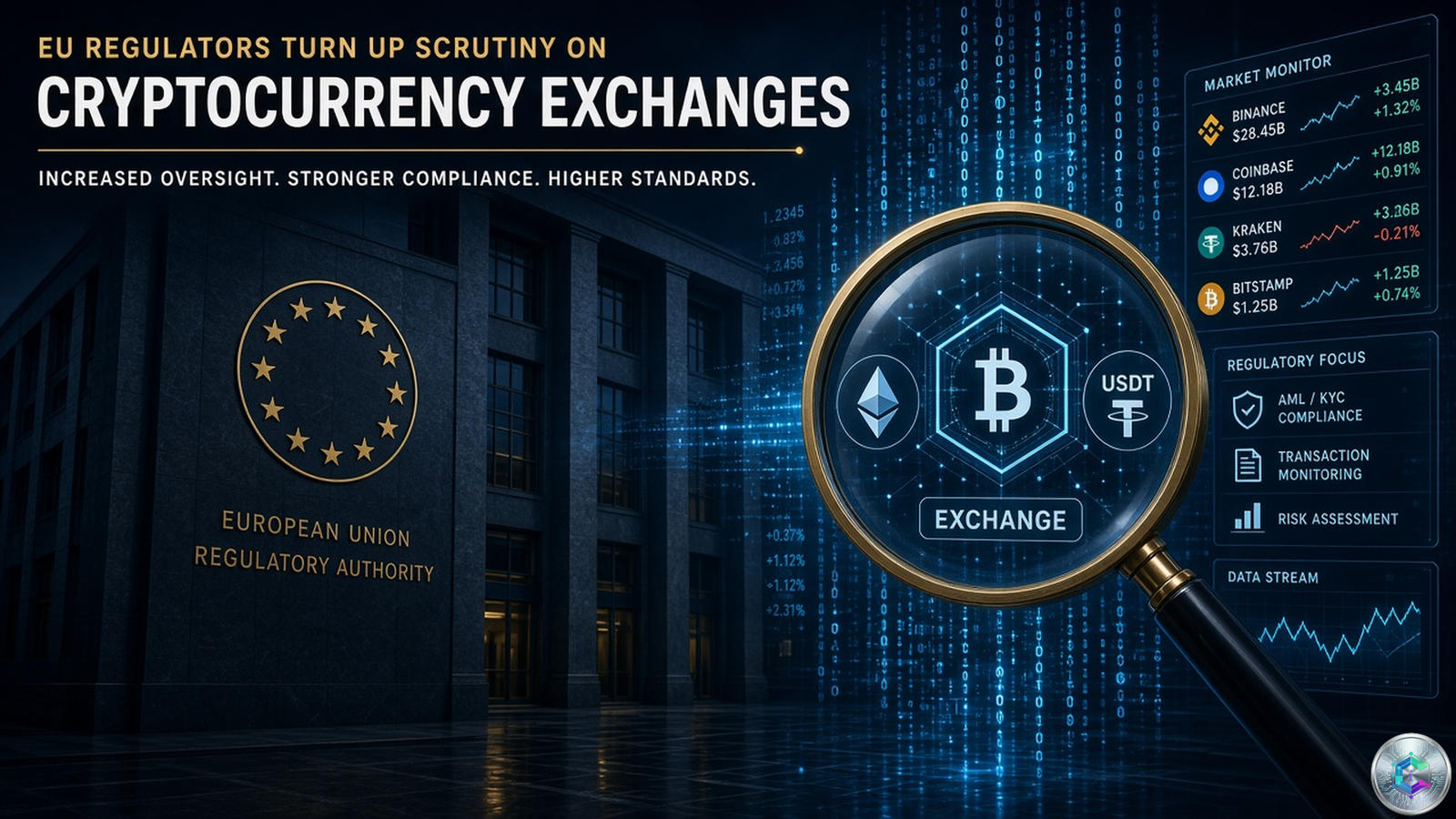
The European Securities and Markets Authority (ESMA) has opened a joint investigation with France, Germany and Greece, following revelations by the Financial Times. The question: is Binance circumventing the ban through the reverse solicitation clause?
This MiCA provision allows a non-EU crypto firm to serve an EU client provided the client initiates the contact. Binance has used it to continue offering services, from outside the bloc, to millions of EU users. ESMA has stressed that the exemption must be “interpreted very restrictively” and must not be used to bypass MiCA. The investigation will determine whether Binance actively pushed clients to initiate contact, which would constitute abuse.
“This reverse solicitation exemption must be interpreted very restrictively and constitutes an exception that must not be used to circumvent the requirements of the MiCA regulation.”
ESMA, statement to the Financial Times
If wrongdoing is confirmed, the exchange faces fines and coercive measures from national regulators. On Tuesday, ESMA ordered unlicensed firms to immediately cease their activities in the EU “in an orderly manner.”
A €400 million exodus toward competitors
Despite Binance’s assurances, distrust is setting in. The equivalent of €400 million in assets has been withdrawn in recent days, according to media sources. The app was downloaded more than 4 million times in the EU in 2025, with the majority of installations in France, Germany and Spain. Binance claims more than 300 million users worldwide but refuses to disclose its European share.
| Platform | MiCA license | Origin |
|---|---|---|
| Coinbase | Obtained (2025) | United States |
| Kraken | Obtained | United States |
| OKX | Obtained | Seychelles |
| Bitstamp | Obtained | Luxembourg |
| Bitvavo | Obtained | Netherlands |
| Bitpanda | Obtained | Austria |
| Binance | Rejected/withdrawn (Greece) | International |
Coinbase has launched a commercial offensive targeting Binance users, offering migration incentives. Kraken, OKX, Bitstamp, Bitvavo and Bitpanda are also leveraging this window to capture abandoned clients. The macroeconomic backdrop adds pressure: bitcoin dropped below $60,000, after a record high of $126,000 in autumn 2025, amplifying the strain on trading platforms.
CZ’s judicial record weighs on the European case
Changpeng Zhao’s track record complicates Binance’s recovery efforts in Europe. In 2023, he pleaded guilty to US anti-money laundering violations, in a $4.3 billion settlement with the US Treasury. He served nearly four months in prison before being pardoned by Donald Trump in 2025. US authorities documented more than 100,000 unreported suspicious transactions linked to organizations Washington designates as terrorist.
CZ acknowledged in a February podcast that he remains the “ultimate beneficial owner” of Binance. The company says it employs around 1,500 compliance staff and has invested heavily in internal controls. Gillian Lynch, head of Europe and UK, told Reuters that “Changpeng Zhao is entirely removed from the company” — a statement partially contradicted by the founder’s own admissions.
Irish, Latvian and Greek regulators have raised concerns about past AML sanctions, Binance’s “complex” international structure and what they describe as a “risk-taking culture.” Binance filed its application in Greece after unsuccessful discussions with Dublin and Riga. Co-CEO Richard Teng had defended the Athens choice in February, citing the local security profile and workforce.
What comes next for Binance in Europe?
Binance has contacted four or five regulators but only formally filed one application, in Greece. Gillian Lynch said the company is “not leaving Europe” and is exploring other jurisdictions, without specifying which. The outcome of ESMA’s investigation will determine whether the platform can maintain its European foothold via reverse solicitation, or must submit to a full licensing framework.
The case is being closely watched by European crypto players, who have long called for tighter regulation of the clause. Several scenarios are emerging: filing a complete new application with a more welcoming regulator, financial penalties in case of proven abuse, or a gradual withdrawal from the European market. In any case, Binance’s regulatory credibility remains the central issue.
Conclusion
The standoff between Binance and European regulators illustrates the structural tension between a global platform and a demanding continental framework. Two scenarios are emerging: either Binance files a complete new application with a more welcoming regulator, or the investigation concludes that reverse solicitation was abused, opening the door to fines. The trust of European clients is already shaken, as evidenced by the €400 million in recent withdrawals. The outcome of this case could redefine the real scope of MiCA and the viability of the “global by default” model for large international exchanges, while accelerating the consolidation of the European market around already-licensed players.
Sources
This article is published for informational and educational purposes only. It does not constitute investment advice. Do your own research (DYOR) before making any decision.

