


The SEC closed its Novel ETFs consultation on August 31, 2026, with Grayscale, a16z and the Crypto Council for Innovation calling for a more agile and confidential review framework for crypto ETFs, while other market participants raised concerns.
🔑 Key takeaways
- The SEC published on June 30, 2026 a Request for Comment on Novel ETFs, closed on August 31, 2026.
- Grayscale, a16z and the CCI call for confidential pre-filing discussions and a 45-day response window.
- The United States now counts 174 crypto-linked ETFs, with BlackRock’s IBIT managing roughly 61 billion dollars in assets.
- Charles Schwab and Jane Street oppose full confidentiality or any acceleration that could affect product quality.
- US ETF assets grew from 4 trillion dollars in 2019 to over 12 trillion dollars by the end of 2025.
An exploratory consultation on Novel ETFs
On June 30, 2026, the Securities and Exchange Commission (SEC) published in the Federal Register a Request for Comment titled “Request for Comment on Certain Novel Exchange-Traded Products.” Open for 60 days and closed on August 31, 2026, the consultation targets exchange-traded funds investing in so-called innovative asset classes: crypto assets, commodity-linked instruments, leveraged equity strategies, blockchain opportunities, private assets, and event contracts.
The move follows the September 2025 adoption of generic listing standards for commodity-backed trust shares. These standards already cut review timelines for eligible spot crypto ETFs from 240 days to roughly 75 days, a procedural acceleration that has sped up the rollout of new digital-asset products.
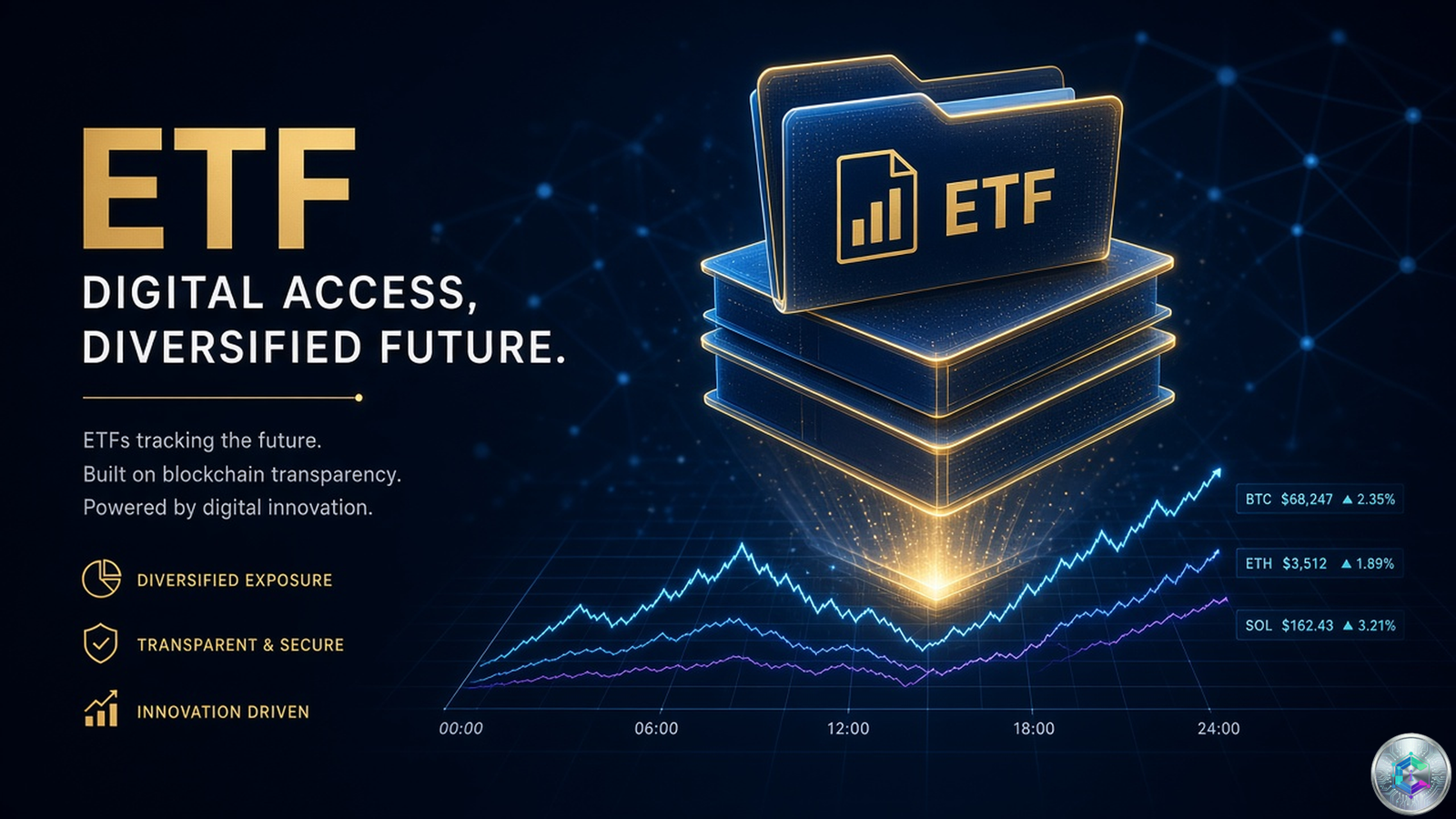
SEC Chair Paul Atkins justified the review by stating that financial innovation “depends on a consistent, transparent, and effective regulatory framework.” The Commission also noted that US ETF assets rose from over 4 trillion dollars in 2019 to more than 12 trillion dollars by the end of 2025, a threefold increase in six years.
“Innovation depends on a consistent, transparent, and effective regulatory framework.”
Paul Atkins, SEC Chair
Grayscale, a16z and the CCI push for a more agile framework
Three major crypto-industry players submitted separate comment letters on August 31, 2026. Their positions converge on the need for a more predictable and faster registration process, while diverging on certain technical points.
Grayscale Investments backed the idea of optional confidential discussions before public filings, in order to flag regulatory concerns upstream. The firm also asked the SEC to respond to comments within 45 days, and argued that “funds with established compliance records should continue to be evaluated using the rules governing their legal structure and assets.”
“Funds with established compliance records should continue to be evaluated using the rules governing their legal structure and assets.”
Grayscale Investments, SEC comment letter, August 31, 2026
For its part, Andreessen Horowitz (a16z) argued that the SEC should evaluate each product on the basis of its economic structure and underlying risks, rather than by asset label. The venture firm warned that “asset-based labels could group established crypto products with less developed strategies that present different liquidity, valuation, and custody concerns.” a16z also proposed reserving the term “ETF” to open-end funds under the Investment Company Act.
The Crypto Council for Innovation (CCI) called for comparable regulatory treatment between ETFs and other exchange-traded products, while supporting an optional confidential process. The CCI nonetheless clarified that “the confidential process should not extend automatic effectiveness or review deadlines,” a caveat designed to prevent any administrative backlog.
Side-by-side positions of the main respondents
| Actor | Position on confidentiality | Position on timelines | Key point |
|---|---|---|---|
| Grayscale | Supports pre-filing discussions | 45-day response window | Evaluation by legal structure |
| a16z | Qualified support | Coordinated reviews and predictable schedules | Risk of asset-based labelling |
| Crypto Council for Innovation | Supports, without extending deadlines | Comparable treatment to other products | Clear disclosure of regulatory status |
| Charles Schwab | Opposes full confidentiality | Publish filings 75+ days ahead | Investor protection |
| Jane Street | Reservations | Worried about excessive acceleration | Quality and liquidity risk |
The US crypto ETF market in numbers
The US market now counts 174 crypto-linked ETFs, according to figures cited by respondents to the consultation. That figure reflects the maturity reached since the historic approval of spot Bitcoin ETFs in early 2024.
BlackRock’s iShares Bitcoin Trust ETF (IBIT) alone manages roughly 61 billion dollars in assets, about 38 percent of the total assets of the crypto ETFs covered. This concentration illustrates the weight of traditional players in distributing regulated crypto products.
| Metric | Value | Source / Period |
|---|---|---|
| Crypto ETFs in the US | 174 | SEC consultation 2026 |
| IBIT (BlackRock) assets under management | ~61 billion USD | 2026 |
| IBIT market share | ~38% | 2026 |
| Total US ETF assets | >12 trillion USD | End-2025 |
| Total US ETF assets (2019) | >4 trillion USD | 2019 |
| Review timeline (post-reform) | ~75 days | Since Sept. 2025 |
| Previous review timeline | ~240 days | Before Sept. 2025 |
Grayscale recently withdrew three proposed altcoin products whose registrations had never become effective, a sign that the market remains selective despite procedural acceleration.
Industry reservations and the path forward
The consultation did not only collect positions favorable to acceleration. Charles Schwab opposed full confidentiality and recommended that filings be disclosed at least 75 days before any decision, to preserve transparency for investors and competitors. Trading firm Jane Street argued that further acceleration could compromise product quality, competitiveness, and market liquidity.
These reservations reflect a delicate balance between three imperatives: fostering innovation, protecting investors, and preserving market integrity. Traditional brokers and trading firms fear that overly rapid deregulation could introduce poorly calibrated or insufficiently liquid funds.
Several technical questions remain open: should Rule 6c-11 be amended to impose minimum holding or diversification requirements? Should Rule 485 automatic timelines be extended for Novel ETFs? Should the SEC publish unresolved staff comments? Should the use of Rule 6c-11 be conditioned on Rule 485 compliance? The consultation raises these questions without answering them.
Conclusion: toward a more flexible, but cautious ETF framework
The SEC consultation marks a new step in the modernization of the US ETF regulatory framework. By explicitly raising the questions of filing confidentiality and review acceleration, the Commission opens the door to procedural adjustments that could bring the pace of US crypto fund launches closer to that of other jurisdictions.
Three medium-term scenarios emerge. A first, activist scenario would see the SEC adopt amendments allowing confidential filings and shortening timelines, reigniting the race for new crypto and structured altcoin products. A second, cautious scenario would lead to administrative guidance without rule changes, possibly extending timelines for the most complex products. A third, wait-and-see scenario would preserve the status quo, prioritizing stability over speed of innovation. With no date announced for a Commission response, market participants will have to navigate this uncertainty over the coming quarters.
Sources
- The Block – Crypto firms urge SEC to speed ETF reviews
- Chapman – SEC Requests Public Comment on Novel ETFs
- KuCoin News – SEC Considers ETF Filing Confidentiality
- SEC – Crypto Task Force Written Input
- Binance Square – SEC ETF consultations
- crypto.news – SEC Novel ETF review draws opposition
This article is published for informational and educational purposes only. It does not constitute investment advice. Do your own research (DYOR) before making any decision.

