


MetaMask officially launched its Agent Wallet on June 8, 2026: a self-custodial wallet that lets artificial intelligence agents execute DeFi transactions autonomously while keeping users firmly in control through configurable guardrails.
🔑 Key takeaways
- The Agent Wallet is available today through an early access CLI program, with general availability slated for summer 2026.
- It supports 10 blockchains: Ethereum, Base, Arbitrum, Optimism, Polygon, Avalanche, BNB Chain, Linea, Sei and Hyperliquid.
- Two modes are offered: Guard Mode (default, with strict caps) and Beast Mode (expanded autonomy for advanced traders).
- Every transaction passes through four security layers, including MetaMask indemnification of up to $10,000 per month.
- MetaMask controls roughly 25% of the self-custodial wallet market, competing with Coinbase Agentic Wallets and MoonPay.
A wallet built for autonomous AI agents
The Agent Wallet targets a very specific audience: developers and traders who already build or use AI agents to interact with decentralized finance. Until now, these agents had to rely on ad-hoc scripts, shared keys, or centralized services to move funds onchain, exposing users to elevated risks of hacks and sloppy permission management.
With this new wallet, MetaMask offers a native infrastructure tailored for these use cases. The Agent Wallet covers a broad range of DeFi operations: token swaps, perpetual contracts, prediction markets, and liquidity provision. The goal is to let an AI agent operate a wallet without human intervention at every step, but within boundaries defined in advance by the holder.
Four layers of security on every transaction
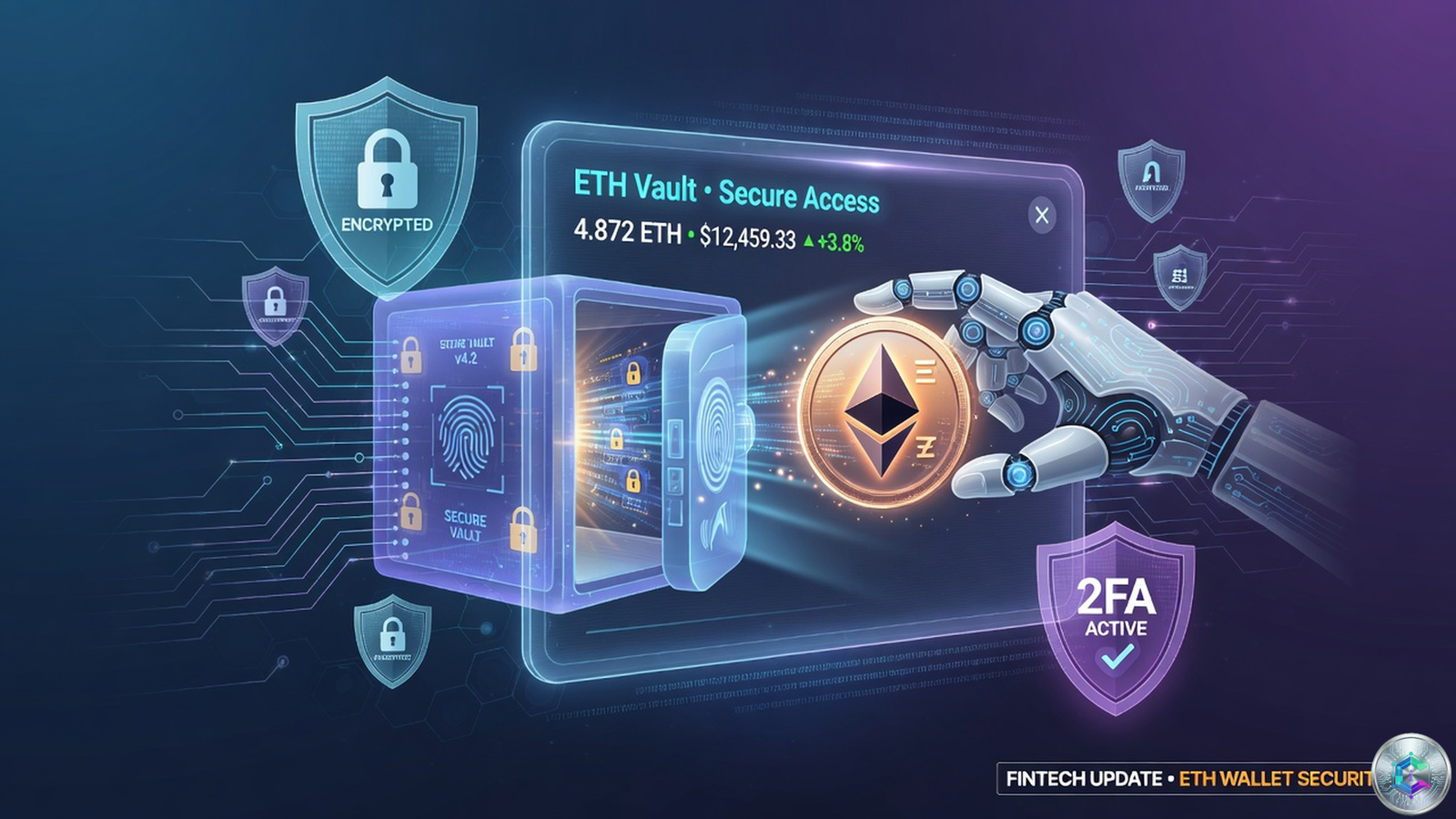
To address concerns around agent autonomy, MetaMask runs every transaction through a defense-in-depth pipeline that combines simulation, threat detection, maximal extractable value (MEV) protection and indemnification.
| Layer | Function | Tool / Provider |
|---|---|---|
| Simulation | Evaluates the likely outcome before execution | MetaMask internal engine |
| Threat detection | Flags suspicious contracts or abnormal behavior | Blockaid |
| MEV protection | Prevents front-running and sandwich attacks | Smart Transactions (where available) |
| Indemnification | Covers losses from successful malicious transactions | Transaction Protection, up to $10,000/month |
The indemnification, capped at $10,000 per month and subject to program eligibility, is an unprecedented safety net in the ecosystem. It does not cover losses from market moves, only malicious transactions that slipped through the first three layers of defense.
From Guard Mode to Beast Mode: user control comes first
The wallet offers two operating modes that define how much autonomy the agent receives. Guard Mode, enabled by default, imposes a strict framework: daily spending caps, whitelists of approved protocols and addresses, and two-factor authentication for any transaction that breaches the defined rules or is flagged as malicious.
Beast Mode is reserved for advanced traders and developers who want fewer interruptions. In that mode, the agent gains broader autonomy on policy edge cases, but malicious transaction detection stays on and still triggers a 2FA prompt, with no exceptions.
Several mechanisms complete the stack. When a transaction exceeds limits or is flagged as suspicious, a push notification is sent via the MetaMask Mobile app, or an approval link is emailed, allowing the holder to manually approve or reject the operation. Private keys are protected by a Trusted Execution Environment (TEE), and the user retains custody of their assets, with the ability to export the recovery phrase at any time.
Native integration with major AI frameworks
The product was designed to slot cleanly into developer workflows. The Agent Wallet is compatible with widely adopted AI frameworks: OpenClaw, OpenAI Codex, Claude Code, Cursor and Nous Research’s Hermes Agent. This compatibility lets developers connect their existing AI agent to the wallet without changing their workflow.
“The next great expansion of the onchain economy won’t be driven by humans alone. Machine intelligences will increasingly transact, coordinate, and verify one another on crypto rails, because crypto protocols are naturally well suited for autonomous actors. Agents will manage real capital and make real financial decisions, and the underlying infrastructure must be worthy of that.”
Joe Lubin, Founder and CEO of Consensys, Ethereum co-founder
Christian Montoya, product director at MetaMask, summed up the launch philosophy by describing MetaMask as a “magic wand” that simplifies blockchain interaction for users, including software agents.
Booming market, rising competition and analyst caution
The launch lands in the middle of a structural shift. According to projections cited by the World Economic Forum, the AI agent market is expected to grow from $5.4 billion in 2024 to $236 billion by 2034. Gartner forecasts that a quarter of enterprise breaches by 2028 could stem from the exploitation of AI agents. MetaMask is positioning its wallet as a response to these risks, baking security in as a mandatory step on every transaction.
MetaMask is not the first to ship an AI agent wallet. Coinbase launched agentic wallets in February 2026 and MoonPay has been building a similar offering since spring. However, MetaMask dominates the self-custodial wallet market with roughly a quarter of the share, which makes this launch particularly significant for the DeFi ecosystem.
Market reactions remain mixed. Some analysts note that trader trust in autonomous software handling real funds will take time to build. Others warn about approval fatigue, where repeated 2FA prompts could push users to accept transactions mechanically. Gartner has cautioned that agentic systems require continuous controls, stronger guardrails, rollback mechanisms, circuit breakers and clear accountability for behaviors. MetaMask’s ability to make these strict controls user-friendly will be decisive for adoption.
Conclusion: a real-world stress test for agentic DeFi
MetaMask’s Agent Wallet lands at a pivotal moment for DeFi, which is trying to balance two contradictory demands: giving AI agents enough autonomy to be useful, and maintaining a level of control compatible with managing real capital. The defense-in-depth stack and Guard/Beast mode split offer a credible first answer, but adoption will ultimately hinge on user experience quality and the ability to avoid dreaded approval fatigue.
Three scenarios emerge for the coming months: rapid adoption driven by algo desks and native DeFi projects, prolonged mistrust from retail traders wary of software autonomy, or an intermediate model where the Agent Wallet acts as an orchestration layer without directly touching capital. General availability, slated for summer 2026, will be the first true real-world stress test.
Sources
- Decrypt – Morning Minute: MetaMask Hands AI Agents a Wallet
- MetaMask News – Agent Wallet launch announcement
- CryptoSlate – MetaMask gave AI agents a DeFi wallet with a leash
- CoinDesk – MetaMask launches AI agent wallet with built-in security
- Binance Square – MetaMask Agent Wallet launch coverage
- Yahoo Finance – Morning Minute coverage
This article is for informational and educational purposes only. It does not constitute investment advice. Do your own research (DYOR) before making any decision.

