


Long unable to settle a payment, AI agents could become the new intermediaries of online commerce thanks to the x402 standard and infrastructures like XDC AI, which enables USDC settlement without gas fees and ISO 20022 compliance.
🔑 Key Takeaways
- The x402 standard, introduced by Coinbase in 2025, revives the HTTP “402 Payment Required” status code to let AI agents settle API calls in stablecoins.
- XDC AI pairs x402 with gasless USDC payments via EIP-3009, at sub-cent fees.
- The XDC Network has processed over 1.12 billion transactions since launching in 2019.
- McKinsey projects $3 to $5 trillion in global consumer commerce routed by AI agents by 2030.
- Gartner forecasts 33% of enterprise software applications will embed agentic AI by 2028, up from less than 1% in 2024.
Agentic Economy: Why AI Agents Need to Pay
AI assistants can now plan a trip, draft emails, or recommend a nearby store. Yet most of them remain unable to complete a payment. That gap is precisely what the “agentic economy” concept aims to fill, where AI agents act on behalf of users to book services, pay for data, and execute transactions.
“They don’t actually do things for you, and there’s a reason: they lack real-time settlement, compliance, dispute resolution, KYC, AML, and that exact trust layer AI needs.”
Atul Khekade, Co-founder of the XDC Network
That gap is pushing players ranging from card networks to crypto startups to race toward filling it. According to Khekade, the missing layer is exactly what prevents assistants from becoming truly autonomous economic agents capable of booking, paying, and settling in real time without human oversight.
x402 and Gasless USDC Settlement
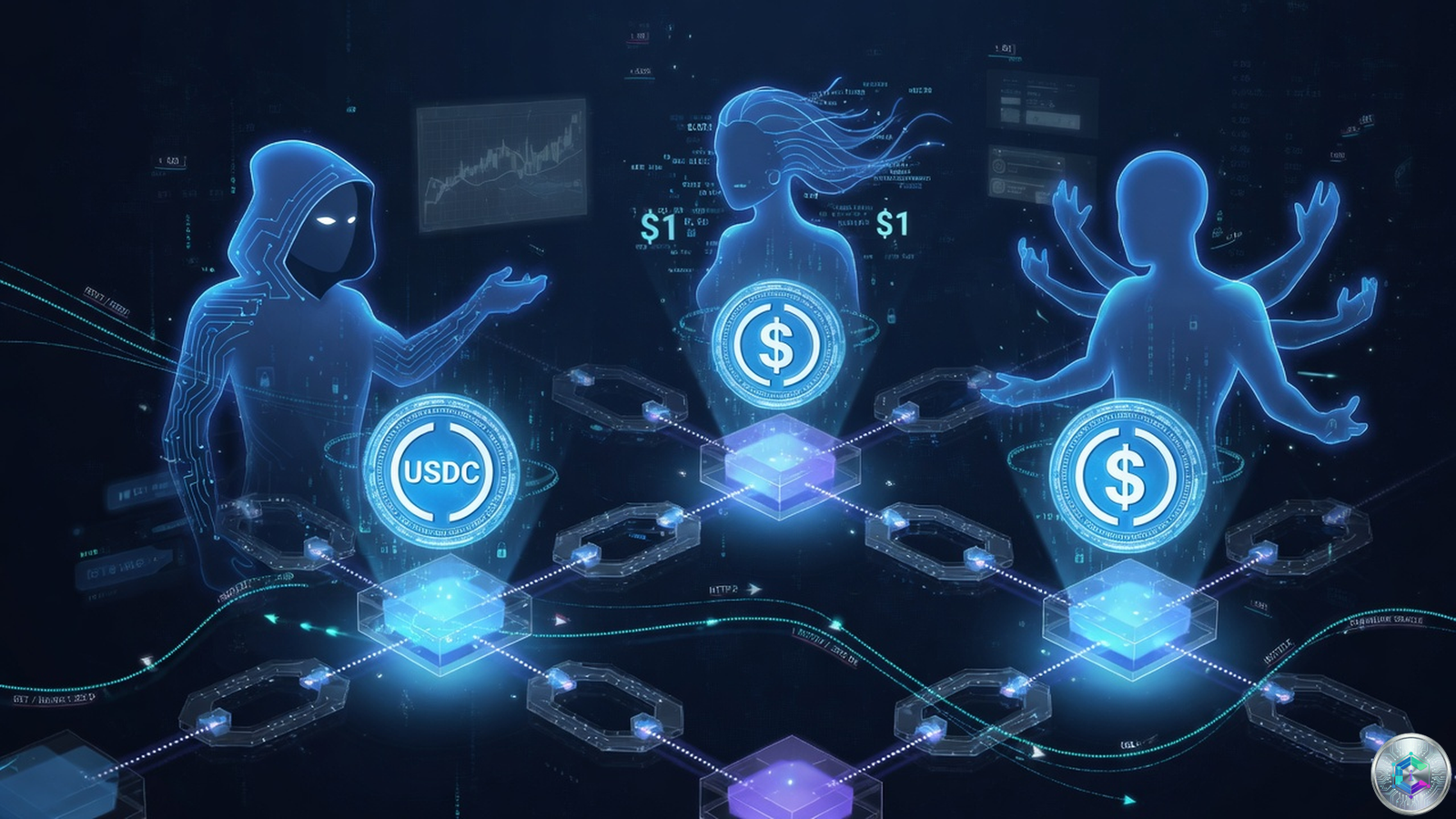
One key piece emerging from that race is the x402 standard, introduced by Coinbase in 2025. This open standard revives the HTTP “402 Payment Required” status code, reserved since the 1990s but never deployed. In an x402 exchange, a server can charge for an API call or a data feed, and a client, including an autonomous AI agent, can settle in stablecoins within the same request, with no account, no API key, and no human validation.
The XDC Network is among the platforms building on this standard. XDC AI combines x402 with gasless USDC settlement, allowing AI agents to pay per API call autonomously, book services, and clear transactions in real time at sub-cent fees, according to Ritesh Kakkad, co-founder of the XDC Network. The goal is to provide shared infrastructure rather than see every company build its own agentic payment rails.
An Institutional, ISO 20022-Aligned Infrastructure
The XDC Network is no newcomer to institutional infrastructure. Launched in 2019 by XinFin and co-founded by Atul Khekade and Ritesh Kakkad, this EVM-compatible Layer-1 aligns with the ISO 20022 messaging standard used across traditional banking. The network has focused on trade finance, payments, and real-world asset (RWA) tokenization.
XDC Tech, the network’s US institutional arm, has integrated Bridge, a Stripe company, bringing stablecoin settlement into its agentic AI roadmap. Native USDC and Circle’s CCTP V2 (Cross-Chain Transfer Protocol) are already live on the XDC Network, supporting fast, ISO 20022-compliant, low-cost, cross-chain transfers. Circle describes its European-issued USDC as a regulated e-money token compliant with MiCA and states it already meets the core requirements of the GENIUS Act.
| Feature | XDC Network |
|---|---|
| Launch | 2019 (by XinFin) |
| Type | EVM-compatible Layer-1 |
| Compliance | ISO 20022, MiCA, GENIUS Act |
| Transactions processed | 1.12B+ since 2019 |
| Native stablecoin | USDC + CCTP V2 |
| Integrated standard | x402 (Coinbase, 2025) |
A Market Worth Trillions of Dollars
The commercial opportunity is massive. McKinsey estimates that AI agents could intermediate between $3 and $5 trillion of global consumer commerce by 2030, including up to $1 trillion in the US B2C market alone. Gartner forecasts that by 2028, agentic AI will be embedded in 33% of enterprise software applications, up from less than 1% in 2024, and will autonomously drive roughly 15% of daily business decisions.
Technical Framework and New York Demo
The company recently showcased its XDC AI marketplace at its New York offices, at a demo attended by more than 100 industry representatives from major banks, tech partners, venture capital, family offices, AI companies, and ecosystem builders. The event demonstrated how agentic finance is becoming the key translation layer for AI to truly transact and operate, Khekade explained.
XDCAI equips autonomous agents with a non-custodial smart wallet, a compliance and regulatory framework, and the ability to pay for APIs and digital services using stablecoins like USDC. The framework integrates ChatGPT, Claude, Codex, Cursor, and other AI platforms via the MCP (Model Context Protocol) API connector, with gasless USDC payments built on EIP-3009, on-chain spending limits controlled by the user, and machine-readable transaction records.
“Every layer of finance is being rebuilt for a world where software, not just people, initiates the payment. This partnership gives our ecosystem a stablecoin infrastructure that already meets that requirement.”
Atul Khekade, Co-founder of the XDC Network
Khekade positioned compliance and risk controls as central, arguing that autonomous software needs a risk control layer and spending limits to operate safely. Instead of subscriptions, invoices, or credit cards, an AI agent can pay the exact price of a service and receive an on-chain transaction record for every request.
Conclusion
Agent-driven payments still have a long way to go before becoming as routine as tapping a card, with nascent standards and the industry still working through security, privacy, and control. But traditional finance and crypto builders are already engineering for a future where agents transact. Ritesh Kakkad is betting that the convergence of AI agents, stablecoins, and enterprise blockchain, especially in trade finance and RWA, “will unlock massive value.” The XDC Network continues to evolve with every major tech cycle: trade finance, real-world asset tokenization, regulated stablecoins, and now agentic commerce.
Sources
This article is published for informational and educational purposes only. It does not constitute investment advice. Do your own research (DYOR) before making any decision.

