


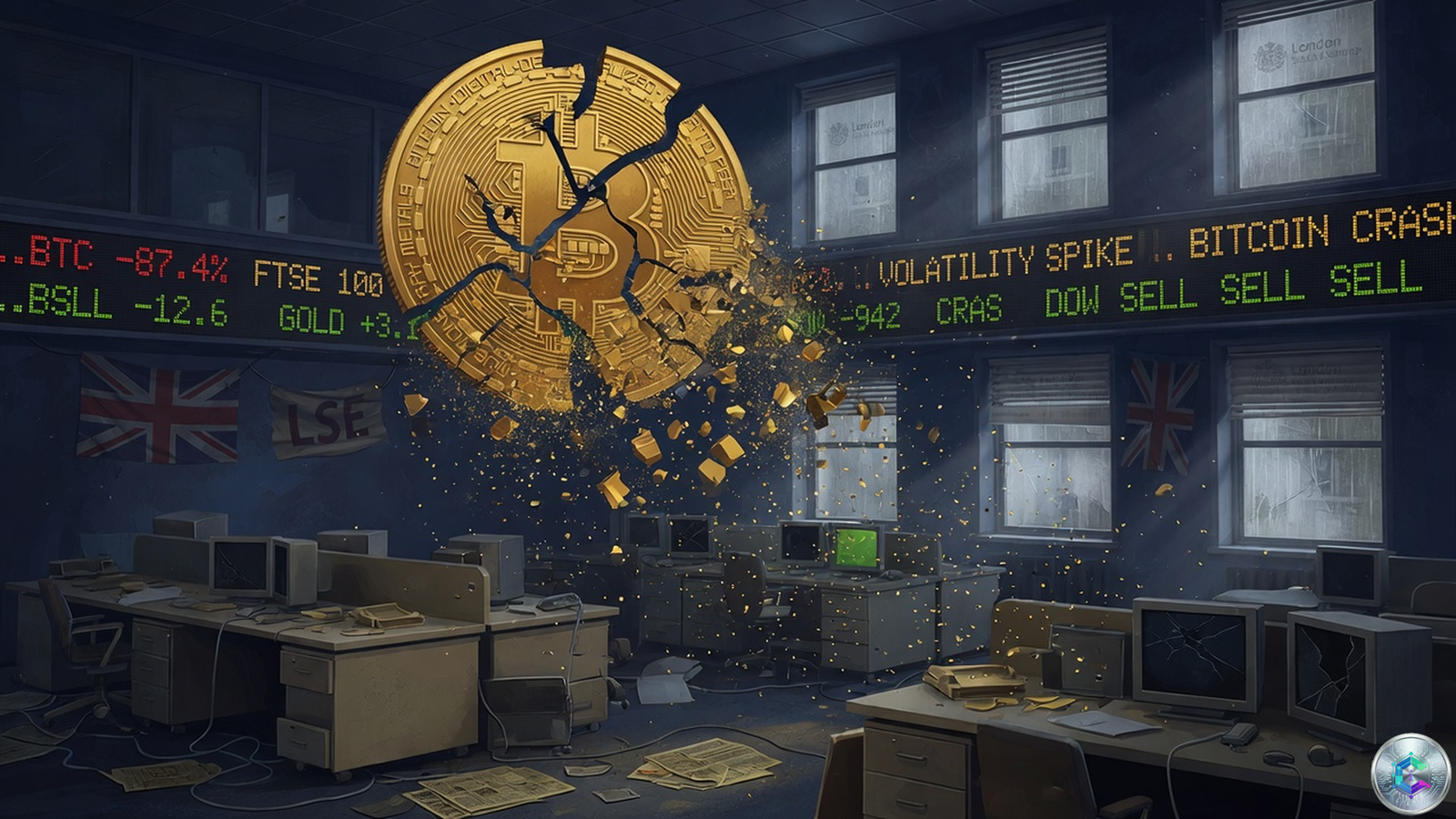
Satsuma Technology shareholders have approved, by more than 90%, the liquidation of 668.48 BTC (approximately $43.5M) and the delisting from the London Stock Exchange, ending one of the last British Bitcoin treasury funds (DAT) after a share price collapse of more than 99% in less than a year.
🔑 Key takeaways
- Satsuma will sell 668.48 BTC for roughly $43.5M and leave the London Stock Exchange.
- More than 90% of votes backed the two resolutions, which required 75% to pass.
- Capital return is estimated between £26.8M and £30M, after £2.7M in winding-up costs.
- The mNAV ratio fell to 0.80x, triggering the pressure for dissolution.
- CLN1 holders could recover between £113.9 and £143 per £100 invested, vs £22.4-25.5 for CLN2.
An overwhelming vote for dissolution
More than 90% of votes cast at the general meeting supported the two interlocking resolutions to sell the company’s 668 BTC holdings and cancel its listing on the London Stock Exchange’s main market. These special resolutions required at least 75% of votes to pass and were interdependent: failure of one would have blocked both the capital return and the delisting.
The procedure relies on a UK legal mechanism known as a « B-share scheme », under which one non-tradable B-share is issued for every ordinary share after the BTC has been sold. The remaining capital, net of winding-up costs, is then distributed to shareholders via those B-shares.
The board was deeply split: four of its six directors opposed the dissolution, arguing that Satsuma remained a viable listed Bitcoin vehicle. Two directors sided with shareholders pushing for liquidation. The vote overturned the outgoing majority by a wide margin, sealing the end of this digital-asset treasury experiment.
From AI pivot to Bitcoin bet
Satsuma Technology was not always a Bitcoin fund. The company originally operated as TAO Alpha, a small artificial-intelligence firm. In August 2025, it rebranded and hired Mark Moss as Chief Bitcoin Strategist. The American commentator, who has more than 700,000 YouTube subscribers, is known for advising institutions on holding Bitcoin as a corporate treasury asset (a Digital Asset Treasury, or DAT).
The same month, Satsuma raised £163.6M ($218M) via convertible bonds, debt instruments allowing investors to reclaim their principal or convert their claim into equity. The round was led by ParaFi Capital, with participation from Pantera Capital, Digital Currency Group and Kraken. Notably, investors contributed 1,097 BTC directly rather than roughly $97M in cash, rapidly inflating the on-chain treasury.
The shares then peaked around £14 in June 2025, taking the market cap to about £66M. The bet looked validated: Bitcoin had just printed a new all-time high of $126,000 in October 2025, before embarking on a months-long slide that ushered in the current crypto winter.
A lightning stock collapse
The crypto winter dragged Satsuma down with it. By April 2026, the shares had lost more than 99% of their June 2025 peak value, trading at a fraction of a penny. The driver became structural: Satsuma’s market capitalization fell well below the value of the Bitcoin on its balance sheet, producing an mNAV ratio of 0.80x (the market priced the company at only 80% of its net Bitcoin holdings, a 20% discount).
Faced with this dislocation, Pantera Capital, which held about 6.7% of the shares, began publicly advocating for a full liquidation. A shareholder group representing more than 20% of issued capital formally tabled the resolution. As early as December 2025, Satsuma had been selling assets to stay solvent: 579 BTC were offloaded for £40M to repay bondholders who declined to convert their debt into equity before year-end.
The loss of confidence then translated into successive executive departures: the CFO left in February 2026, followed by the CEO in March, leaving a board struggling to resist shareholder pressure.
Liquidation timeline and key figures
As of June 30, 2026, Satsuma held 668.48 BTC. The June factsheet valued those holdings at £29.44M, against a total net asset value of £33.23M, with an average acquisition cost of £84,026 per BTC and a latent loss of £39,984 per coin. Applying Bitcoin’s £48,372.69 price on July 16 yields a gross value of roughly £32.34M.
Financial indicators as of June 30, 2026
| Indicator | Value |
|---|---|
| BTC holdings | 668.48 BTC |
| Gross BTC value | £29.44M |
| Net Asset Value (NAV) | £33.23M |
| mNAV ratio | 0.80x |
| Average cost per BTC | £84,026 |
| Latent loss per BTC | £39,984 |
Expected liquidation timeline
| Step | Date |
|---|---|
| Sale of all BTC holdings | ~August 3, 2026 |
| Issuance of B-shares | ~August 4, 2026 |
| Court confirmation hearing (High Court) | September 8, 2026 |
| Delisting from LSE | September 14, 2026 |
| Payments to shareholders | September 28, 2026 |
Asymmetric recovery for bondholders
The total estimated payout for former bondholders combines the £40M from the December 2025 sale with the £26.8M-£30M from the current capital return, for roughly £66M-£70M overall. These figures must be compared with the £163.6M initially raised: the shortfall is significant.
Moreover, holders of the CLN1 and CLN2 convertible bonds rank ahead of ordinary shareholders in the repayment waterfall. With Bitcoin priced at $59,923 in the recovery scenarios, former CLN1 holders could receive between £113.9 and £143.0 per £100 invested, depending on warrant-exercise and excess-cash assumptions. CLN2 holders, more deeply subordinated, would recover only £22.4 to £25.5 per £100 invested.
« The logic was inescapable: once the market cap falls below the Bitcoin on the balance sheet, holding the share becomes strictly less attractive than owning the underlying coin directly. »
Crypto analyst, Satsuma press dossier
Recovery scenarios (BTC at $59,923)
| Bond series | Low scenario | High scenario |
|---|---|---|
| CLN1 | £113.9 / £100 invested | £143.0 / £100 invested |
| CLN2 | £22.4 / £100 invested | £25.5 / £100 invested |
Trading in Satsuma shares remains suspended since 7:30 a.m. on July 1, as the unresolved vote prevented directors and auditors from filing accounts within the regulatory deadline. The company expects to publish its accounts by end-July and hopes to resume trading subject to FCA approval. Satsuma remains the second-largest listed Bitcoin treasury in the UK, behind The Smarter Web Company which holds 2,878 BTC and has not signalled any dissolution.
Conclusion: a warning shot for listed DATs
Satsuma Technology starkly illustrates the limits of the DAT (Digital Asset Treasury) model in a bear market. The structure, designed to amplify Bitcoin exposure through a listed vehicle, became trapped by an inverted mNAV and eroding market confidence. The dissolution, now voted through, will redistribute only a fraction of the original capital to investors, with a clear advantage for CLN1 bondholders.
While The Smarter Web Company remains the UK’s largest listed Bitcoin treasury with 2,878 BTC, the Satsuma episode may serve as a warning to other listed structures still trading at an mNAV below 1. The DAT wave that powered several 2024-2025 IPOs now appears to be losing momentum, and a string of liquidations could reshape how the market prices indirect Bitcoin exposure going forward.
Sources
This article is for informational and educational purposes only. It does not constitute investment advice. Do your own research (DYOR) before making any decision.

