


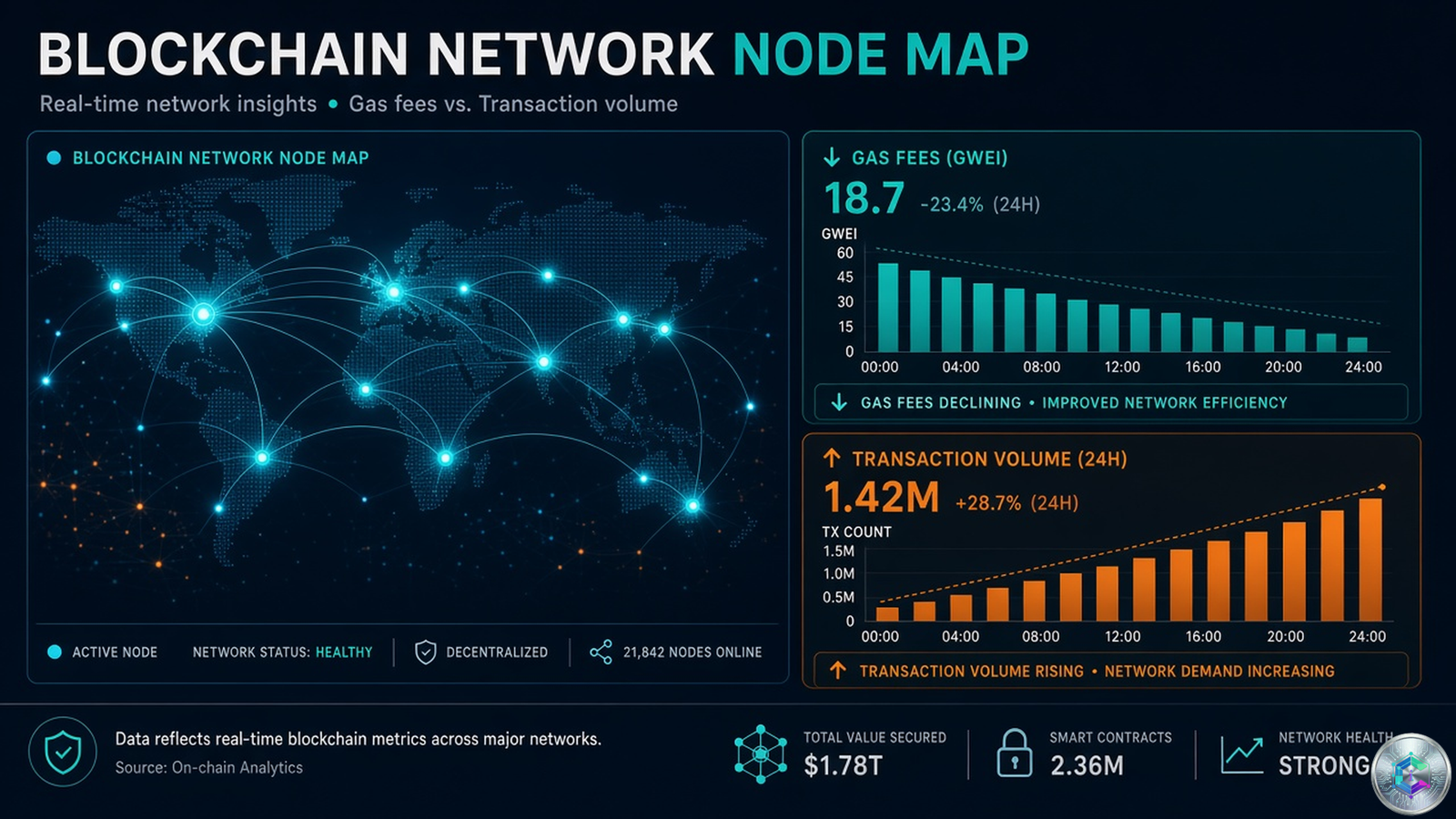
Robinhood Chain network fees have collapsed 97% in less than three weeks while transaction counts remain near all-time highs. The disconnect is rewriting the economics of the chain — and the apps built on top of it.
🔑 Key takeaways
- Early September peak: $8M in daily fees on 13.1M transactions (~$0.64/tx).
- By Sept. 16: ~$230K in fees on 8.9M transactions (~$0.026/tx), down 97%.
- Apps on the chain still generated ~$8M in fees over 24h, keeping ~$1.5M net.
- Pons, the memecoin launchpad, still contributes ~$830K/day in revenue.
- Uniswap V3 doubles volume to $5.3B, while V4 slips 22% to $4.9B.
A 97% fee collapse that contradicts real activity
The contrast is striking. In early September, Robinhood Chain — barely two months old — ranked among the most expensive networks in crypto. On August 30, apps hosted on the chain generated $2.7 million in revenue in a single day, twice Ethereum’s figure and surpassed only by Solana. The token-issuance platform Pons and the memecoin-trading app GMGN accounted for roughly $2 million of that total, while users launched 22,600 tokens in 24 hours.
At the early-September peak, the chain collected about $8 million in fees on 13.1 million transactions in a single day, averaging $0.64 per transaction. By September 16, daily fees had plunged to roughly $230,000 on 8.9 million transactions — barely $0.026 each, according to Growthepie. The gap reflects a brutal dilution of per-transaction revenue, not a slowdown in usage.
Pons and GMGN: the apps driving the chain
This lightning-fast sequence was largely driven by two flagship applications. Pons, a launchpad where users create and trade new memecoins, and GMGN, a dedicated memecoin-trading interface, generated the bulk of the chain’s early revenue. On August 30, they alone delivered close to $2 million in daily revenue.
On a seven-day rolling basis, fees fell 82% while the number of transactions dropped only 6%, with roughly $1.5 billion traded daily across the network. Network health remains robust in usage terms, but the value captured by the chain itself is melting away.
| Period | Transactions / day | Fees / day | Avg cost / tx |
|---|---|---|---|
| Week ending Sept. 4 | 11.5M | ~$4M | ~$0.35 |
| Peak (early Sept.) | 13.1M | ~$8M | ~$0.64 |
| Week ending Sept. 16 | 10.8M | $641K | ~$0.06 |
| Day of Sept. 16 | 8.9M | ~$230K | ~$0.026 |
“Higher gas fees haven’t affected me or any other trader I know. People don’t care as long as they can make money on this chain.”
Unipcs, top-ranked memecoin trader on FOMO
Pons, Uniswap, and the mechanics of app-level revenue
Between September 10 and 16, Pons logged roughly $616 million in trading volume, down 37% versus the prior seven days. Protocol revenue slipped from $10.7M to $5.8M over the period, still representing about $830,000 per day. Pons creator Ozzy explained that the platform devotes 80% of protocol revenue to buying back and burning PONS — at current revenue pace, that translates to roughly $4.6 million earmarked for the buyback program.
On the DEX side, Uniswap V3 volume on the chain more than doubled, from $2.5B to $5.3B between the two periods, while Uniswap V4 fell 22% to $4.9B. Across all DEXs tracked by DeFiLlama, total volume rose 5% to $12.8 billion. Robinhood-based DEXs processed about $13B over the week, up 5%. Stablecoin supply edged down 1% to roughly $1B, of which about $930M sat inside DeFi applications.
The crux of the paradox lies in this disconnect: apps built on Robinhood Chain continued to capture revenues far larger than those collected by the chain itself. They earned roughly $8M in fees over the past 24 hours and kept $1.5M in net revenue — far more than the chain’s $230K. The asymmetry exposes a model where value migrates to application-level protocols at the expense of the underlying L1/L2.
Cross-chain flows: a quiet drift toward Solana
Bridge data paints a nuanced picture. debridge processed $8.2M from Robinhood to Solana and a little over $6M in the opposite direction — a net outflow of roughly $2M. The prior week had been nearly balanced ($13.4M out, $13.3M in). But the transfer count tilted the other way: about 5,000 Solana → Robinhood orders versus 3,800 in reverse.
On the other side of the bridge, Solana DEXs processed roughly $17B over the same period, down 8% week-over-week. PumpSwap, the exchange tied to the Pump.fun launchpad, logged $2.9B in volume, down 36% — a contraction comparable to Pons’s 37% slide. Bearish pressure is thus affecting the entire memecoin ecosystem, not Robinhood alone.
New records by year-end?
Despite the chill in chain-level revenue, trader sentiment remains bullish. Unipcs is optimistic about Robinhood Chain’s future and expects its user count, trading volume and fees to reach new highs before year-end. He notes that memecoin speculation remains concentrated primarily on Robinhood Chain, BNB Chain, and Solana — a triptych that structures most of the on-chain memecoin liquidity.
Yet the current dynamic highlights a structural point: in an environment of fierce competition between L2s and memecoin-focused chains, revenue spikes can evaporate as quickly as they appear. If Unipcs’s thesis holds, Robinhood Chain will need to demonstrate an ability to attract durable activity — beyond ephemeral token launches — to turn this volatility into installed growth. The decisive test will be whether native apps can monetize a volume that, today, no longer translates into revenue for the underlying chain.
Sources
- CoinDesk — Robinhood Chain fees collapse 97% even as transactions stay near record highs (Sept. 19, 2026)
- CryptoNews.net — Altcoins coverage
- AltcoinBuzz — Robinhood Chain fees analysis
- Fidelity — Crypto newswire (Sept. 19, 2026)
- TradersUnion — Robinhood Chain coverage
This article is published for informational and educational purposes only. It does not constitute investment advice. Do your own research (DYOR) before making any decision.

