


Prediction markets have experienced unprecedented growth. Polymarket and Kalshi collectively surpassed $150 billion in total volume, marking a milestone for this evolving sector. This meteoric rise comes with questions about the sustainability of this model and the risks associated with wash trading practices.
🔑 Key takeaways
- Combined monthly volume of Polymarket and Kalshi reached $44.8 billion in June 2026, up from under $5 billion in September 2025
- The $150 billion cumulative threshold was crossed across both platforms combined
- Kalshi represented 71% of combined volume in June ($31.5B), with Polymarket international at $10.26B
- Sports represented 80% of Kalshi’s volume since July 2024 versus only 39% on Polymarket, which dominates politics
- A Columbia University study estimates 25% of Polymarket’s historical volume involved wash trading
Exponential growth trajectory
Polymarket and Kalshi dominate the prediction markets sector, also known as conditional futures markets, where traders buy and sell binary contracts indexed to real-world events. The combined monthly volume of these two platforms experienced exponential growth, rising from under $5 billion in September 2025 to approximately $24 billion in April 2026, according to a Pew Research Center analysis based on The Block data. For comparison, the total amount wagered monthly with legal sportsbooks in the United States was approximately $14 billion on average in 2025.
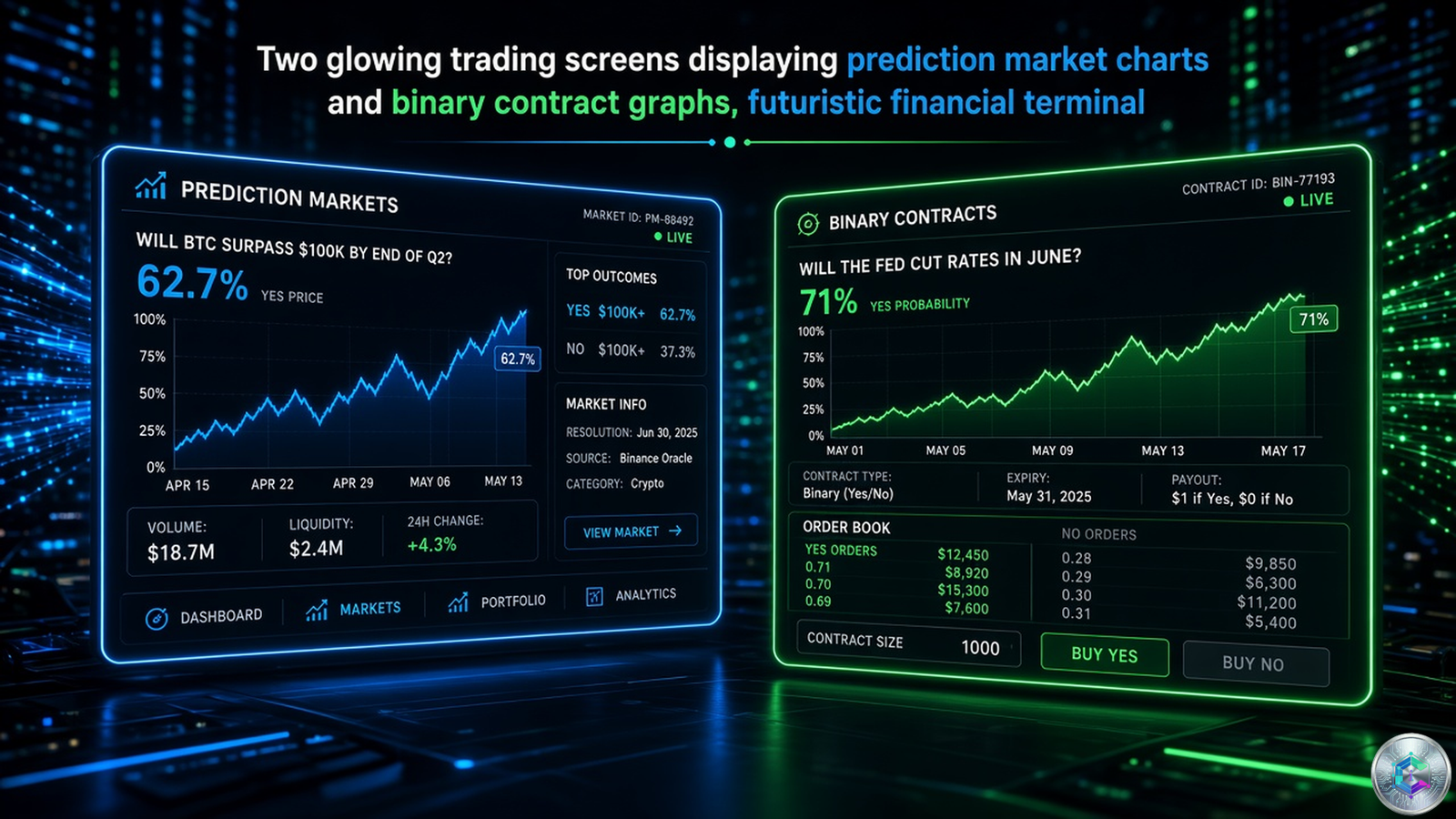
In June 2026, combined monthly volume reached $44.8 billion, still according to The Block. Kalshi represented $31.5 billion, while Polymarket totaled $13.3 billion ($10.26 billion for the international version and $3.04 billion for the American version). The previous month, in May 2026, Kalshi had recorded $16.81 billion, representing a monthly increase of 87.4%. Polymarket International had risen from $7.08 billion in April to $10.26 billion in June, an increase of approximately 45%.
“Combined volume for Polymarket and Kalshi exceeded $150 billion, a major milestone for the prediction markets sector.”
Pew Research Center, May 2026
Monthly trends and data volatility
A notable anomaly appears in June data: some trackers record volume of only $336.2 million for Polymarket in May 2026, before rebounding to $10.29 billion in June (+2,959.5%). This extreme fluctuation suggests methodological differences between sources or potentially occasional data collection issues. July 2026 volume reportedly reached a new record around $50 billion according to news headlines, although detailed content of these articles was not accessible in available sources.
On a cumulative annual basis, Polymarket crossed the $55 billion total volume milestone by September 2026, with $51.99 billion recorded by end of July. Polymarket’s monthly volume evolved as follows according to available data:
| Month | Volume (billions $) | Monthly change |
|---|---|---|
| December 2025 | 2.17 | — |
| January 2026 | 4.19 | +92.9% |
| February 2026 | 7.26 | +73.2% |
| March 2026 | 12.22 | +68.3% |
| April 2026 | 9.14 | -25.2% |
| May 2026 | 0.34* | -96.3% |
| June 2026 | 10.29 | +2,914% |
| July 2026 | 8.56 | -16.7% |
| August 2026 | 3.47 | -59.5% |
| September 2026 | 0.155 | +38.7% |
*Data varies across sources
Early signs of fatigue
However, this record growth is beginning to show signs of fatigue. The number of active traders on Polymarket’s international platform decreased, falling from approximately 733,000 in March to approximately 643,000 in April 2026, according to The Block. Dollar volumes also declined on Polymarket, and notional volume decreased on both platforms.
Distinct calculation methodologies
A fundamental difference in volume calculations complicates comparisons between the two players. Kalshi reports notional volume where each contract is counted at its face value of $1, regardless of the actual price paid. Polymarket uses taker notional volume, which multiplies the number of contracts by the price effectively paid at the time of the transaction.
“Approximately 25% of Polymarket’s historical volume consisted of wash trading, a practice of exchanging assets with oneself to inflate statistics.”
Columbia University Study
A Columbia University study estimated that approximately 25% of Polymarket’s historical volume consisted of wash trading, with this rate being higher on sports markets. The introduction of taker fees on Polymarket on March 30, 2026 could modify this dynamic going forward.
Specializations and catalyst events
Polymarket experienced contrasting development across categories. The FIFA World Cup 2026 generated record volumes. On Polymarket, the World Cup winner market, the largest in the platform’s history, had accumulated approximately $3.9 billion by July 7, 2026, crossing the $4 billion threshold the following day. On Kalshi, the equivalent market had attracted over $800 million in bets by early July. Combined bets, requiring multiple correct predictions to win, represented nearly half of Kalshi’s total volume since the World Cup opened on June 11, 2026, according to an InGame analysis.
Sector breakdown
Dominant categories differ significantly between the two platforms. Since July 2024, sports represented 80% of Kalshi’s volume versus only 39% on Polymarket. Conversely, politics and world events concentrate the majority of activity on Polymarket. Overall, sports, politics and crypto represent 91% of Kalshi’s volume and 90% of Polymarket’s volume over the same period.
| Category | Kalshi (since July 2024) | Polymarket (since July 2024) |
|---|---|---|
| Sports | 80% | 39% |
| Politics and news | 11% | 51% |
| Crypto and other | 9% | 10% |
During the period surrounding the November 2024 U.S. presidential election, political markets reached 90% of Kalshi’s volume and 65% on Polymarket, at a time when Kalshi had not yet developed its sports betting offering.
Regulatory framework and diversification
The regulatory framework also diverges between the two platforms. Kalshi is fully regulated by the Commodity Futures Trading Commission (CFTC) and settles transactions in traditional U.S. dollars. Polymarket primarily operates on the Polygon blockchain with USDC, a stable cryptocurrency, and offers a CFTC-regulated American version distinct from its international platform.
Kalshi’s annualized revenue exceeded $1.5 billion in May 2026, and the platform generated approximately $1.15 billion in fee revenue since launch, with $850 million alone in 2026. Kalshi also diversified its offering by launching perpetual futures contracts on cryptocurrencies in June 2026, starting with Bitcoin on June 3, followed by Ethereum and XRP, with Solana announced later. These contracts allow betting on token price movements without expiration dates, with fees initially set to zero to stimulate activity.
“Institutional trading volume on Kalshi increased by 800% over the past six months.”
Kalshi, Q2 2026 Institutional Report
On the institutional front, trading volume on Kalshi increased by 800% over the past six months, and the platform completed its first customized transaction block. U.S. regulators remain cautious regarding the integration of prediction markets into mainstream financial products. The SEC delayed the launch of six event contracts ETFs, filed in February by Roundhill Investments, GraniteShares and Bitwise, to obtain more information on product mechanisms and disclosures to investors. Andreessen Horowitz supported the CFTC in a jurisdictional conflict with state authorities, arguing that state-by-state restrictions could limit market access and drain liquidity.
Valuations and outlook
The valuations of both platforms reflect their growth. Kalshi raised a Series F at $22 billion in May 2026, while Intercontinental Exchange (ICE) completed a $2 billion investment in Polymarket in March 2026, valuing it at approximately $8 billion before this injection.
Despite impressive growth indicators, the sector faces several challenges. The declining number of active traders on Polymarket, methodological issues in volume calculations, and wash trading concerns raise questions about the reliability of reported metrics. The introduction of fees on Polymarket and SEC filings suggest increasing regulatory scrutiny that could reshape this expanding market. The perpetual cryptocurrency contracts launched by Kalshi represent new territory, but their success will depend on platforms’ ability to maintain user and institutional investor trust.
Sources
- The Block – Polymarket and Kalshi Volume Monthly
- MetaMask – Kalshi vs Polymarket
- Yahoo Finance – Kalshi Polymarket Trading Volume
- CoinMarketCap Academy – Polymarket Kalshi Volumes
- Pew Research Center – Trading Volume on Prediction Markets
- DeFi Rate – Polymarket Volume
This article is published for informational and educational purposes only. It does not constitute investment advice. Do your own research (DYOR) before making any decisions.

