


Circle released solid Q2 2026 earnings on August 5, driven by a 19% increase in USDC circulation, while unveiling the eleven founding validators of its Arc blockchain — including BlackRock, Visa, Mastercard, and the DTCC. The public mainnet launch is scheduled for September 16, 2026.
🔑 Key Takeaways
- Q2 2026 revenue: $701M, up 7% year-over-year
- USDC in circulation: $73.3 billion (+19% YoY)
- On-chain transaction volume: $14.8 trillion (+151% YoY)
- 11 founding validators confirmed for Arc, including BlackRock, DTCC, Visa, Mastercard
- Arc public mainnet launch scheduled for September 16, 2026
Q2 2026 Financial Results
Circle published its fiscal Q2 2026 results on August 5, 2026, confirming robust growth momentum for the USDC ecosystem despite a sluggish market environment. The company generated $701 million in revenue, up 7% compared to Q2 2025.
USDC in circulation reached $73.3 billion, representing a 19% year-over-year increase, while on-chain transaction volume surged 151% to $14.8 trillion. Net income from continuing operations stood at $48 million, and adjusted EBITDA (earnings before interest, taxes, depreciation, and amortization) reached $143 million, up 8% year-over-year.
| Metric | Q2 2026 | YoY Change |
|---|---|---|
| Revenue | $701M | +7% |
| USDC in circulation | $73.3B | +19% |
| On-chain volume | $14.8T | +151% |
| Net income (continuing ops) | $48M | n/a |
| Adjusted EBITDA | $143M | +8% |
Despite these positive indicators, the CRCL stock listed in New York showed no notable rally in early August. Shares remain down about 60% over the past twelve months, trading around $63 at the time of the earnings release — far below its IPO (initial public offering) price from June 2025.
“These results reflect the current interest rate environment and a crypto market operating at low gear, but the company’s recent developments tell an entirely different story.”
Jeremy Allaire, CEO of Circle
Arc: Eleven Founding Validators from Traditional Finance
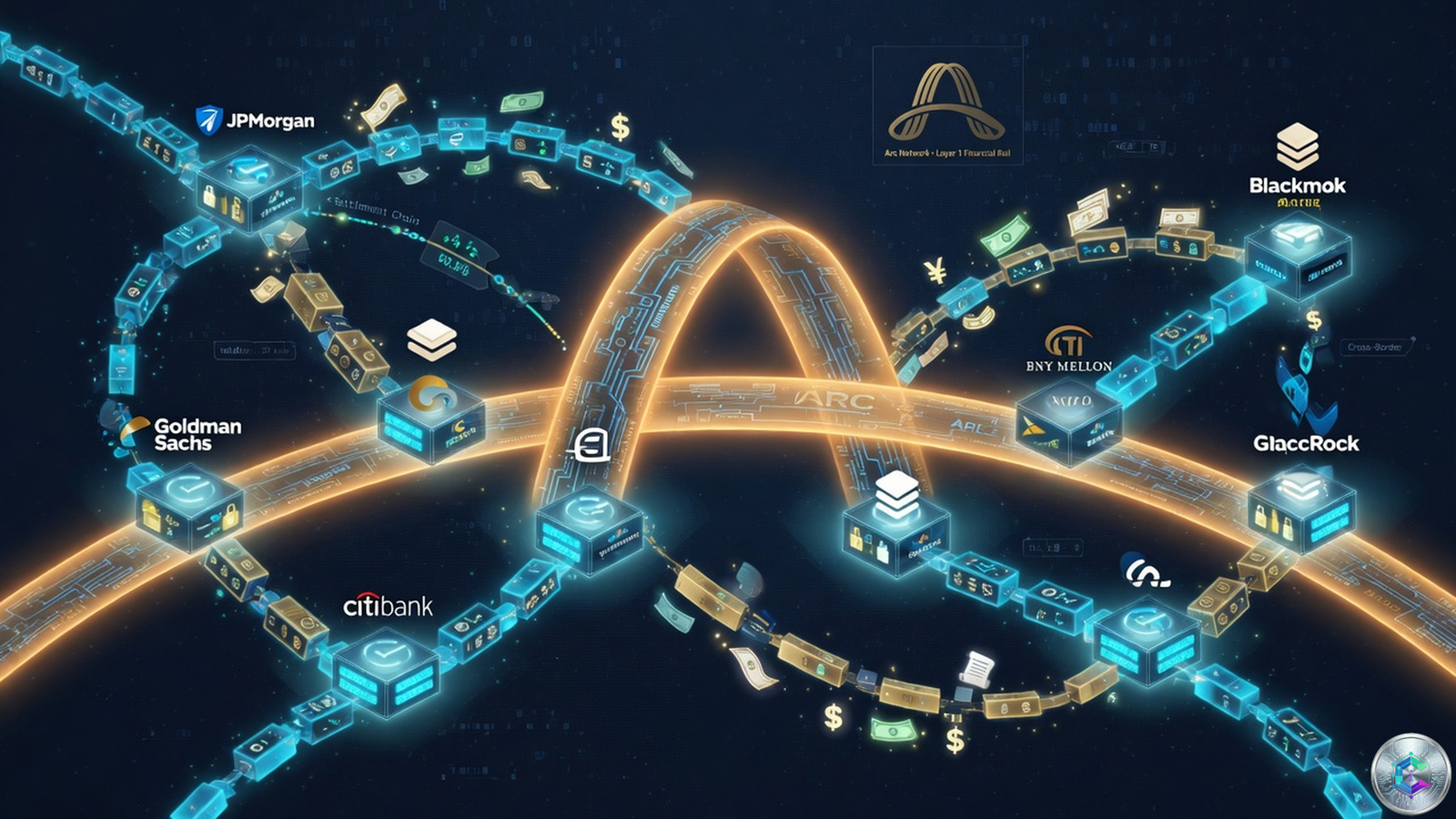
Alongside its earnings, Circle confirmed the composition of the first founding validator cohort for its Arc blockchain, whose public mainnet launch is scheduled for September 16, 2026. Alongside Circle, eleven major traditional finance and payments players confirmed their participation: BlackRock, the Depository Trust & Clearing Corporation (DTCC), Galaxy, Global Payments, Intercontinental Exchange (ICE) — parent company of the New York Stock Exchange — Mastercard, MoneyGram, SBI Group, Standard Chartered, Sumitomo Corporation, and Visa.
These validators are responsible for verifying transactions, securing the network, and adding new blocks to the blockchain. According to CEO Jeremy Allaire, Arc was designed as a distributed network initially operated by approximately 10 to 12 major players, with the potential to expand to 20 or 40 operators over time.
Circle clarifies that Arc is an open Layer 1 (L1) blockchain — meaning an independent base-layer network — launched by Arc Network Services LLC and operated by a set of permissioned validators. The network is currently in private mainnet with over 100 ecosystem builders, including DeFi (decentralized finance) protocols, stablecoin payment protocols, exchanges, and wallet providers.
“The founding validator model allows Arc to meet the trust, security, operational, and compliance requirements demanded by critical financial market infrastructure, while remaining open and permissionless at its core.”
Circle, official statement
Institutional Integrations: BlackRock, DTCC, BNY, and Standard Chartered
The announcement comes with several major institutional integrations. BlackRock plans to deploy its tokenized fund BUIDL (USD Institutional Digital Liquidity Fund) on Arc, leveraging native USDC integration on the network. Institutional investors will be able to subscribe, redeem, and deploy fund assets in a fully on-chain (blockchain-based) environment.
Circle is also collaborating with the DTCC to enable tokenization of assets custodied by The Depository Trust Company on Arc starting in the second half of 2027. This connection will allow market participants to use third-party applications on Arc to settle in stablecoins outside DTC, but against assets tokenized by DTC. The DTCC clarified that DTC-tokenized assets will continue to provide the same protections, rights, and guarantees as traditionally held assets.
BNY and Standard Chartered are also exploring integrations covering tokenized asset settlement, digital asset custody, stablecoin access, as well as foreign exchange and repo (repurchase agreement) infrastructure.
“Stablecoins and tokenized assets are inextricably linked in the future of financial market infrastructure. Rails built specifically like Arc can support faster settlement, improve collateral mobility, and drive broader institutional adoption of digital assets.”
Robert Mitchnick, Global Head of Digital Assets at BlackRock
Applications and Ecosystem at Launch
At launch, Arc will already host a wide range of applications. Confirmed DeFi protocols and capital allocators include Aave, Aerodrome, FalconX, Galaxy, GSR, Keyrock, Morpho, Nonco, Uniswap, and XFX. Stablecoin payment providers include Rain, Thunes, and Wirex. On the exchanges and wallets side, the lineup features Binance Wallet, Chainlink, Fireblocks, Kraken, Ledger, MetaMask, Uniswap Labs, and Upbit.
Several of the institutions that became founding validators — including BlackRock, ICE, SBI, and SC Ventures (Standard Chartered’s innovation unit) — had participated in a pre-token sale for Arc in May 2026 worth $222 million, valuing the project at $3 billion on a fully diluted basis. Circle confirmed plans to launch a native token for Arc.
Conclusion
With the Arc founding validator cohort, Circle is laying the groundwork for a blockchain infrastructure aligned with traditional finance standards. The simultaneous presence of BlackRock, DTCC, Visa, and Mastercard sends a strong signal about the convergence between stablecoins and tokenized assets, in an increasingly favorable US regulatory context. The coming months will show whether Arc manages to establish itself as a reference standard for institutional digital asset settlement.
Sources
This article is published for informational and educational purposes only. It does not constitute investment advice. Do your own research (DYOR) before making any decision.

