


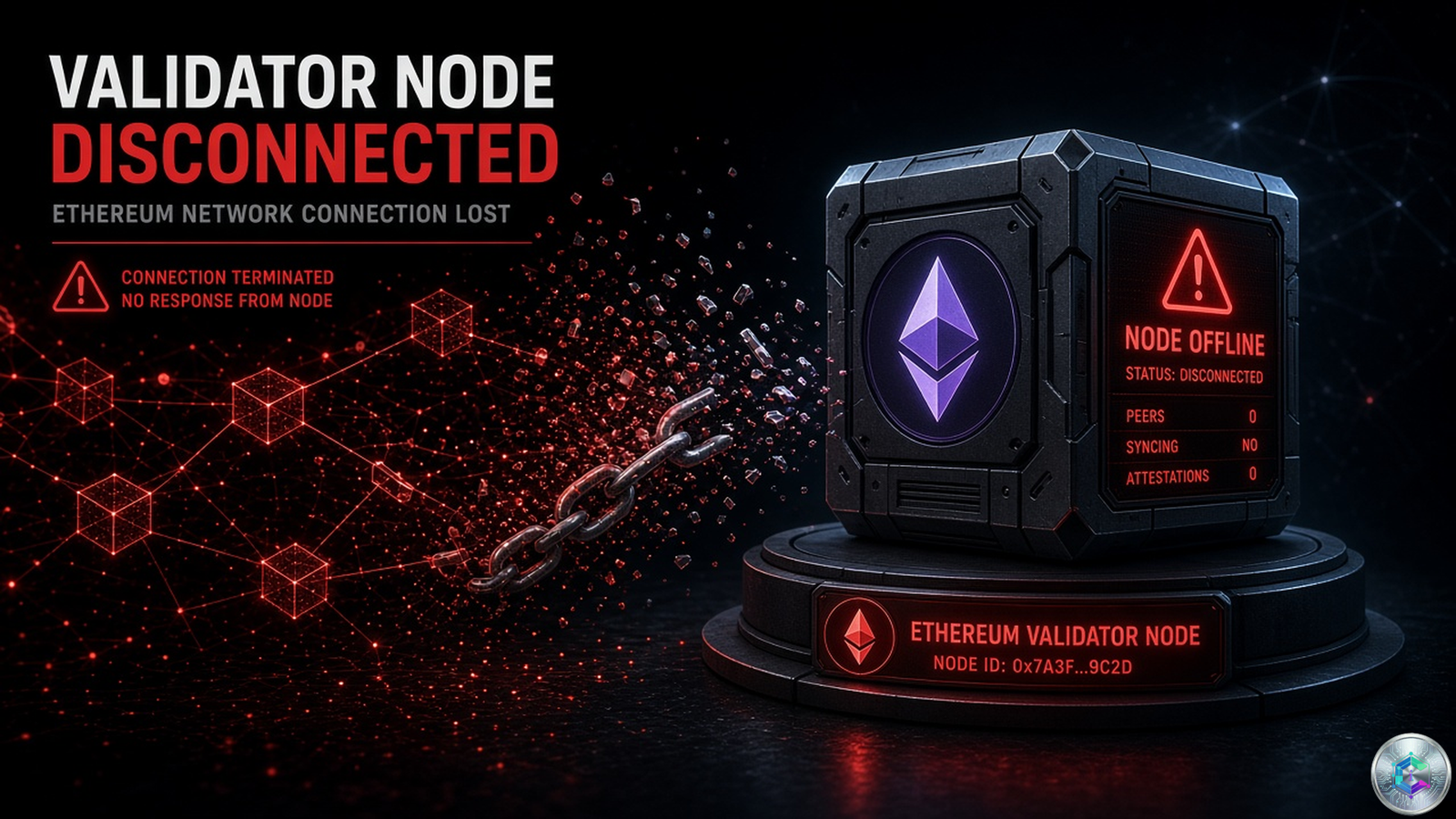
On September 30, 2026, MetaMask triggered the proactive exit of roughly 17,000 Ethereum validators from Lido staking after discovering a security incident within its infrastructure. While no client funds were lost, the episode highlights the operational risks inherent to non-custodial staking and triggered precautionary withdrawals across several DeFi protocols.
🔑 Key Takeaways
- MetaMask confirmed a security incident affecting part of its infrastructure on September 30, 2026.
- About 17,000 Ethereum validators operated by MetaMask Staking are exiting the Lido protocol.
- The full exit, withdrawal, and re-staking cycle could take around 45 days.
- Only ~0.36 ETH was reportedly siphoned through redirected fee payments.
- Ethena pre-emptively withdrew ~$135M from Morpho vaults before redeploying the funds.
The security incident: timeline and scope
On September 30, 2026, MetaMask publicly acknowledged being confronted with an incident affecting part of its technical infrastructure. The cryptocurrency wallet provider, which also operates staking services, stressed that it had identified “no immediate threat” targeting user wallets. No compromise of private keys or seed phrases was reported, and no client fund losses have been disclosed at this stage.
In response, MetaMask initiated a proactive exit procedure for validators operated by its MetaMask Staking division (formerly Consensys Staking) from its non-custodial staking service. Lido, the main liquid staking protocol affected, confirmed that validators operated by MetaMask Staking had begun leaving the protocol. According to estimates, the last affected validators are expected to complete their exit by October 7, 2026.
Ethereum security researcher Kaden provided the first on-chain analysis on X. Out of 19 validators operated by MetaMask that had recently earned block rewards, 18 had redirected fee payments to an unexpected address. The siphoned amount remains marginal — about 0.36 ETH — but the perimeter is far larger: roughly 17,000 validators holding nearly 523,000 ETH.
Technical mechanics: how a validator can be drained without touching the stake
The incident exploits a specific feature of the Ethereum protocol that is essential to understand in order to gauge the actual impact of the attack. Each validator has a separate fee recipient address that receives fee payments when the validator produces a block.
Modifying this fee destination allows an attacker to siphon block production revenues without affecting the location of the principal stake, which remains intact for legitimate withdrawal. A compromise of the validator’s operational credentials also opens a more severe risk: luring the validator into signing conflicting attestations, triggering a slashing penalty — Ethereum destroys part of the stake and permanently removes the validator from the network. At this stage, neither MetaMask nor Lido have reported that this has occurred.
“stETH holders do not need to take any action: the token continuously reflects the user’s proportional share of the ETH staked through the Lido protocol.”
Lido, statement of October 1, 2026
MetaMask stressed that its validator staking service is non-custodial and that it does not manage withdrawal keys on behalf of clients. Its staking stack is distributed across multiple clients: Teku and Lighthouse for the consensus layer, Geth and Besu for the execution layer. The infrastructure is also split between AWS and Azure, across multiple geographic regions — an architecture designed to limit the blast radius in case of compromise.
DeFi market response and on-chain movements
The DeFi ecosystem reacted quickly to the disclosures. Stani Kulechov, founder of Aave, stated on X that his platform was monitoring the situation alongside Lido, confirming no impact on Aave markets and the normal continuation of operations.
Several significant on-chain movements nonetheless drew market attention, although no direct connection to the MetaMask incident was confirmed:
| Movement | Amount | Protocol / Asset |
|---|---|---|
| Transfer — wallet linked to Joseph Lubin | 133,298 ETH (~$356M) | New address |
| Ethena withdrawal from Morpho | ~$75M | RLUSD vault (Ripple) |
| Ethena withdrawal from Morpho | ~$60M | PYUSD vault (PayPal) |
Ethena, the company behind the synthetic dollar stablecoin USDe, withdrew these funds from the Morpho lending platform in the context of the security revelations. According to a source close to the matter, the moves were purely precautionary. On-chain data shows that Ethena redeployed the funds after obtaining clarifications on the situation.
Open questions and outlook
Despite communications from MetaMask and Lido, several gray areas remain. The company has not identified the compromised systems, has not disclosed the exact attack vector, and has not indicated whether an attacker gained sustained access to internal data or operational credentials. No financial damage estimate has been provided.
On the operational side, Lido warned that the full cycle — validator exits, actual ETH withdrawal, and re-entry into the staking system — could take around 45 days, partly due to the queue to enter staking. During this time, the affected validators will miss rewards, and minor penalties may be incurred if validators are taken offline before completing their exit.
Conclusion: a wake-up call for non-custodial staking
While the incident did not escalate into a massive loss — the siphoned amount remains below one ETH — it highlights the operational attack surface of large staking operators. The separation between signing keys and fee recipient addresses, along with multi-client and multi-cloud diversification, does not eliminate residual risk as long as operational credentials can be compromised.
The coming days will be decisive: MetaMask will need to publish a detailed post-mortem to restore confidence, while Lido will have to manage a massive wave of exits without destabilizing the stETH market. For users, the lesson is clear — even the most distributed architectures are not immune to operator compromise, and diversification across providers remains the best structural protection.
Sources
This article is published for informational and educational purposes only. It does not constitute investment advice. Do your own research (DYOR) before making any decision.

