

On September 18, 2026, the U.S. Treasury blacklisted the Iranian crypto exchange BitBank and software firm Pishtaz Simorgh Electronic Trade Company, accusing them of channeling hundreds of millions of dollars in bitcoin to the Islamic Revolutionary Guard Corps (IRGC) through a toll levied on vessels transiting the Strait of Hormuz. The OFAC designation marks a new frontier in crypto-related sanctions enforcement and underscores bitcoin’s growing role as a geopolitical instrument for evading U.S. restrictions.
🔑 Key takeaways
- BitBank and Pishtaz Simorgh sanctioned on Sept. 18, 2026 by OFAC for bitcoin transfers to the IRGC since June 2026
- Tolls of $1M to $2M per vessel imposed since March 2026 by the Hormuz Safe Marine Services Authority
- Estimated daily flow of $20M to $21M (roughly 280-282 BTC) — a negligible share of global BTC volume
- Major technical constraints: the largest Lightning Network transaction ever recorded peaked at $1M
- Stablecoin freeze risk: Tether already blocked Iranian wallets in 2025, including $37M tied to the central bank
How the Hormuz crypto toll mechanism works
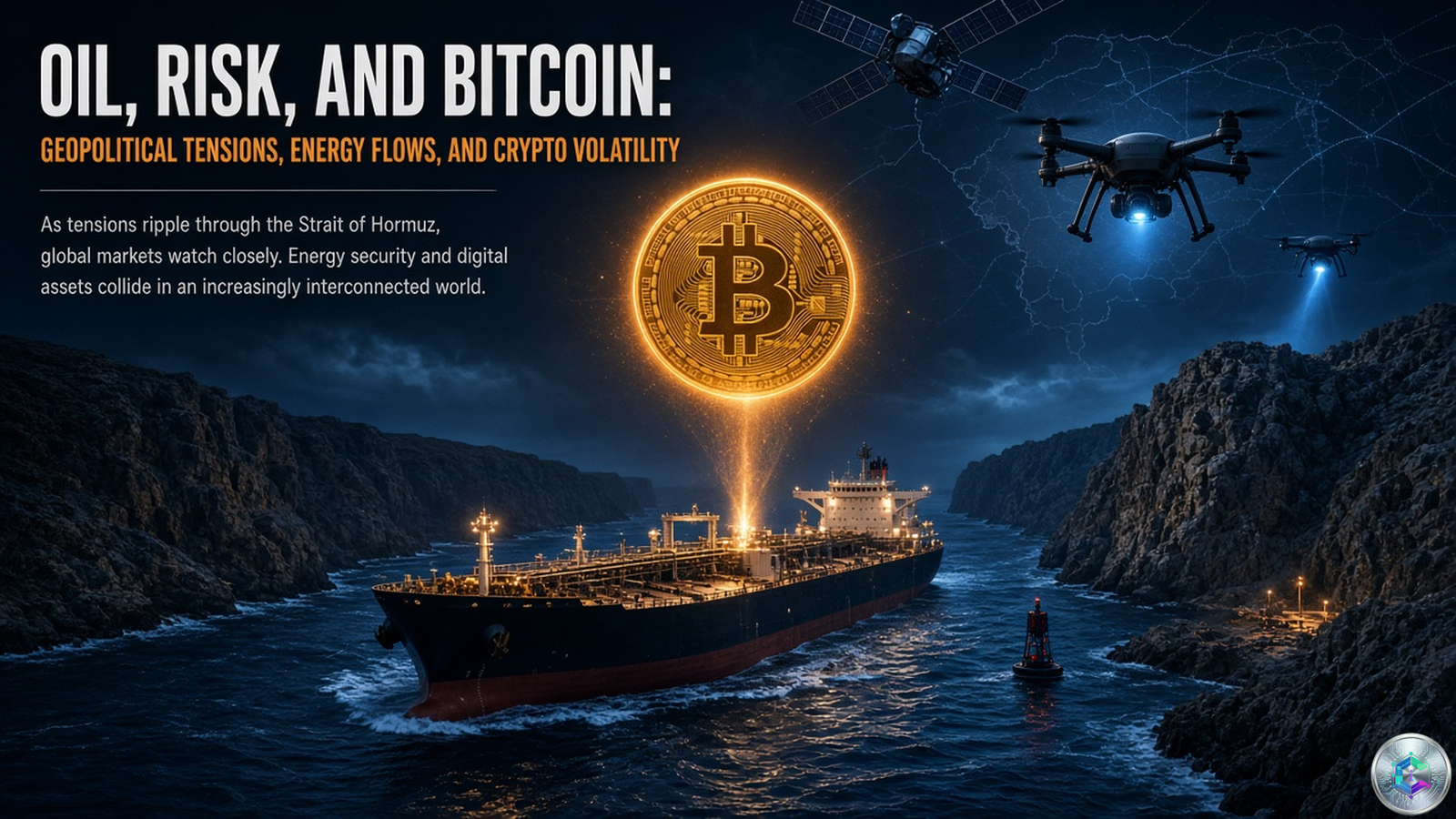
The scheme relies on a three-tier architecture. Since March 2026, the Hormuz Safe Marine Services Authority — itself sanctioned by OFAC on July 29 — has been collecting passage fees from tankers using the strategic corridor through which 21 million barrels of oil transit daily, roughly 20 % of global supply. The levy stands at $1 per barrel transported, equivalent to $1M to $2M for a typical super-tanker.
Since June 2026, part of these proceeds has flowed through BitBank, a Tehran-based exchange created in 2024 that serves as a technical intermediary to route toll revenues to regime entities, primarily the IRGC. Pishtaz Simorgh Electronic Trade Company provides the software layer enabling conversion and routing of payments in digital assets.
Hamid Hosseini, spokesperson for Iran’s Union of Oil, Gas and Petrochemical Exporters, detailed the process to the Financial Times: “Once the email is received and the assessment completed by Iran, vessels have a few seconds to settle in bitcoin, which ensures they cannot be traced or have their funds seized due to sanctions.”
Market reaction: a symbolic shock, not a structural one
The announcement of the bitcoin toll project, first reported by the Financial Times on April 8, 2026, triggered a sharp move in BTC price from $68,000 to $73,000 within hours. Analysts characterized the move as purely speculative, reflecting anticipated geopolitical adoption of bitcoin rather than any real liquidity impact.
For context, the estimated daily flow of $20M to $21M — roughly 280 to 282 BTC — represents an infinitesimally small share of total daily volume traded across major venues. The table below summarizes the scale:
| Metric | Value | Context |
|---|---|---|
| Toll per super-tanker | $1M to $2M | ~$1 per transported barrel |
| Estimated daily flow | $20M to $21M | 280 to 282 BTC per day |
| Global daily BTC volume | ~$40B | All venues combined |
| Toll share of volume | < 0.05 % | Negligible for liquidity |
| Largest Lightning transaction | $1M | Insufficient for a super-tanker |
“This is an extremely fluid situation in the middle of a conflict. We are not yet seeing on-chain evidence that toll payments are being made at scale.”
Ari Redbord, Global Head of Policy at TRM Labs
Contradictions over the nature of payments
Several specialized sources diverge on the actual settlement format. Chainalysis indicated that transactions are in fact settled in stablecoins, particularly USDT on the Tron blockchain, rather than directly in bitcoin. TRM Labs, for its part, reported that the IRGC invoices vessels in Chinese yuan, bitcoin, and potentially USDT, without being able to confirm a significant on-chain volume of crypto payments.
Deal-breaking technical limits
Sam Lyman, analyst at the Bitcoin Policy Institute, argued in an April 15, 2026 report that bitcoin is unfit for settlements of this magnitude. His demonstration rests on a damning technical observation: the largest transaction ever recorded on the Lightning Network (a second-layer protocol designed for fast, low-cost payments) reached only $1 million, well below the $2 million required for a super-tanker.
“Routing this value through Lightning, given current liquidity constraints, is virtually impossible,” he wrote. The main on-chain network, which is slower and more expensive, would also impose prohibitive fees for single transactions worth several million dollars.
The structural risk of centralized stablecoins
Stablecoin use is not without risk for Tehran. In 2025, Tether froze dozens of wallets linked to Iranian actors, including $37 million tied to the central bank, with more than 40 addresses flagged for sanctions exposure. Unlike bitcoin, whose transmission no one can prevent, stablecoins issued by centralized entities can be blocked at regulators’ request — creating a structural vulnerability for the Iranian setup.
Context: Iran’s crypto ecosystem under pressure
Iran legalized bitcoin mining in 2019. At its peak, Iranian miners represented 4 % of the global hashrate and operated more than 427,000 machines. According to TRM Labs, roughly $3 billion in crypto-related flows have been attributed to the Revolutionary Guards since 2019. The Iranian crypto ecosystem reached $7.8 billion in 2025, half of which came from the IRGC in the fourth quarter, according to compiled analytics data.
Geopolitical implications and outlook
On the diplomatic front, U.S. President Donald Trump publicly condemned the project: “Iran should not be charging fees. If they do, they should stop immediately.” He had previously floated the idea of a joint venture with Iran to secure the strait. On the Saudi side, Ali Shihabi, a commentator close to the royal court, warned: “Granting Iran any form of control over the strait would be a red line.”
If the toll remains in place without diplomatic resolution, shipowners will need to acquire substantial bitcoin amounts for each crossing. That could lift BTC demand in Asia, marginally influence the crypto price, and shift hashrate distribution toward the East. However, bitcoin’s technical constraints, the possibility of stablecoin freezes, and Washington’s firm stance make large-scale implementation highly uncertain. The outcome will largely depend on the trajectory of negotiations and the parties’ willingness to find common ground — failing which Brent crude could sustainably break the symbolic $100 per barrel threshold.
Conclusion: a precedent more than operational reality
The sanctions against BitBank mark a turning point in the extraterritorial application of U.S. law to crypto assets. For the first time, OFAC has explicitly designated an exchange infrastructure for its role in financing a sanctioned state via bitcoin-denominated maritime freight payments. Yet, as on-chain analysts stress, the Hormuz crypto toll remains, for now, more of a political signal than a verifiable operational flow. Between the technical limits of the Lightning Network, bitcoin’s native traceability, and the freezing power of stablecoin issuers, the Iranian scheme stays vulnerable — but its mere existence is enough to redraw the frontiers of monetary geopolitics.
Sources
- CoinDesk — Iran’s Strait of Hormuz toll booth ran through a bitcoin exchange, US says
- Yahoo Finance — Iran turns Strait of Hormuz into bitcoin toll
- Bitcoin Foundation — Iran first crypto payment
- Fortune — Iran Strait of Hormuz crypto tolls
- Bitcoin Magazine — Why Iran wants bitcoin for safe passage
- DL News — Iran bitcoin toll impossible to collect, analyst says
This article is for informational and educational purposes only. It does not constitute investment advice. Do your own research (DYOR) before making any decision.

