


Mistral AI announced on September 8, 2026 a €3 billion Series D fundraising, the largest ever completed by a private European technology company. Led by Samsung, the round pushes the French start-up’s valuation past €21 billion and cements its position as Europe’s flagship artificial intelligence champion against American giants OpenAI and Anthropic.
🔑 Key takeaways
- €3 billion Series D announced on September 8, 2026, valuation above €21 billion
- Round led by Samsung, joined by the Scaleup Europe Fund, PSG Equity, ASML and Nvidia
- Targets: 200 MW of compute by 2027 and 1 GW by 2030, backed by a €4 billion data center investment
- Multi-year, multi-billion-dollar compute contract signed with Microsoft
- Annualized revenue around €300 million, on track toward the €1 billion target
A round led by Samsung with the heavyweights of the industry
South Korean giant Samsung, already a shareholder through Samsung Ventures, led this historic Series D. It was joined by the Scaleup Europe Fund, created by the European Commission in May 2026 with a €5 billion endowment, as well as PSG Equity. Dutch company ASML, which became the largest shareholder during the Series C, and American chipmaker Nvidia also participated, alongside undisclosed investors.
The founders retain control of the company. CFO Johan Bergqvist confirmed this to Agence France-Presse: governance does not change, even though average investor tickets reached unprecedented levels for the European ecosystem. This setup contrasts with the massive dilution seen at some American competitors, where founders have lost majority stakes across successive rounds.
An exponential valuation trajectory in just three years
Founded in June 2023 by Arthur Mensch, Guillaume Lample and Timothée Lacroix, Mistral AI has charted a funding path unmatched in Europe. The company has closed six rounds totaling nearly $3.7 billion, supplemented by a debt facility of several hundred million dollars announced in spring 2026.
| Round | Date | Amount | Valuation |
|---|---|---|---|
| Seed | June 2023 | €105M | €240M |
| Series A | December 2023 | €385M | €2B |
| Series B | June 2024 | €600M | €5.8B |
| Series C | September 2025 | €1.7B | €11.7B |
| Series D | September 2026 | €3B | €21B+ |
The September 2025 Series C, led by ASML with roughly €1.3 billion invested for an estimated 11% stake, had already marked a turning point. Nvidia, DST Global, Andreessen Horowitz, Bpifrance, General Catalyst, Index Ventures and Lightspeed were also part of that round.
€3 billion to accelerate infrastructure and frontier models
CEO Arthur Mensch detailed the roadmap in the official release: “This fundraising gives us the means to move faster on research, products and infrastructure, and to help more organizations deploy AI at scale, on their own terms.”
“This fundraising gives us the means to move faster on research, products and infrastructure.”
Arthur Mensch, CEO of Mistral AI
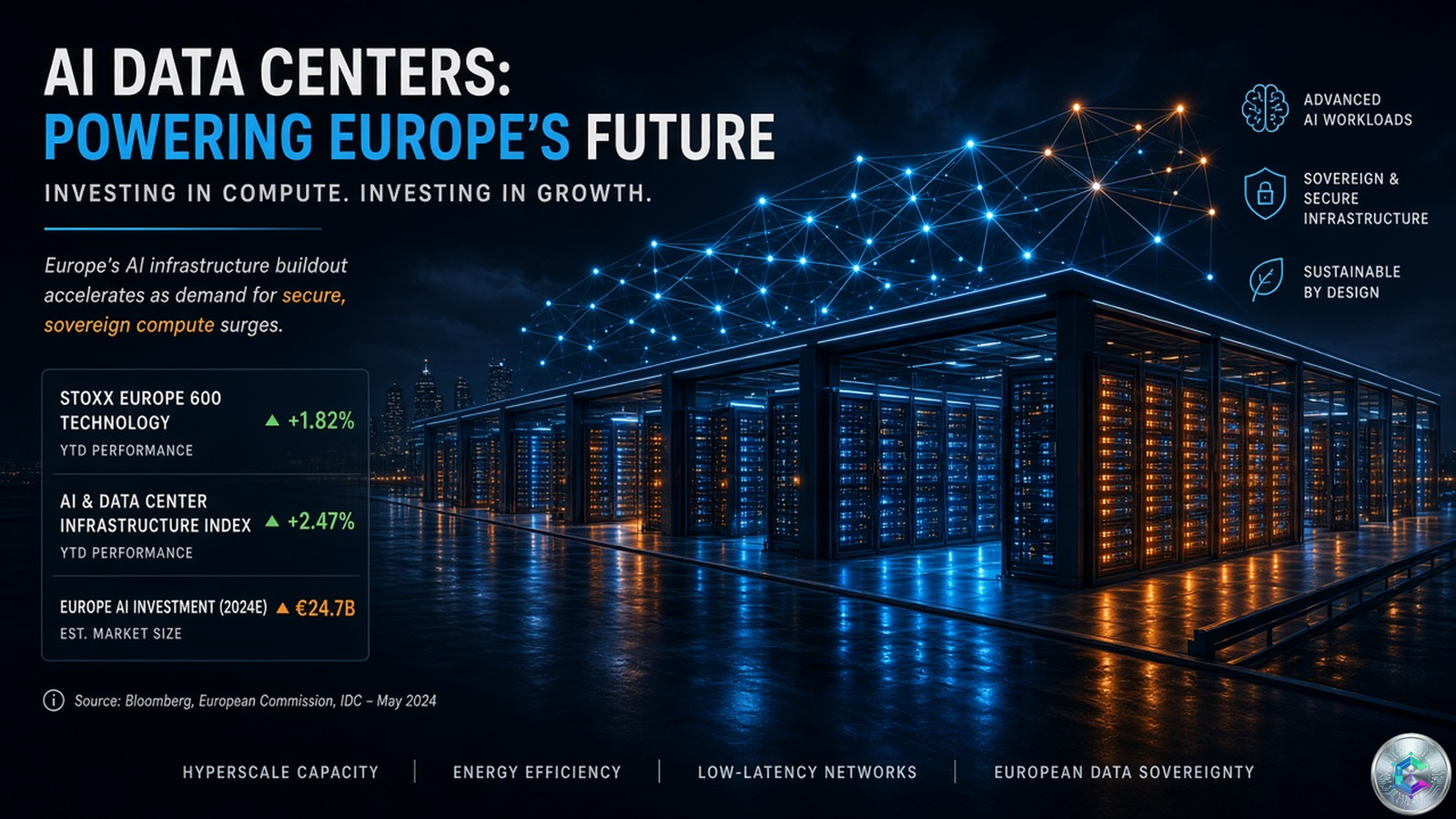
The company targets 200 MW of compute capacity by 2027 and 1 gigawatt by 2030, representing a cumulative €4 billion investment in data centers across France and Europe. The Compute cloud platform, launched in early 2026, already supports a multi-billion-dollar multi-year contract signed with Microsoft.
On the model side, Mistral is preparing new announcements for fall 2026 as part of the frontier model race. Its open architecture under the Apache 2.0 license remains a key differentiator: 60% of revenue comes from Europe, where native compliance with the AI Act — whose high-risk obligations took effect on August 2, 2026 — has become a commercial argument against American alternatives.
A business model winning over corporates and governments
Mistral works with BMW, Airbus, CMA CGM, EDF, BNP Paribas, TotalEnergies and Orange. BNP Paribas has teamed up with the start-up to build a European alternative to dominant American offerings. Tristan Nitot of consultancy Octo summarizes the appeal: running models on the client’s own servers guarantees that sensitive data never leaves the company’s perimeter.
The French state has signed a non-exclusive partnership to provide an AI assistant to civil servants, with experiments underway in several ministries, notably in cybersecurity. Headcount now exceeds 1,000 employees, almost doubled in a year. Annualized revenue sits at roughly €300 million, versus €30 million at the end of 2024, on the path toward the €1 billion target.
“We are more of a mix between Palantir and Anthropic.”
Johan Bergqvist, CFO of Mistral AI
Digital sovereignty: an edge against a widening gap
Despite this European record, comparison with the United States remains daunting. OpenAI was valued around $500 billion at the end of 2025 and raised $110 billion in March 2026. Anthropic closed a Series H at $183 billion, with an IPO in preparation that could surpass SpaceX’s. The two American leaders each trade near $1 trillion in valuation, roughly 50 times Mistral’s.
OpenAI has entered talks with Nvidia to secure up to $250 billion in financing dedicated to renting compute power, sums on a different scale. ASML, the largest shareholder, justifies its bet by the desire to “generate clear benefits for its customers through AI-enabled solutions,” according to CEO Christophe Fouquet, particularly to analyze data from EUV lithography.
The June 2026 episode, in which Washington forced Anthropic to cut off all foreign nationals’ access to its most advanced models for two weeks, reinforced Europe’s sense of urgency. French Economy Minister Roland Lescure warned from San Francisco: “If European AI comes down to Mistral, then we are done for. We cannot put all our eggs in the same basket.” The European Commission also launched in February 2026 a Frontier AI Grand Challenge, won by an Italian consortium tasked with developing an open-source model covering the EU’s 24 official languages.
Conclusion: a European champion, but not a monopoly
With a €21 billion valuation and €3 billion in fresh cash, Mistral AI has an unprecedented window to reach profitability and keep pace with American leaders on frontier models. The bet on open source and native AI Act compliance remains its strongest asset in an environment where digital sovereignty has become a structural procurement criterion for European administrations and large corporates.
However, the capital gap with OpenAI and Anthropic remains a structural handicap. The trajectory will depend on Mistral’s ability to convert its regulatory head start into market share against competitors with near-unlimited resources, and on building an ecosystem — rather than a single player — capable of rivaling the Microsoft, Google and Amazon triad in AI cloud.
Sources
This article is for informational and educational purposes only. It does not constitute investment advice. Do your own research (DYOR) before making any decision.

