


Austan Goolsbee, President of the Federal Reserve Bank of Chicago since 2023, delivers a nuanced analysis of the US economy in 2026. Between stubborn inflation, tariffs, and AI, the challenges for monetary policy remain considerable.
🔑 Key Takeaways
- US inflation has remained above the Fed’s 2% target for nearly six years, with CPI at 3.5% in June 2026
- Tariffs and Middle East conflict are fueling persistent rather than one-time inflationary pressures
- US consumer spending remains the pillar of economic stability, but remains vulnerable to a reversal
- Kevin Warsh, new Fed Chair, abandoned forward guidance and launched five reform working groups
Inflation: Between Glimmers of Hope and Caution
Austan Goolsbee, 55, former Chairman of the Council of Economic Advisers under Barack Obama (2009-2011), serves on the FOMC without a vote this year — a right he will regain in 2027. During an interview with PBS on July 15, 2026, he stated: “You never want to make too much hay out of any one number. You want to get several months before you think it’s a trend.” He acknowledged that inflation “has taken the wrong turn” for several consecutive months, but recent data is encouraging.
“You never want to make too much hay out of any one number. You want to get several months before you think it’s a trend.”
Austan Goolsbee, President, Federal Reserve Bank of Chicago, PBS, July 15, 2026
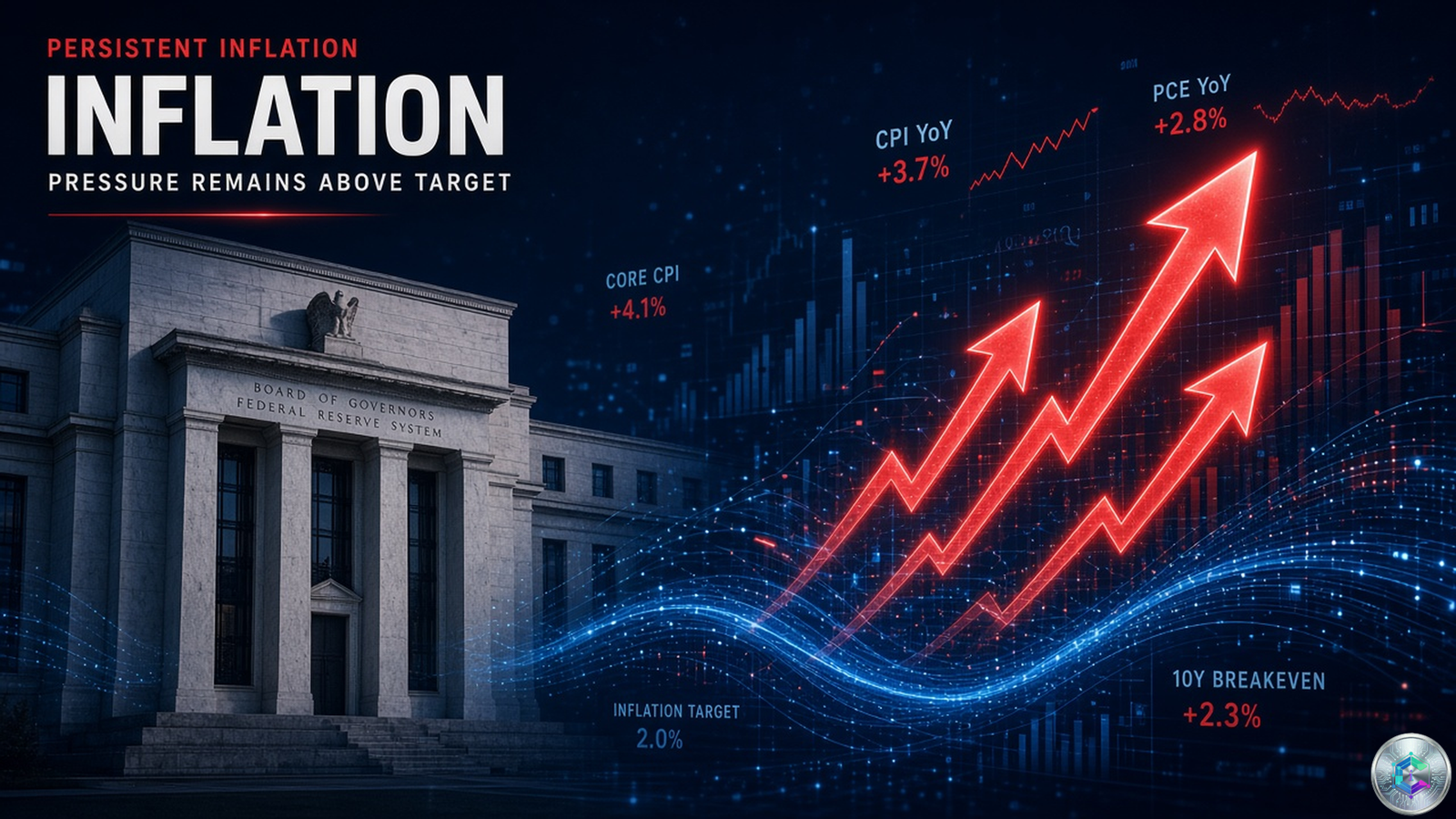
The context of this prolonged inflation is significant. As Goolsbee explained on Masters of Scale’s Rapid Response: “We’re now coming on six years that we’ve been above the official 2% inflation target.” Inflation has therefore persisted well beyond the Fed’s target, a situation that makes monetary policy all the more complex. The annual inflation rate for all goods and services fell to 3.5% in June 2026, compared to higher levels in previous months. Core inflation, excluding food and energy, stood at 3% according to the same data.
Tariffs and Middle East Conflict
Two main factors are fueling inflationary pressures according to Goolsbee: tariffs and the Middle East war, particularly the conflict with Iran. He described a situation where these shocks overlap rather than remaining one-time events: “Tariffs are supposed to be a one-and-done impact on prices. But that’s only true if it’s one and done, not if you keep adding new ones.” The conflict with Iran has also contributed to rising energy prices, creating a situation where households face multiple shocks simultaneously.
“Everybody that’s driving a car looks out the window and sees what’s been happening to inflation, especially on energy and gasoline prices. This was supposed to be going away, started going away, and then you add these uncertainties and the conflict flares back up. I think that’s part of why you’re seeing consumer confidence being as weakened as it is.”
Austan Goolsbee, PBS, July 2026
Risk of Unanchoring Expectations
One of the major dangers Goolsbee identifies is the risk that inflation expectations become self-fulfilling. He warned: “If people become convinced that inflation is going to be with them for an extended period, the job of the Fed becomes 100 times harder.” This phenomenon, which he calls unanchorage of inflation expectations, could create a spiral where households demand higher wages to compensate for rising prices, prompting companies to raise their prices in turn.
Labor Market: A Paradoxical Landscape
The US labor market presents unusual characteristics according to Goolsbee. In the Midwest (Illinois, Indiana, Iowa, Michigan, and Wisconsin), indicators are sending contradictory signals: “The hiring rate is extremely low, as low as what’s normally corresponds with the recession. But the layoff rate is also extremely low, what normally corresponds with the height of the boom.” Goolsbee explained this phenomenon by the uncertainty weighing on businesses: they hesitate to hire new employees for fear of a turnaround related to geopolitics or rapidly evolving economics, while also hesitating to lay off workers they found difficult to recruit.
| Indicator | Current Signal | Typical Interpretation |
|---|---|---|
| Hiring Rate | Extremely Low | Recession |
| Layoff Rate | Extremely Low | Economic Boom |
Consumer Spending as the Economy Pillar
Despite these uncertainties, Goolsbee considers US consumer spending as the main factor of economic stability. He told Fortune: “The thing that has kept the economy solid and stable is the unrelenting, continued consumer spending.” However, he remains vigilant: “If we hit a hiccup on consumer spending, to me, that is the biggest risk to continued stability and growth.”
“The thing that has kept the economy solid and stable is the unrelenting, continued consumer spending. If we hit a hiccup on consumer spending, to me, that is the biggest risk to continued stability and growth.”
Austan Goolsbee, Fortune, September 2026
In the 7th district of the Chicago Fed, Goolsbee observes that concerns primarily focus on the cost of living: “The number one thing that I hear is about affordability, about cost. If I talk to businesses, they say, ‘Our input costs are way up.’ If you talk to the farmers, they say, ‘We’re getting squeezed on both sides.'”
Artificial Intelligence: Between Productivity and Overheating
Regarding artificial intelligence, Goolsbee adopts a nuanced position, which he himself qualifies as a “grim optimist.” He explained on Masters of Scale: “If the productivity lands on us in an unexpected way, inflation goes down, and rates can go down. But the more expected it is, and the bigger the hype, it leads to just old-fashioned overheating in the short run, because equity values go up and so the businesses launch massive capital investment in the here and now.”
He also ridiculed past technologist predictions: “I would like them at least to acknowledge that in the last 10 or 15 years, they have declared numerous technologies were going to totally change the world and displace millions of jobs, and we’re still waiting for those ones to happen, whether from autonomous vehicles to NFTs and blockchain.” The expansion of AI-related data centers worries Goolsbee for its ripple effects on the economy: “I would characterize the expansion of the data centers as very hot, but largely shoving other parts of the economy down. The rise has been stepping on others — they’re competing for the resources. When I’m touring around the 7th district, people are saying, ‘We’re having to scale back our plans because getting construction workers is too expensive, you can’t get HVAC.’ That implies a sector rebalance, that is different from an aggregate overheating, but that said, we’re not far from that turning into aggregate overheating.”
New Fed Direction and Communication Changes
Kevin Warsh was confirmed as the new Fed Chair by Congress in May 2026. Goolsbee highlighted his past collaboration with Warsh during the 2009-2011 global financial crisis: “I saw his actions in a moment of real stress in the economy. He was real level-headed, so I’m optimistic.” He described Warsh as a “serious guy” in a CNBC interview on June 25, 2026, adding: “He comes in with new ideas. You saw in the press conference that he comes with a different style.”
“Any time the central bank is saying, ‘We think we’re going to do X,’ you don’t know what the conditions are going to be when it actually comes to that circumstance. And then if you end up not doing it, the market and the public say, ‘They made us a promise, and they didn’t carry it out,’ so your credibility takes a hit.”
Austan Goolsbee, CNBC, June 2026
One of the major changes initiated by Warsh is abandoning “forward guidance,” the practice of indicating in advance the likely future rate directions. Goolsbee expressed his support for this decision. Warsh also launched five working groups to reform monetary policy, covering topics ranging from measuring inflation to the impact of artificial intelligence on the labor market. Goolsbee commented: “It’s helpful to have some new re-thinks. Let’s have a discussion about reforming the way the Fed does business.”
Conclusion
For Goolsbee, the main risk for the US economy lies in a possible slowdown in consumption. He urged a return to traditional economic indicators: “What I would like to shift it back to is the thing in my mind that has made the economy stable and growing — despite a series of pretty intense shocks — is the unrelenting, continued consumer spending.” At the July 2026 FOMC meeting, Goolsbee said he was comfortable maintaining the benchmark rate at its current level, citing improvement in recent inflation data (all-items CPI down 0.4% in June, flat at +0.1% in July). Markets expected roughly a 30% probability of a rate hike in September by late June, according to the CME Group’s FedWatch tool. The annual Jackson Hole symposium in Wyoming, organized by the Federal Reserve Bank of Kansas City, is the next major gathering for central bankers worldwide. Goolsbee described it as an event “not an FOMC meeting where we’re making any decisions, but there’s a lot of learning. They’re bringing in top people who are giving papers on various subjects.” The FOMC committee, composed of 12 regional Fed presidents and seven politically appointed members with 14-year terms, is designed to function despite uncertainties. Goolsbee explained: “In every venue, we’re always trying to make decisions under time pressure and without full information, and that’s true at the Fed, too. And so that’s why I actually think this committee character has a diversity of perspectives, which is important at times when you’ve got this much uncertainty.”
Sources
This article is published for informational and educational purposes. It does not constitute investment advice. Do your own research (DYOR) before making any decision.

