


On August 25, 2026, the Blockchain Association threw its weight behind the US Treasury’s proposed rules implementing Section 3 of the GENIUS Act. The endorsement comes at a pivotal moment as America’s first federal framework for payment stablecoins moves from statute to operational implementation.
🔑 Key takeaways
- The Blockchain Association backs Treasury’s NPRM published August 18, 2026
- The GENIUS Act, signed July 18, 2025, creates the first US federal definition of payment stablecoins
- Two core prohibitions: unauthorized issuance and distribution of non-compliant foreign stablecoins
- Penalties reach up to $1 million per violation and five years in prison
- Effective by January 18, 2027 at the latest, with full DASP obligations from July 18, 2028
An unprecedented federal framework for stablecoins
The Guiding and Establishing National Innovation for U.S. Stablecoins Act (GENIUS Act) was signed into law on July 18, 2025, establishing the first comprehensive federal regulatory framework for payment stablecoins in the United States. The statute defines a payment stablecoin as a digital asset designed for use as a means of payment or settlement, whose issuer is obligated to convert, redeem, or repurchase the token for a fixed monetary value while maintaining a stable peg.
The GENIUS Act expressly excludes national currencies, bank deposits, and securities from its scope. This carve-out matters: it positions payment stablecoins in a new regulatory category distinct from traditional securities law.
On August 18, 2026, the Treasury Department published a Notice of Proposed Rulemaking (NPRM) in the Federal Register to implement Section 3 of the statute. The proposal defines what it means to “issue a payment stablecoin in the United States,” giving the industry clarity on when a GENIUS license is required. It also clarifies what it means to “offer or sell” a payment stablecoin to a person “in the United States.”
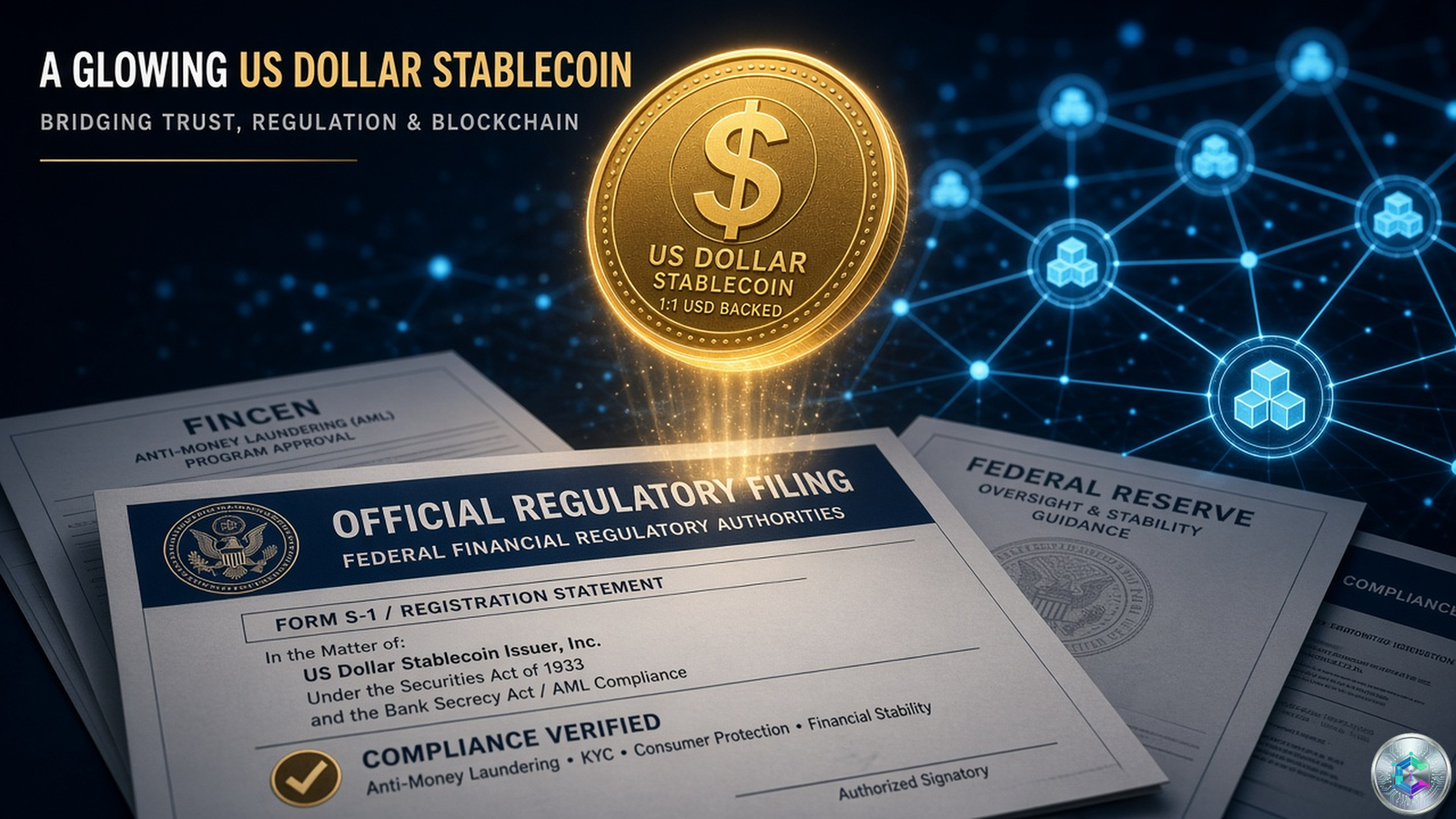
“President Trump and Congress passed the GENIUS Act, establishing a historic framework and clear rules for payment stablecoins, and Treasury is moving full speed ahead to implement that framework.”
Scott Bessent, US Treasury Secretary
Two core prohibitions to lock down the market
Issuance restricted to authorized issuers
Section 3(a) of the GENIUS Act prohibits anyone other than an “authorized payment stablecoin issuer” from issuing such an asset in the United States. An authorized issuer must be a US-formed entity meeting one of three criteria: a subsidiary of an insured depository institution, a qualified federal payment stablecoin issuer, or a qualified state payment stablecoin issuer.
Willful participation in a violation triggers severe consequences: a fine of up to $1 million per violation, imprisonment of up to five years, or both.
Treasury further clarifies when a stablecoin is considered “issued”: at the moment of the first transfer of a newly minted token to an outside party for circulation or redemption. Tokens minted but not yet transferred to an external party are not considered issued under this framework.
Restrictions on digital asset service providers
Section 3(b) imposes a two-pronged prohibition on Digital Asset Service Providers (DASPs):
- First prong (effective July 18, 2028): prohibits offering or selling a payment stablecoin to a US person unless the issuer is authorized.
- Second prong (effective January 18, 2027): prohibits offering, selling, or making available in the United States any stablecoin issued by a foreign issuer unless that issuer has the technological capability to comply with US legal orders and reciprocal arrangements between jurisdictions.
Timeline, regulators and AML/CFT obligations
The GENIUS Act takes effect on the earlier of two dates: 18 months after enactment (i.e. January 18, 2027), or 120 days after federal regulators publish final implementing regulations. Treasury has opened a 60-day public comment window following Federal Register publication, with submissions available on regulations.gov.
On February 25, 2026, the Office of the Comptroller of the Currency (OCC) issued Bulletin 2026-3, containing its own NPRM to implement the GENIUS Act for issuers under its jurisdiction. Adam J. Cohen, Deputy Comptroller and Chief Counsel, signed the bulletin. The OCC will exercise authority over subsidiaries of national banks, qualified federal issuers, and certain qualified state issuers.
On April 8, 2026, the Financial Crimes Enforcement Network (FinCEN) and the Office of Foreign Assets Control (OFAC) jointly published an NPRM requiring authorized issuers to comply with federal anti-money-laundering (AML) and sanctions laws. The comment period closed June 9, 2026, with final regulations required before July 18, 2026.
A booming stablecoin market
The supply of dollar-pegged stablecoins has surged, reaching nearly $280 billion by the end of 2025, up from roughly $25 billion in 2020. This trajectory reflects the growing integration of stablecoins in cross-border payments and decentralized finance (DeFi).
| Period | Market cap (USD Bn) |
|---|---|
| December 2020 | 25 |
| December 2022 | 137 |
| December 2024 | 203 |
| December 2025 | 280 |
Transaction volumes have also climbed sharply since 2024 and now process several trillion dollars in annual volume. Treasury justified its decision not to apply existing securities or commodities law frameworks: the operational mechanics of stablecoins, such as minting and redemption, differ from traditional securities in ways that existing frameworks do not adequately address.
Conclusion: toward an operational framework by 2027
The Blockchain Association’s endorsement sends a constructive signal to the US crypto ecosystem. By clarifying issuance and distribution conditions, the GENIUS Act could cement the dollar’s dominance in digital payments while giving domestic players a readable operating framework.
The coming months will be decisive: the quality of final regulations and coordination with foreign regulators will determine whether the US can attract innovation while preserving financial stability and AML/CFT (Anti-Money Laundering / Combating the Financing of Terrorism) compliance. For foreign issuers, technological capacity to comply with US orders will become a key competitive factor from January 2027 onward.
Sources
- The Block – Blockchain Association backs GENIUS Act stablecoin rules
- OCC Bulletin 2026-3
- US Treasury press release SB0605
- Brookings – Next steps for GENIUS payment stablecoins
- JD Supra – Treasury proposes rules to implement Section 3
- NetBankAudit – Treasury GENIUS Act illicit finance rules
This article is published for informational and educational purposes only. It does not constitute investment advice. Do your own research (DYOR) before making any decision.

