


Goldman Sachs has sharply revised its outlook on US monetary policy. On August 17, 2026, chief economist Jan Hatzius described a September Fed interest rate hike as “very unlikely,” citing expected improvement in inflation and a weakening labor market. The reversal marks a dramatic break from the bank’s projections issued just one year earlier.
🔑 Key takeaways
- On August 17, 2026, Goldman Sachs called a September Fed rate hike “very unlikely”
- Jan Hatzius cites improving inflation, weak retail sales, and a cooling labor market
- CME FedWatch implied odds for a 25 bps hike in September stood at just 30.6%
- The call reverses Goldman’s July 2025 forecast, which projected five consecutive cuts
- Bitcoin holds near $63,500 within a $62,000-$66,000 range for over a month
Goldman’s diagnosis of the US economy
In a note published on August 17, 2026, Goldman Sachs chief economist Jan Hatzius delivered a notably downbeat assessment of the odds of further monetary tightening by the Federal Reserve. In his view, the combination of declining inflation and a softening labor market leaves no economic justification for additional rate hikes.
“Under our baseline economic forecasts, news on inflation is more likely to improve further than to deteriorate again over the course of the year. We continue to believe that market pricing for the funds rate is excessively hawkish.”
Jan Hatzius, Chief Economist at Goldman Sachs
Goldman highlighted three decisive indicators: weak retail sales, slowing job growth, and decelerating inflation. These signals point to a scenario in which the Federal Reserve has no objective reason to tighten policy further.
Markets reacted to the note. According to the CME FedWatch tool, the implied probability of a 25 basis point (bps) hike in September stood at 30.6%, down from materially higher expectations just weeks earlier. Investors are now pricing in a prolonged pause.
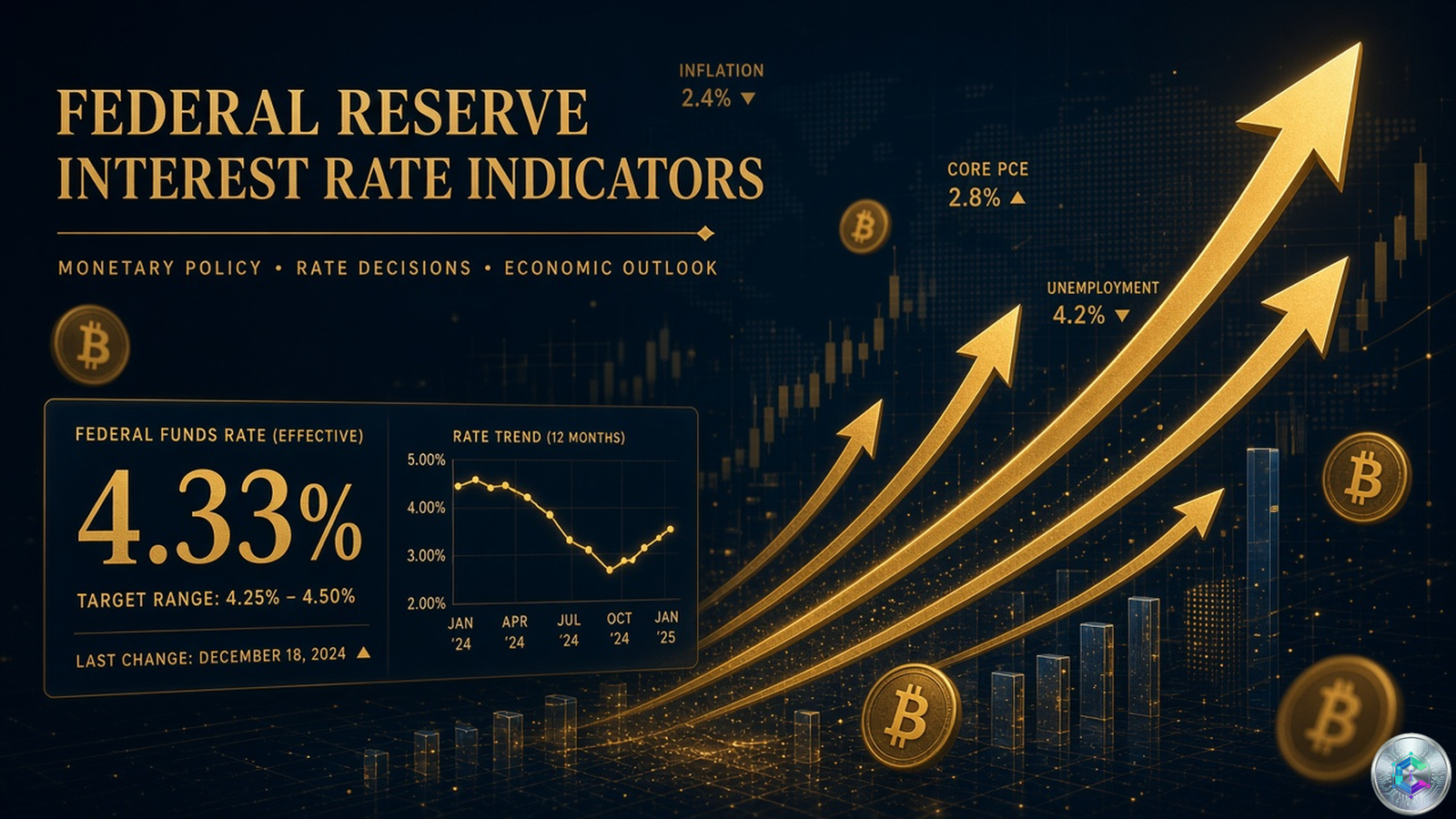
This revised macroeconomic reading contrasts sharply with the summer of 2025, when the same bank had anticipated a marked easing cycle.
A dramatic reversal from 2025
Goldman’s pivot is all the more striking because it contradicts forecasts issued barely a year earlier. On July 7, 2025, then-US chief economist David Mericle estimated that the Fed could cut rates as early as September, with a probability “slightly above 50%.”
The research team projected five successive 25-bps cuts: in September, October, and December 2025, then in March and June 2026. The terminal rate forecast was revised down from a 3.5%-3.75% range to 3%-3.25%.
| Forecast date | Economist | Anticipated scenario | Terminal rate |
|---|---|---|---|
| July 2025 | David Mericle | 5 cuts of 25 bps starting September 2025 | 3.00% – 3.25% |
| August 2026 | Jan Hatzius | Hike very unlikely, status quo preferred | 3.50% – 3.75% (unchanged) |
In an earlier interview with Brazil Journal, David Mericle had already defended the thesis of a “soft landing” for the US economy. He projected rates would remain stable in the 5.25%-5.50% range through Q3 2025, with a first cut envisaged for Q4 2024. That long-held conviction has clearly not survived the actual data observed in 2026.
The July FOMC meeting and internal dissent
The monetary backdrop tightened at the Federal Open Market Committee (FOMC) meeting on July 29, 2026. The federal funds rate was held at 3.50%-3.75%, but the vote revealed unusual internal tensions: nine votes for holding, but three dissents in favor of a 25-bps hike.
The three hawks were Beth Hammack (Cleveland), Neel Kashkari (Minneapolis), and Lorie Logan (Dallas). It marked the largest number of dissents since September 2016. The implied probability of a September hike, as calculated by CME FedWatch, jumped to 71.3% the day after the meeting, up from 55.8% the day before.
“The Committee remains resolved to ensure price stability.”
Kevin Warsh, Chairman of the Federal Reserve
Fed Chairman Kevin Warsh was evasive about the future trajectory during the press conference, declining to predict next steps. That caution did not prevent markets from pricing in a more restrictive scenario after the meeting.
Bitcoin, equities, and risk appetite
Goldman’s note comes against a backdrop where Bitcoin, the traditional barometer of risk appetite, trades in a tight range. On August 17, 2026, the cryptocurrency traded around $63,500, up roughly 1% since midnight UTC. For over a month, BTC has oscillated between $62,000 and $66,000, a sign of relative stability despite monetary uncertainties.
Equity markets reacted unevenly to the July 2026 decision. The Nasdaq erased its losses to close marginally higher at +0.05%, while the S&P 500 slipped 0.23% and the Dow Jones shed 1.32%. Two-year Treasury yields fell, reflecting investor repositioning.
Goldman Sachs CEO David Solomon offered an important nuance during a Barclays conference on August 17, 2026. For him, there is no urgency to cut rates: “It does not seem to me that the interest rate is extraordinarily restrictive when you look at risk appetite.” Investor enthusiasm, he added, currently sits at the high end of the spectrum.
That view clashes with pressure from the Trump administration. Treasury Secretary Scott Bessent has recently called on the Fed to cut rates by at least 1.5 percentage points. For her part, Beth Hammack reiterated that no case could be made for a near-term cut, with inflation remaining above the 2% target and trending upward.
Conclusion
Goldman Sachs’s August 17, 2026 note marks a notable inflection point in the debate over the US monetary trajectory. By labeling a September rate hike “very unlikely,” Jan Hatzius validates a scenario of prolonged status quo, backed by receding inflation and a weakening labor market. Yet the three hawkish dissents at the July FOMC remind us the institution is not unanimous.
In this environment of uncertainty, Bitcoin continues to display contained volatility in the $62,000-$66,000 range. Upcoming inflation prints and Kevin Warsh’s remarks at the Jackson Hole symposium will be decisive in assessing whether the Goldman scenario – durable status quo – holds, or whether the Fed ultimately pivots toward a new tightening cycle.
Sources
This article is published for informational and educational purposes only. It does not constitute investment advice. Do your own research (DYOR) before making any decision.

