


Taiwan’s Shilin District Court sentenced Shih Qiren, the mastermind behind the BitShine crypto platform, to 22 years and 16 months in prison for a crypto fraud and money laundering scheme that caused 39 million dollars in losses across 1,539 identified victims. The ruling, delivered on July 16, 2026, marks one of the harshest penalties ever handed down in Taiwan for a digital asset case.
🔑 Key Takeaways
- Shih Qiren sentenced to 22 years and 16 months on 485 counts of aggravated fraud and money laundering.
- The network laundered roughly NT$2.3 billion (US$71 million) between January 2024 and April 2025.
- The court recognized NT$364.5 million in proven losses out of 1,539 initially identified victims.
- The operation relied on 45 physical storefronts operating under the BitShine and BiXiang brands.
- The verdict follows Taiwan’s new Virtual Asset Service Act adopted on June 30, 2026.
A verdict after an exceptional trial
The judicial proceedings against Shih Qiren and his accomplices concluded on July 16, 2026, after nearly a year of unusually dense hearings. Between January and April 2026, the Shilin District Court heard no fewer than 513 witnesses, an exceptionally high volume even by Taiwanese standards for organized fraud cases.
Prosecutors had sought a 25-year prison sentence, but the court ultimately imposed a slightly shorter term: 22 years for aggravated fraud and money laundering charges, plus an additional 16 months for operating virtual asset services without registering with anti-money laundering (AML) authorities. Shih denied the allegations throughout the investigation. His case remains appealable, meaning the final decision has not yet been reached.
The scale of the fraud and the criminal mechanism
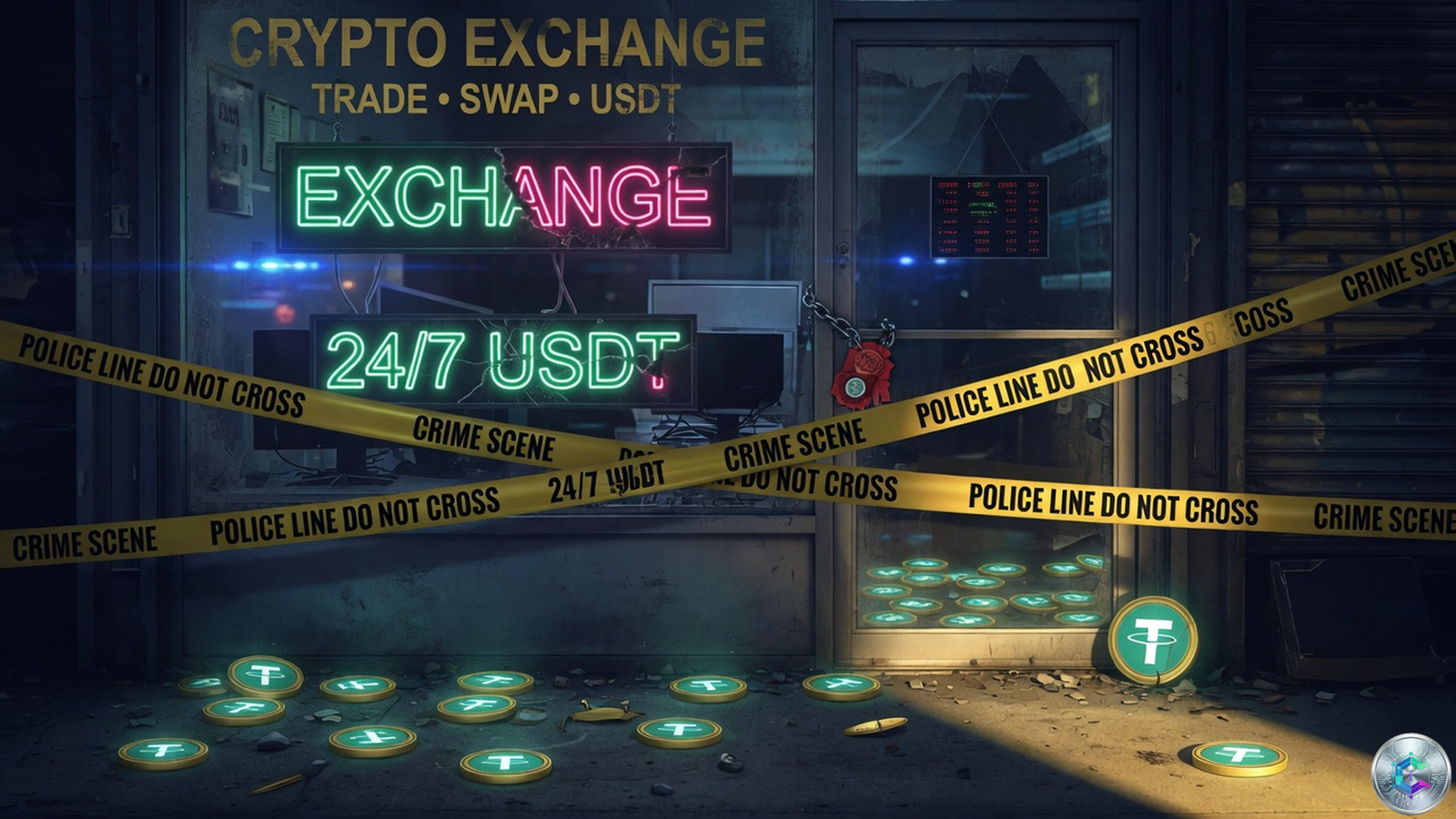
The BitShine network operated as a full-fledged illegal franchise, running 45 physical storefronts across Taiwan under two brand names, BitShine and BiXiang, both serving as fronts for a single entity: Bixiang Technology. This company had initially secured registration with the Financial Supervisory Commission (FSC), then abused that status to conduct unauthorized operations.
The modus operandi was methodical: victims were instructed to visit these stores in person with cash, buy USDT tokens (Tether, a US dollar-pegged stablecoin), and transfer those funds to designated wallets. Transfers were then obfuscated through multiple operations and the use of cold wallets (offline storage devices). The funds were ultimately converted into US dollars and transferred abroad.
« The court found that testimony was insufficiently corroborated for 1,059 victims, and that it was impossible to prove they had been directed to BitShine by the fraud network rather than discovering the platform independently. »
Excerpt from the Shilin District Court ruling
Loss figures revised downward
| Metric | Initial Prosecution | Court Verdict |
|---|---|---|
| Amounts laundered | NT$2.3 billion (~US$71M) | NT$2.3 billion (~US$71M) |
| Recognized losses | NT$1.275 billion (~US$39M) | NT$364.5 million (~US$11M) |
| Victims identified | 1,539 | 480 recognized |
| Witnesses heard | 513 | 513 |
| Storefronts | 45 shops | 45 shops |
Organized crime links and asset seizures
Taiwanese authorities confirmed the organization maintained direct links with organized crime groups. Prosecutors established collaboration with fraud networks affiliated with the Heavenly Way Alliance, one of Taiwan’s three major mafia groups, as well as the Bamboo Union gang.
Raids conducted in April 2025 across the 45 stores and seven residences yielded approximately 647,000 USDT, small amounts of bitcoin and TRX tokens (Tron network), over NT$60 million in cash, plus two luxury vehicles: a Ferrari and a Maserati SUV. The court ordered the confiscation of NT$43.73 million in criminal profits, and bank deposits exceeding NT$100 million were identified.
A fake compliance system
The organization had recruited compliance officers who were unaware of the operation’s true nature to set up KYC (Know Your Customer, identity verification) procedures. Intermediaries then coached members of the fraud networks on how to answer verification questions, allowing victims to complete onboarding and execute their crypto purchases under a veneer of legitimacy. Shih Qiren had previously served as head of Southeast Asia operations at CoinW, an offshore exchange that had never completed its AML registration in Taiwan, before investing roughly 19.2 million USDT to acquire an already-registered entity and exploit its compliance record as a shell for illicit activities.
A regulatory turning point for Taiwan
This sentence fits into a broader regulatory tightening in Taiwan. On June 30, 2026, the Legislative Yuan passed the Virtual Asset Service Act, replacing the previous AML registration system with a full licensing regime covering exchanges, custodians, transfer firms, lending service providers, and other service providers.
Existing businesses will have 12 months to file for regulatory approval and a maximum of 21 months to obtain a license, with a possible single three-month extension. Stablecoin issuers must secure approval from both Taiwan’s central bank and the FSC, maintaining fully backed reserves (assets held in trust at 100% parity) with regular audits and public disclosures.
The new criminal penalties are significant: unauthorized virtual asset services or illegal stablecoin issuance can trigger up to 7 years in prison and NT$100 million in fines, while fraud and market manipulation carry 3 to 10 years and fines up to NT$200 million.
Conclusion: toward an era of heightened accountability
The BitShine ruling sends a clear signal to crypto operators walking the line of legality in Taiwan. With a combined sentence of 22 years and 16 months, 485 criminal counts, and massive asset confiscations, Taiwanese justice demonstrates its capacity to handle large-scale crypto fraud cases. The timing alongside the new Virtual Asset Act reinforces a coherent, modernized enforcement framework.
If the appeal confirms the ruling, this case could become a precedent-setting decision in Asia for laundering operations involving stablecoins and physical distribution networks. For investors, the message is unambiguous: the appearance of regulatory compliance does not guarantee legitimacy, and DYOR (Do Your Own Research) remains the first line of defense.
Sources
- The Block — Taiwan sentences BitShine crypto exchange ringleader to 22 years
- Crypto Briefing — Taiwan BitShine ringleader 22 years fraud
- Crypto Times — Taiwan jails BitShine operator for 22 years
- TechNext24 — Taiwan jails BitShine boss
- CryptoNews — BitShine fraud legal coverage
This article is published for informational and educational purposes only. It does not constitute investment advice. Do your own research (DYOR) before making any decision.

