


The Swiss franc has never been stronger. In early 2026, the Helvetic currency has climbed to levels not seen since the darkest hours of the European financial crisis, when investors worldwide rushed into safe-haven assets. Against this brutal backdrop, the Swiss National Bank (SNB) finds itself caught between two contradictory imperatives: containing an appreciation that threatens the competitiveness of the domestic industry, and preserving the value of massive reserves denominated in US dollars. It is in this tense context that a bold proposal is resurfacing with renewed insistence: what if Switzerland integrated bitcoin into its official reserves?
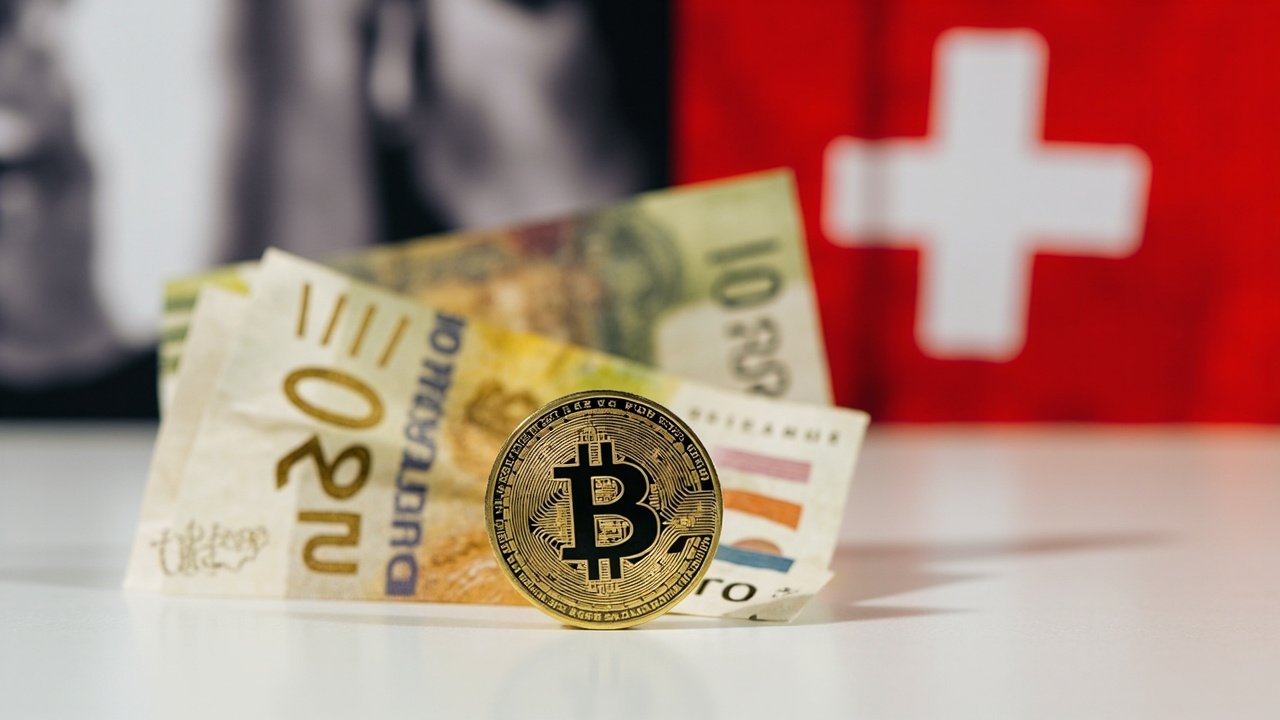
The SNB Faces a Historic Challenge on the FX Market
With more than CHF 765 billion in foreign exchange reserves, the Swiss National Bank ranks among the world’s best-capitalized central banks. To put that figure into perspective, it represents nearly 90% of Switzerland’s annual gross domestic product. And a significant portion of these holdings — approximately 36% according to the latest available data — is denominated in US dollars.
This is precisely where the problem lies today. Since the outbreak of the Middle East conflict involving Iran, capital flows have abruptly shifted toward safe-haven assets. The Swiss franc, traditionally regarded as a safe bet on international markets, has experienced record appreciation. The USD/CHF exchange rate has plummeted, progressively making Swiss products more expensive for foreign buyers.
The SNB made its position clear during its latest monetary policy review: it stands ready to intervene in the foreign exchange market to curb any excessive franc appreciation. « Given the conflict in the Middle East, the SNB’s willingness to intervene in the foreign exchange market has increased, » declared the institution’s chairman, Martin Schlegel. This statement marks a rhetorical turning point: the central bank is no longer content to merely monitor exchange rate developments — it is directly threatening to enter the market.
This situation highlights the SNB’s structural dependence on the dollar. Each greenback appreciation translates into an accounting loss on Swiss reserves. The first quarter of 2026 perfectly illustrates this mechanism: the SNB recorded a loss of CHF 8.2 billion on its foreign currency positions, partly driven by franc strength. Such erosion threatens, in the medium term, the central bank’s capacity to fulfill its price stability mandate.
A Popular Initiative to Amend the Constitution
While SNB officials multiply verbal interventions and foreign exchange operations, a civic movement is attempting to bypass the traditional monetary policy debate by going through the Constitution. In December 2024, a popular initiative was officially registered with the Swiss Federal Chancellery. Its purpose: to amend Article 99 of the Federal Constitution to require the Swiss National Bank to hold part of its reserves in bitcoin.
The text proposes adding simply three words at the end of the existing sentence. Article 99 currently states: « The Swiss National Bank shall create sufficient currency reserves from its revenues; part of these reserves shall be held in gold. » The initiative suggests appending: « and in Bitcoin. » A minimalist change in form, but considerable in its implications.
The group behind this proposal is led by Yves Bennäim, a digital sector entrepreneur and recognized author in French-speaking Switzerland. He has gathered around him a collective of Swiss cryptocurrency advocates sharing a common vision: to make Switzerland the first country in the world to officially integrate bitcoin into its strategic reserves. The campaign has collected more than 100,000 signatures, a threshold sufficient to trigger a national referendum. If the vote were to take place, Swiss citizens would directly decide on the country’s monetary future.
Martin Schlegel’s Clear Rejection
Faced with this mobilization, the SNB chairman did not pull his punches. In April 2025, Martin Schlegel publicly rejected any prospect of integrating bitcoin into the central bank’s reserves. His position rests on two main arguments: liquidity risk and cryptocurrency market volatility.
« Bitcoin is not part of the Swiss National Bank’s plans, » he flatly stated during a press conference. A definitive formulation that contrasts with the sometimes nuanced tone usually adopted by banking officials. Schlegel also pointed out that the SNB did not intend to follow the American example, where the Trump administration had embarked on a similar drive to build strategic reserves in digital assets.
Yet the reality of the SNB’s balance sheet is more ambiguous than it appears. According to data compiled by Fintel, the Swiss central bank held significant positions at the end of 2024 in American companies themselves heavily exposed to bitcoin. Notably: 520,000 shares of Strategy — formerly MicroStrategy — the group specializing in bitcoin treasury reserves, 8.12 million shares of Tesla, 580,000 shares of MARA Holdings, and 500,000 shares of CleanSpark. An indirect but very real exposure, which SNB critics are all too happy to point out.
The European Central Bank is not to be outdone. Its president, Christine Lagarde, has described bitcoin as « an asset worth nothing » and « a highly speculative vehicle linked to money laundering. » A scathing condemnation that illustrates the persistent gap between traditional institutions and cryptocurrency advocates.
The Full-Scale Test of a Swiss Franc Stablecoin
Beyond the reserves debate, the Swiss banking sector is moving forward with caution but determination in the digital ecosystem. In April 2026, six major Swiss banks launched a joint project to test a Swiss franc-pegged stablecoin. UBS, the country’s largest bank, partnered with PostFinance, Sygnum — one of the world’s first banks to obtain a blockchain financial intermediary license —, Raiffeisen, ZKB, and BCV to form a unique consortium.
This project, officially named CHF Stablecoin Sandbox, is coordinated by Swiss Stablecoin AG. It operates on an Ethereum blockchain and aims to explore potential use cases for the stable cryptocurrency in the real economy. Testing is set to continue throughout 2026 and could ultimately result in the regular issuance of digital tokens pegged to the Swiss franc.
This initiative carries considerable symbolic weight. It demonstrates that major Swiss financial institutions are taking asset tokenization seriously, independently of the bitcoin reserves question. If the test succeeds, the Swiss franc would become one of the first major currencies to have an institutional-grade digital equivalent, consolidating Switzerland’s position as an innovative financial hub.
What Deutsche Bank Says About the Future of Reserves
The debate is not limited to Switzerland. Deutsche Bank Research published a report in 2025 titled « Bitcoin vs. Gold: The Future of Central Bank Reserves by 2030, » offering a novel macroeconomic perspective. According to this analysis, gold and bitcoin could coexist on central bank balance sheets by the end of the decade, driven by evolving market dynamics and growing institutional adoption.
The report emphasizes that the US dollar shows signs of structural weakness, pushing central banks to diversify their reserve assets. In this context, gold retains its historical role as a safe-haven asset, while bitcoin emerges as a digital store of value with complementary characteristics. The massive appreciation of the Swiss franc in recent months validates, a posteriori, this analysis of growing interest in non-dollar-denominated safe-haven assets.
This convergence between current geopolitical trends and predictions from major financial institutions lends weight to the Swiss proposal. The country stands at a crossroads: continue to rely on a dollar-centric system, or prepare the transition toward a more diversified monetary order.
A Debate That Extends Far Beyond Switzerland
The Swiss proposal is part of a broader global movement. Several nations now view bitcoin as a legitimate reserve asset. The United States officially took the step under the Trump administration, creating the precedent Switzerland lacked to justify its own approach. Other emerging countries, particularly in Latin America, have already integrated bitcoin into their diversification strategies.
For Switzerland, the stakes are twofold. On one hand, the competitiveness of its financial sector is at play — a sector that traditionally attracts capital from around the world thanks to its stability and innovation. On the other hand, the country must manage the consequences of chronic currency appreciation, which is progressively eroding the margins of its export industry.
The watchmaking sector, a pillar of the Swiss economy, is sounding the alarm. Nick Hayek, CEO of the Swatch Group, has publicly expressed concerns about franc strength, arguing that the SNB is not doing enough to protect the domestic industry. A way out of this vicious circle might lie in a diversification of reserves that would reduce structural dollar dependence.
The referendum, if held, will therefore be far more than a technical vote on monetary policy. It will seal Switzerland’s choice between an established order and a new financial paradigm. The coming months will be decisive.
Sources: Reuters, CoinDesk, Swissinfo, Bloomberg, Deutsche Bank Research, SNB.ch, Finance Yahoo, Anadolu Agency, CNBC, Trading Economics, initiativebtc.ch

