

Bitcoin Surges Past $74,000 Despite Middle East Tensions: Is This Rebound Here to Stay?
A Surprising Rebound Amid Geopolitical Risks
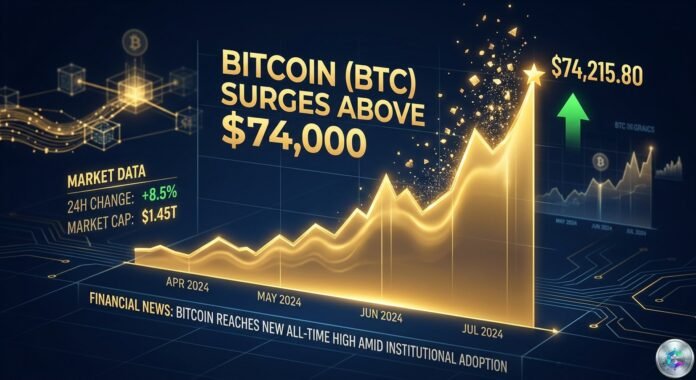
The cryptocurrency market just experienced one of the most unexpected sessions of early 2026. While geopolitical tensions between the United States and Iran continue to shake global financial markets, Bitcoin (BTC) managed to rebound above $74,000, posting a gain of nearly 5% over twenty-four hours. Ether (ETH) followed with a 7.9% rise, trading at $2,365.
This move raises a crucial question: does this rebound reflect real structural demand or a temporary short squeeze?
The Unfavorable Macroeconomic Environment
The current macroeconomic environment had nothing obvious for risk assets. US crude oil jumped 7.4% to $103.69 on April 13, with the US preparing for a potential blockade of the Strait of Hormuz and Iranian ports. Brent followed to $102.24.
Such an oil surge should have triggered widespread selling on risk assets, fueling inflation and stagflation fears. Yet Bitcoin not only resisted but rebounded, showing remarkable resilience.
Technical Factors Driving the Rebound
Multiple technical elements support this rise. First, liquidity on exchanges remains high, enabling capital inflows without major friction. Second, short squeeze data shows short positions were forced to cover, amplifying the bullish move.
Momentum indicators also turn positive, with the daily RSI passing above 70 on major exchanges. This technical configuration suggests strength rather than mere speculation.
Institutional Perspective
Institutional interest in Bitcoin remains solid. Bitcoin investment products recorded their third consecutive week of net inflows, according to Bloomberg data.
This persistent institutional demand demonstrates market maturation and its growing integration into diversified allocation strategies for major investors.
Conclusion and Outlook
Bitcoin’s rebound above $74,000 shows its ability to absorb major geopolitical shocks. The durability of this move will depend on several factors: US-Iran negotiation developments, Federal Reserve monetary policy trajectory, and continued institutional inflows.
The coming days will be crucial in confirming whether this rebound represents a new durable bullish phase or merely a technical correction.

