

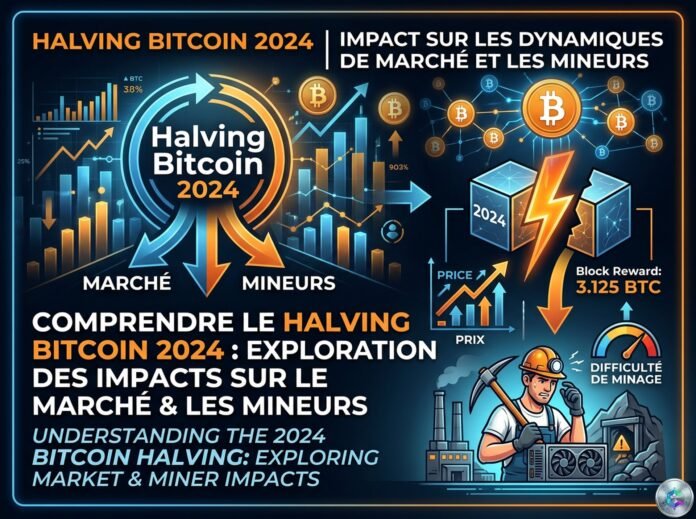
The fourth Bitcoin halving, occurring in April 2024, reduced miner rewards by 50% to 3.125 BTC per block. This programmatically scheduled event raises questions about supply dynamics, mining profitability, and medium-term market movements.
🔑 Key Takeaways
- Mining reward reduced to 3.125 BTC, impacting miner margins.
- Daily Bitcoin supply decreased by approximately 450 BTC, enhancing scarcity.
- Historically, prices have increased 12-18 months post-halving.
- Monitor hashrate trends and miner behavior closely.
1. Understanding the Halving Mechanism and Protocol Objectives
The halving is a scheduled event in the Bitcoin protocol that halves the reward allocated to miners for block validation. Since inception in 2009, three halvings have occurred, and the 2024 event set the reward at 3.125 BTC. The goal is to control the inflation of Bitcoin’s supply, which has a maximum cap of 21 million units.
This mechanism ensures a controlled decline in emission, creating digital scarcity similar to assets like gold. With each halving, the growth rate of circulating supply diminishes, which can influence price dynamics if demand remains constant or increases.
2. Immediate Impact on Miners and Profitability
With reduced rewards, miners face direct pressure on their margins. Mining operations require high fixed costs, notably in electricity and equipment. Profitability now depends more on Bitcoin’s price and transaction fees.
| Parameter | Pre-Halving 2024 | Post-Halving 2024 | Impact |
|---|---|---|---|
| Block Reward | 6.25 BTC | 3.125 BTC | 50% reduction |
| Daily Emission | ~900 BTC | ~450 BTC | 450 BTC/day decrease |
| Fee Dependence | Moderate | High | Transaction fees become crucial |
« The halving forces miners to innovate to cut costs or rely more on transaction fees, potentially increasing short-term volatility. » — Analyst at Glassnode
3. On-Chain Data Analysis and Historical Trends
On-chain data, available via tools like CoinGlass or Glassnode, provides key indicators to assess the halving’s impact. The hashrate, a measure of network computing power, has historically increased post-halving, signaling miner confidence.
Historically, Bitcoin prices have seen significant gains 12 to 18 months after each halving. For instance, after the 2016 halving, the price increased by over 2,800% by end of 2017. However, past performance does not guarantee future results, and other macroeconomic factors play a role.
Key Indicators to Watch
- Hashrate: Uptrend indicates network health.
- Miner Behavior: Selling or holding BTC can affect market supply.
- Transaction Fees: Increases could offset reward losses.
4. Perspectives and Market Scenarios
Medium-term, several scenarios are considered. If Bitcoin demand remains robust, notably via spot ETFs approved in 2024, reduced supply could support price increases. However, selling pressure from struggling miners could lead to increased volatility.
Analysts predict an adjustment period where less efficient miners might exit the market, a consolidation beneficial long-term. Monitoring macroeconomic indicators, such as interest rates and institutional adoption, is essential to anticipate movements.
Conclusion
The 2024 halving marks a crucial step in Bitcoin’s evolution, reinforcing its digital scarcity and testing the mining network’s resilience. Historical data suggests long-term growth potential, but short-term risks related to miner profitability are real.
Investors and observers should adopt a prudent approach, relying on on-chain analysis and macroeconomic trends rather than speculation. Bitcoin’s future will depend on the balance between reduced supply and increasing demand.
📚 Sources
- CoinGlass — Real-time data on hashrate and exchange flows
- Glassnode — Advanced on-chain analysis for Bitcoin
- CoinDesk — Crypto market news and analysis
- TradingView — Charts and technical indicators
This article is published for informational and educational purposes only. It does not constitute investment advice. Do your own research (DYOR) before making any decisions.

