


Data centers feeding the AI boom have become a standalone fixed-income asset class. According to the Structured Finance Association and Barclays, securitizations backed by these facilities climbed from $4B to $61B in five years, on track to hit $180B by 2028.
🔑 Key takeaways
- Data center securitization outstanding: $61B at end-July 2026, vs $4B in 2020.
- Barclays projection: $180B by end-2028.
- Hyperscalers: $132B of debt raised in the first seven months of 2026.
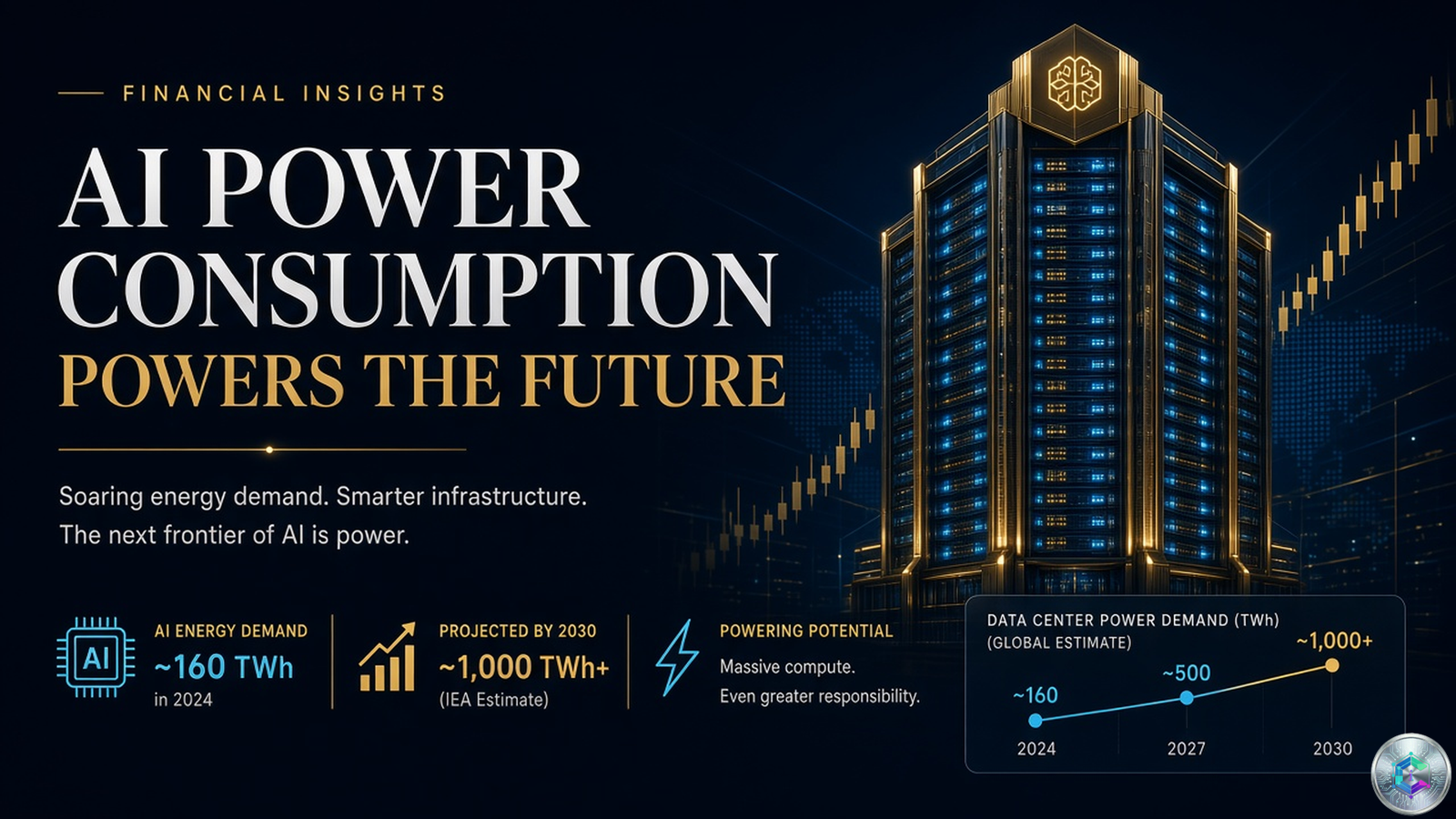
- US data centers: up to 649 TWh by 2030, i.e. 11.8% of national electricity.
- S&P rates A(sf) on Sabey’s $475M data center notes in February.
From server campus to rated bond
The structure rests on dedicated special-purpose vehicles that hold the buildings, the leases and the power supply contracts. Once the site is operational and leased, the sponsor transfers the asset and the leases to a special issuer, which then issues debt securities backed by those cash flows.
Investors are repaid from rents and service fees paid by tenants—hyperscalers, cloud operators or AI compute providers—after deducting electricity, maintenance, taxes and insurance. Electricity sits at the top of the cash-flow waterfall: the megawatt price and power availability can weigh on bond returns almost as much as the tenants’ own creditworthiness.
In February, S&P assigned an A(sf) rating to $475M of 2026-1 notes issued by Sabey Data Center Issuer, secured by the underlying real estate and lease payments. The rating shows that a high-quality hyperscaler counterparty is enough to convert an industrial asset into investment-grade paper.
The mechanics of issuance
| Structural parameter | Market standard |
|---|---|
| Maximum loan-to-value | 70% of appraised value |
| Sponsor equity cushion | At least 30% |
| Expected repayment point | ~5 years |
| Legal maturity | 25–30 years |
| Average ABS data center deal | ~$600M |
| Average CMBS data center deal | ~$1.2B |
Most transactions are organized as a « master trust »—a crown vehicle to which new eligible data centers are added and from which follow-on notes are issued. This architecture turns a portfolio of server campuses into a recurring source of bond funding.
On July 29, the SEC’s Division of Corporation Finance ruled that data center securitizations meeting the criteria laid out in a memo from law firm Latham do not fall within the ABS definition under the Securities Exchange Act. The reading lets issuers escape the 5% risk-retention rule, Rule 192 on conflicts of interest and select disclosure requirements, while remaining subject to federal anti-fraud law and the usual registration exemptions.
Hyperscaler debt takes off
Funding demand tracks the power curve. Between 2020 and 2024, Alphabet, Amazon, Meta, Microsoft and Oracle issued an average of $35B of debt per year. In 2025, that figure nearly tripled to $93B. As of July 31, 2026, those five firms had already raised approximately $132B—including a multi-tranche deal worth around $53B and a rare 100-year « century » bond.
| Period | Cumulative hyperscaler debt issued |
|---|---|
| 2020–2024 (annual average) | $35B |
| Full year 2025 | $93B |
| First 7 months of 2026 | $132B |
| Full-year 2026 (estimate range) | $300–570B |
Lucas Baynes, senior strategist at Vanguard, pegs 2026’s full-year AI-related debt issuance between $300B and $570B. Hyperscaler capex, meanwhile, is set to approach $800B in 2026 and exceed $1 trillion per year from 2027 through 2030. According to Lawrence Berkeley National Laboratory’s 2025 update, US data centers could consume 649 TWh by 2030 in the baseline scenario—11.8% of national electricity—with a 521–843 TWh range (9.5%–15.3%) depending on chip shipments, server utilization and cooling efficiency.
Indigestion signs in the primary market
The flood of supply is starting to bite. When BlackRock went out to raise several billion dollars for a Meta campus, lead managers JPMorgan and Morgan Stanley favored « real-money » accounts (pension funds, insurers) to weed out fast-money buyers. The $12.5B deal at 7.5% was nonetheless undersubscribed, although the bonds did perform after pricing.
Elsewhere, SpaceX’s $25B deal weakened in its first trading days. Amazon’s 10-year spread widened by seven basis points within days; Nvidia’s widened by 5 bps in its first week. Combined, Amazon, Alphabet, Nvidia, Meta, Oracle and SpaceX have collected more than $200B in year-to-date 2026, versus just $13B a year earlier over the same period.
« The main obstacle for banks and issuers is the lack of secondary market performance. The market can absorb these issues, but the scale and speed create indigestion. »
John Servidea, Co-Head of Global Investment Grade Finance, JPMorgan Chase
Investment banks expect another wave after Labor Day. One banker flags $50–60B of hyperscaler debt lined up for the coming weeks, with several clients asking for a pause to digest the supply. Meta has committed to staying out of the market until Q4 after its April $25B issuance; Oracle pulled $25B in February and does not plan to return in 2026.
In parallel, a $15B loan is in negotiation for an Anthropic campus in Texas, backed by Alphabet. Goldman Sachs is working on $5.4B for a QTS site tied to Microsoft and Blackstone. In Europe, Equinix xScale placed senior secured debt on two UK data centers in Slough, pricing the spread immediately without a wall-crossing phase.
Risks and blind spots for bondholders
Risk vectors for data center bondholders are multi-layered. Volatile spot electricity prices, physical availability of megawatts, tenant concentration—often a handful of hyperscalers—and technological evolution (denser chips requiring costly retrofits) can all weigh on debt service. The expected repayment point around year five leaves issuers exposed to refinancing risk if the bond market turns at that point. A growing share of funding migrates to private credit and off-balance-sheet structures, reducing traceability in public bond indices.
Demand-response strategies inspired by Bitcoin mining—modulating load against the spot price—are spreading among data center operators to smooth peaks and protect margins. Per 247 Wall St, data center power consumption could multiply by 14 by 2028, and electricity prices have already risen 6.1% year-on-year—roughly 61% faster than overall inflation.
« Given every hyperscaler’s capex ambitions, I’m not in a rush to add. »
Kshitij Sinha, Fixed Income Portfolio Manager, Canada Life Asset Management
Lucas Baynes at Vanguard warns that sector concentration in IG will compress diversification in bond portfolios. He recommends monitoring four indicators: concessions on new issues, spread evolution, migration to private credit and capex trajectories.
Conclusion
Wall Street has succeeded in turning a megawatt into a bond coupon. The resilience of the model will hinge on issuer discipline at the year-five repayment point and on operators’ ability to manage the tension between power costs and guaranteed rents. In the short term, the post-Labor-Day window will test digestion of the stock already sold; in the medium term, it is the creditworthiness of hyperscaler tenants—and their appetite for new gigawatts—that will set the path toward the projected $180B market.
Sources
- CryptoSlate
- Ground News
- Vanguard — AI buildout comes to bond market
- Financial Post — AI debt indigestion
- Yahoo Finance
- 247 Wall St
Cet article est publié à titre informatif et éducatif. Il ne constitue en aucun cas un conseil en investissement. Faites vos propres recherches (DYOR) avant toute décision.

