

Lambda, the AI-focused neocloud operator, has closed a $1 billion short-term private debt facility led by JPMorgan to purchase Nvidia GPUs and lease them to Microsoft. The deal, disclosed in late August 2026, crystallizes the debt-fueled arms race reshaping AI infrastructure, where chipmakers, hyperscalers and lenders are increasingly intertwined in circular financing structures.
🔑 Key Takeaways
- Lambda raised $1B in short-term private debt arranged by JPMorgan.
- Proceeds will fund additional Nvidia GPUs to be leased to Microsoft.
- The facility comes ahead of a potential $3B pre-IPO round and a H2 2026 listing.
- Unrated private debt pricing likely sits between SOFR + 400 and 700 bps (7.5% to 12% all-in).
- Globally, more than $400B of AI-linked debt has been raised in the first eight months of 2026.
A debt facility collateralized by GPUs and customer contracts
The financing takes the form of a senior secured short-term loan, collateralized by Lambda’s Nvidia GPU fleet and its long-term lease contracts. Advance rates on this asset class typically range from 50% to 70% of the collateral’s fair market value.
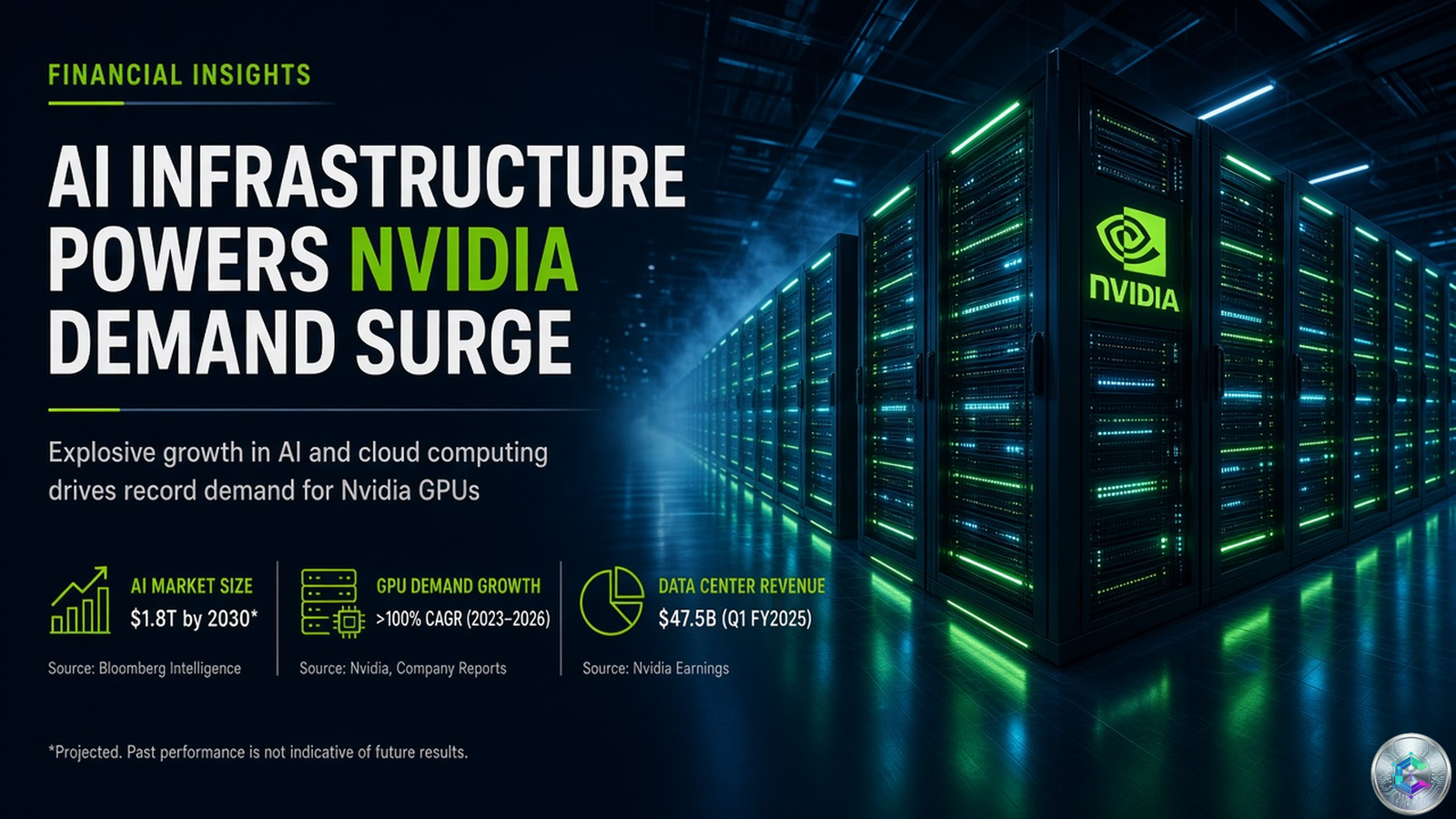
For an Nvidia H100 GPU — currently priced at $20,000 to $25,000 on the secondary market — this translates into $10,000 to $17,500 of borrowing capacity per unit. The presence of a firm contract with Microsoft, an AAA-rated hyperscaler, allows lenders to anchor at the upper end of that range and push the advance rate close to 70%.
“The structure bets on rapid chip deployment and immediate revenue generation, enabling accelerated repayment from future cash flows.”
Bloomberg, August 28, 2026
Lambda is not alone. Nebius, a European neocloud backed by private capital, borrowed $775M against its own GPUs under a $19.4B five-year Microsoft contract. Both players run the same playbook: convert a hyperscaler backlog into collateral eligible for private debt.
Funding history: from Austin to Wall Street
The new billion-dollar facility is the latest milestone in a debt-led growth strategy that dates back to 2025. In August 2025, Lambda had established a $275M secured credit line. By May 2026, that envelope had grown to $1B, nearly four times larger. In parallel, the company closed a $926M loan (per AInvest) — or $917M per The Next Web — to finance Nvidia GB300 GPUs under a deployment contract with Nvidia itself.
The Nvidia deal is striking: the chipmaker acts simultaneously as investor, supplier and indirect customer via the Microsoft contract. That circularity lowers lender risk, but also creates tight interdependencies between the three players. In November 2025, Lambda also closed a $1.5B Series E round at a $5.43B post-money valuation per PitchBook, or roughly $5.9B per AInvest. The gap reflects different methodologies and reference dates. The multi-billion-dollar Microsoft contract covering tens of thousands of GPUs was signed the same month.
A $350M convertible note is reportedly being placed since June 2026, alongside negotiations for a pre-IPO round of up to $3B, paving the way for a potential listing in the second half of 2026. Should the IPO price below the $5.9B mark, the equity cushion protecting lenders would be mechanically compressed.
CoreWeave vs Lambda: the cost of capital gap
Comparing Lambda with CoreWeave — its closest competitor, now listed on Nasdaq since March 2025 — highlights the cost-of-capital gap between public and private neoclouds.
| Metric | Lambda (private) | CoreWeave (Nasdaq-listed) |
|---|---|---|
| Recent facility | $1B (Aug 2026) | $8.5B (Mar 2026) + $3.1B (May 2026) |
| Rating | Not published | A3 / A(low), then Ba2 / BB+ |
| Pricing | Est. SOFR + 400-700 bps | SOFR + 225 bps (floater) / 5.9% (fixed) |
| All-in cost | ~7.5% to 12% | ~6.7% to 7.5% |
| Total debt | ~$2.5B | ~$25.1B (Q1 2026) |
The pricing gap reflects Lambda’s private status, the absence of a public rating and the short-dated maturity of the loan. CoreWeave has also seen its total debt grow by roughly $3.5B per quarter, reaching $25.1B in Q1 2026, and accepted a rating downgrade (from A3 to Ba2) on its second facility — a sign that private credit markets are starting to price in sector risk.
Regulatory warnings and systemic risks
The wave extends well beyond Lambda: according to Bloomberg, more than $400B of AI-linked debt has been raised globally in the first eight months of 2026 alone, including CoreWeave, Nebius and several European neoclouds.
“A collapse in AI investment could disrupt credit markets on a 2008-like scale.”
Bank for International Settlements, June 2026
The ECB warned in May about opaque private credit valuations and portfolio concentration in a handful of US issuers whose valuations follow the AI narrative. The BIS was blunter in June, noting that insufficient disclosure of transaction terms makes it difficult to verify whether the same collateral is being rehypothecated (reused as security for multiple loans) across multiple facilities. Lambda’s circular structure — with Nvidia acting as investor, supplier and indirect customer via Microsoft — is a textbook case.
The GPU depreciation risk
Finally, GPUs depreciate by 55% to 70% over three to four years. An H100’s value curve looks roughly like this: $40,000 in year zero, $28,000 in year one, $18,000 in year two and $12,000 in year three. Facilities are structured with a 20% to 30% annual principal amortization to stay ahead of that depreciation. If repayment slows, the loan goes underwater — tail risk (extreme loss exposure) is mitigated by rental revenues, but never eliminated.
Conclusion: leverage that works as long as AI demand holds
Lambda offers a near-surgical illustration of the new AI financial architecture: a private neocloud raising short-term debt against fast-depreciating GPUs, leasing them to a creditworthy hyperscaler, and betting on enough cash flow before an IPO. As long as demand for inference (running AI models in production) outstrips supply, the loop holds. The day it reverses — capacity saturation, falling utilization rates, a slowdown in generative model demand — the entire chain, from Nvidia to Microsoft to JPMorgan to Lambda, contracts simultaneously.
Sources
- TechCrunch – Neocloud Lambda secures $1B in debt to buy more chips
- Techmeme – August 28, 2026
- The Next Web – Lambda’s $1B private debt deal
- AInvest – Lambda $1B credit facility analysis
- Ground News / Bloomberg – Nvidia-backed Lambda inks $1B private debt
This article is for informational and educational purposes only. It does not constitute investment advice. Always do your own research (DYOR) before making any decision.

