


Federal Reserve Chair Kevin Warsh takes the Jackson Hole stage on Friday for his first keynote at the helm of the US central bank, under intense pressure from a bond market that has already priced in tighter policy. With July CPI at 3.4% and long-end Treasury yields climbing, investors want clarity on the Fed’s reaction function and on its independence from the Trump administration.
🔑 Key takeaways
- US July CPI prints at 3.4%, above the Fed’s 2% target for more than five years.
- Markets price a 40% chance of a September rate hike and 70%+ by year-end (CME Fedwatch).
- 5-year and 10-year Treasury breakeven rates hit multi-month highs.
- US federal debt tops $40 trillion, pushing long yields higher.
- Treasury Secretary Scott Bessent has intervened in the long end, complicating the Fed’s task.
The bond market has already decided
Investors have effectively priced in higher US policy rates. Headline inflation has run above the Fed’s 2% goal for more than five years, and several FOMC members now fear that inaction could erode the institution’s credibility. Last week, 5-year and 10-year Treasury breakeven rates — the implied inflation compensation demanded by bondholders — hit their highest levels in months, a classic signal of reviving inflation expectations.
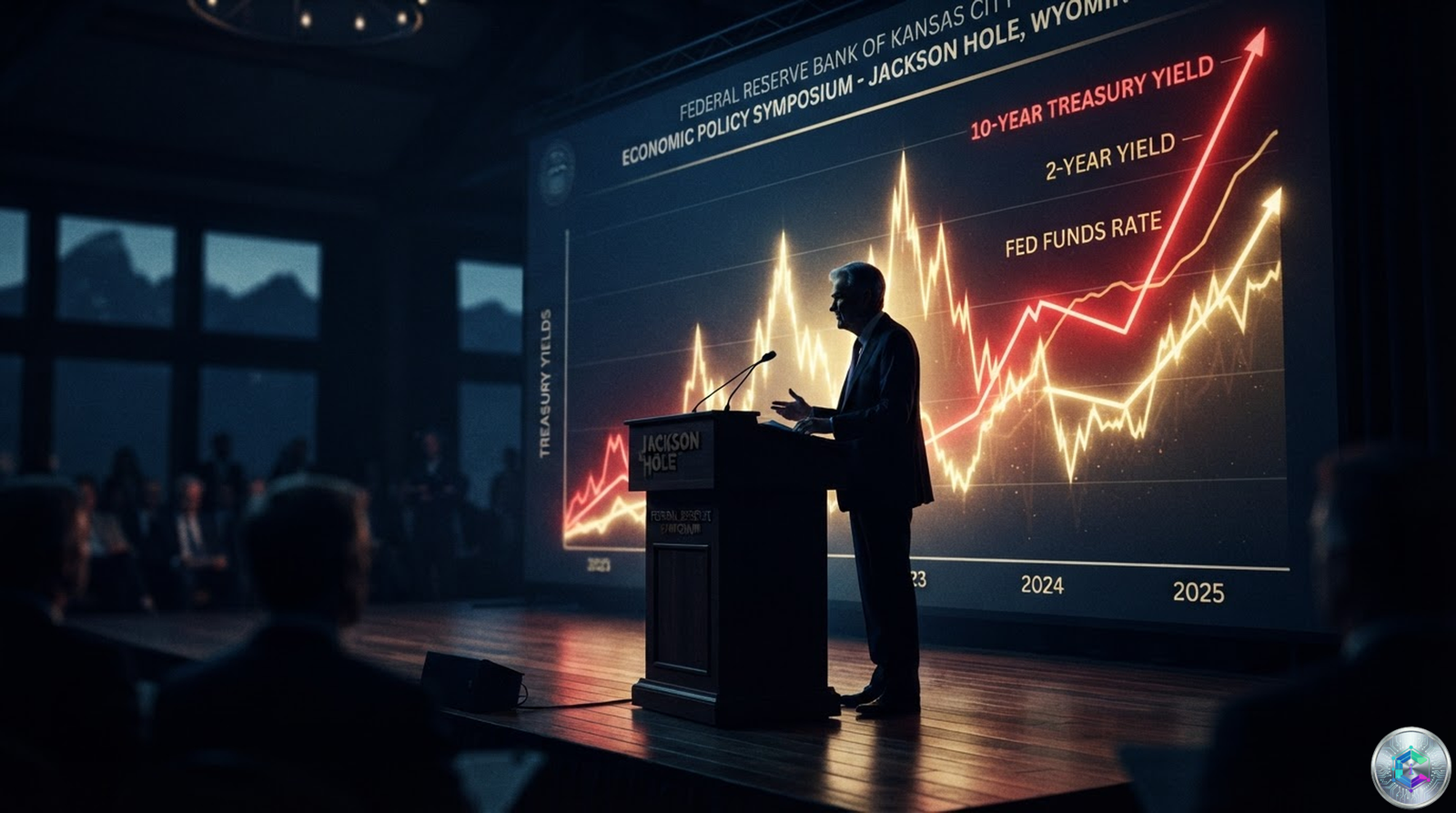
CME Fedwatch futures imply a 40% probability of a hike at the September meeting and more than 70% by year-end. Analysts are pressing Warsh to clarify the Fed’s reaction function — the implicit rule linking rate decisions to inflation and growth outcomes.
“The best move he can make is to give some sort of reaction function.”
Molly Brooks, US rates strategist, TD Securities
Standard Chartered analysts agree: if Warsh offered clarity on the Fed’s reaction function, that could ease some of the policy uncertainty and, with it, the pain in bond markets. Long-dated yields are also being pushed up by concern over the US debt load, now north of $40 trillion, and by persistent fiscal deficits that make government borrowing more expensive and steepen the curve.
From global savings glut to global savings squeeze
Globally, the global savings glut famously described by former Fed Chair and Nobel laureate Ben Bernanke has morphed into a worldwide squeeze. Rising sovereign debt loads, the fracturing of trade and supply chains, the fiscal cost of demographic ageing, and private-sector appetite for AI infrastructure are all competing for a structurally tighter pool of investable capital.
“The bond market and the FOMC have clearly decided to wake up to higher inflation and what promises to become a multi-year secular uptrend in interest rates.”
Adam Posen, President of the Peterson Institute for International Economics
For Posen, Warsh should spend less time on the long-term principles he wants to defend and more on how the Fed currently reads the economy. “What he should say is: I have watched the data, listened to the market as I said I would, listened to the Committee, and there are clearly reasons to consider a hike in coming months if the data do not change,” he argues.
The shadow of an activist Treasury
Friday’s speech lands in an unusual institutional setting. The recent surge in long-end yields and Treasury Secretary Scott Bessent’s intervention in the long bond have revived debate over the boundaries between fiscal and monetary policy. In theory, the cost of government funding is not the Fed’s problem; in practice, any persistent gap between the overnight policy rate and short-term Treasury yields can complicate rate management.
“We are in a regime where activist Treasury policy is as important — for better or worse — as central bank policy. The interaction of the two will be critical for the outlook.”
Krishna Guha, Vice-Chair of Evercore ISI and former senior New York Fed official
A weaker US dollar over the past month adds a further inflationary channel through import prices. The table below summarises the key indicators markets are watching heading into the symposium.
| Indicator | Current level | Trend |
|---|---|---|
| US CPI (July 2026) | 3.4% | Up |
| Fed inflation target | 2.0% | Benchmark |
| September hike probability (CME Fedwatch) | 40% | Up |
| Year-end hike probability | > 70% | Up |
| 5Y / 10Y breakeven rates | Multi-month highs | Up |
| US federal debt | ~$40 trillion | Up |
Finding his footing under political pressure
Beyond the numbers, Warsh’s personal credibility is on the line. Nominated by Donald Trump to succeed Jerome Powell, he has so far declined to echo the president’s calls for aggressive rate cuts. Senate Banking Committee Democrats have pressed him on the frequency of his contacts with Trump, following a Wall Street Journal report describing regular phone calls.
The minutes of the July 28-29 FOMC meeting show several colleagues worried that delaying a hike would force deeper, more painful tightening later. Others fear that the longer inflation stays above 2%, the more the public may lose faith in the Fed’s commitment to its mandate.
“He is clearly finding his footing and operating in a very loaded environment, given the upcoming midterm elections and volatile bond markets.”
Maurice Obstfeld, Professor of Economics at the University of California, Berkeley
For Obstfeld, “there is certainly the possibility that inflationary pressures will lead to the need for larger rate hikes later, which explains some of this action in longer-dated yields.” Friday’s speech is therefore, in his view, “a perfect opportunity to clarify his thinking.”
Conclusion: a speech under triple constraint
Warsh will take the Jackson Hole podium with three balancing acts to manage: safeguarding Fed independence from the White House, restoring the institution’s anti-inflation credibility, and containing the long-end yield surge driven by debt dynamics. A vague speech will prolong bond market volatility; an overtly hawkish signal will antagonise the Trump wing of the monetary debate.
If Warsh anchors policy to a transparent reaction function — a hike conditional on inflation persistence — markets may finally find a foothold. If he does not, the combination of long-end yields and a weakening dollar will, de facto, set the trajectory of US monetary policy for the quarters ahead.
Sources
- Reuters — Bond market anxiety raises stakes for Warsh’s debut Jackson Hole speech
- The Daily Upside — Warsh goes to Wyoming: will he bring an inflation plan?
- AOL — Bond market anxiety raises stakes
- DevDiscourse — Bond market anxiety raises stakes
- TradingView / Reuters — Jackson Hole preview
This article is for informational and educational purposes only. It does not constitute investment advice. Do your own research (DYOR) before making any decisions.

