

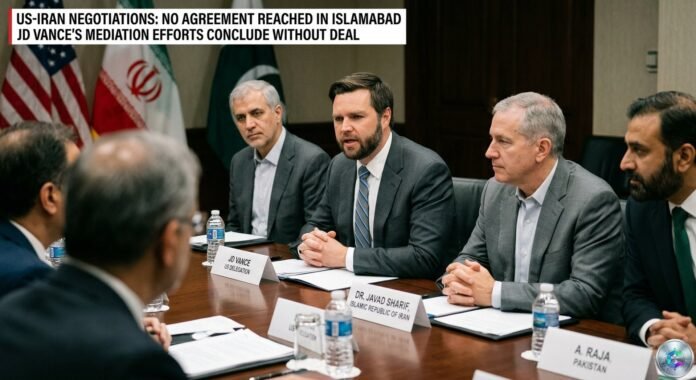
US-Iran Talks Fail in Pakistan: « Much Worse for Iran » Says VP Vance
Direct negotiations between the United States and Iran concluded without an agreement on Sunday, April 12, 2026, after 21 hours of intensive talks in Islamabad, Pakistan. US Vice President JD Vance, who led the American delegation, stated that Tehran had rejected American terms.
21 Hours of Negotiations Without Agreement
The marathon discussions between US and Iranian delegations took place in a five-star hotel in Islamabad, under Pakistani mediation. Despite intensive diplomatic efforts, no agreement was reached to end the six-week conflict between the two countries.
US Vice President JD Vance confirmed the failure of negotiations during his press conference at Karachi airport before departing Pakistan on Air Force Two. « We have not reached an agreement, » he stated. « And I think that’s bad news for Iran, much worse than for the United States. »
Points of Contention
The two parties failed to agree on several fundamental points. Iran refused to accept American conditions regarding the abandonment of nuclear weapons development. Iran’s Foreign Ministry told state media that disagreements on « two or three key issues » prevented an agreement.
According to Iranian sources, the main outstanding issues concerned control of the Strait of Hormuz and the Iranian nuclear program. The United States also demanded security guarantees that Iran deemed « unreasonable and excessive. »
The American Position
Vice President Vance specified that the United States had presented its « best and final offer » to Iran. He emphasized that Tehran had failed to seize this opportunity for peace. « The Iranian negotiators chose not to accept the American terms, » Vance stated.
Throughout the 21 hours of negotiations, the vice president remained in constant communication with President Donald Trump and other administration officials to define the American position.
The Iranian Response
The Iranian Foreign Ministry spokesperson adopted a more nuanced tone than state media, stating that « diplomacy never ends. » This statement suggests Tehran would not completely close the door to future negotiations.
Iranian media also hinted that the United States was simply looking for a pretext to leave the negotiations, accusing Washington of bad faith in this diplomatic process.
Pakistan’s Role
Pakistan continued to play its mediator role despite the failure of these negotiations. Pakistani Foreign Minister Ishaq Dar stated on Sunday that the country would remain available to facilitate future negotiations between the two parties.
This statement suggests Pakistan remains committed to its attempt to play mediator despite the lack of concrete agreement this time.
Future Prospects
As the US delegation departs Pakistan without an agreement, peace prospects remain highly uncertain. The six-week conflict continues to weigh on the region and global energy markets.
The coming days will be crucial in determining whether other rounds of negotiations will be organized. However, the firm stance on both sides makes this eventuality highly uncertain.
This situation will also have significant implications for oil prices and geopolitical stability in the Middle East region. Investors and market observers will closely follow developments in the coming weeks.
This article is for informational and educational purposes only. It does not constitute investment advice. Cryptocurrencies and digital assets are volatile: conduct your own research before making any financial decisions.

