


In the high-stakes realm of decentralized finance, Hyperliquid stands out with real-time visibility into whale positions and liquidations. This transparency converts raw data into valuable trading signals, fundamentally altering how crypto derivative markets operate.
Key Takeaways
- Hyperliquid’s on-chain transparency makes whale liquidations public and verifiable in real time.
- Analytics tools like CoinGlass and social amplifiers like Lookonchain broadcast these data points widely.
- Liquidation data can serve as a trading signal, but its interpretation carries limitations and biases.
- The October 2025 meltdown revealed systemic risks tied to this transparency without coordinated safeguards.
- Understanding technical mechanics, such as maintenance margin and partial liquidations, is essential for traders.
The Anatomy of a Public Whale Liquidation
To grasp the impact, consider what happens when a large position becomes visible on Hyperliquid. Take the trader known as « Machi Big Brother, » whose ETH long positions were liquidated seven times over ten hours in June 2026 while maintaining long exposure. On a traditional centralized exchange, this would be a private blowup—known only to the trader, the margin desk, and the exchange’s risk engine. The wider market would never learn the specifics of which price levels caused the pain.
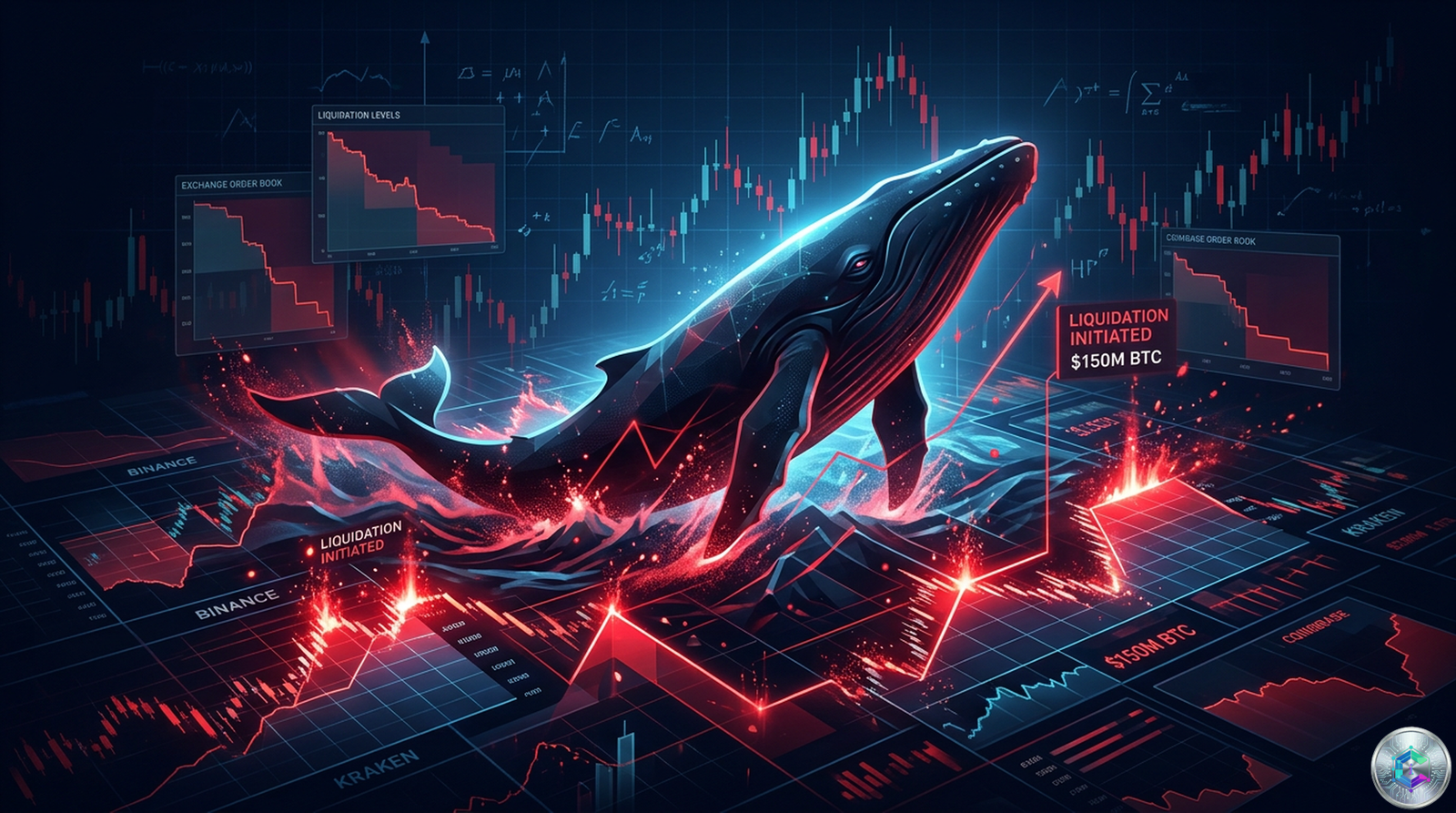
On Hyperliquid, everything differs. The wallet address conducting these trades—for instance, 0x020ca66c30bec2c4fe3861a94e4db4a498a35872—is publicly routed on-chain. Tools like HypurrScan provide a dedicated page where anyone can inspect current positions, entry prices, and historical activity. Platforms like CoinGlass publish real-time liquidation maps showing exactly what price levels correspond to mass liquidations across the entire order book. Social channels like Lookonchain amplify these findings to audiences dwarfing any individual exchange’s trading floor.
The result is a feedback loop where the whale becomes both a trader and a shared data point. The market observes not just price, but the specific coordinates where forced selling might occur, creating a novel information environment.
How the Transparency Stack Works
Hyperliquid’s transparency is not a single feature but an interconnected stack of tools providing unprecedented insight into large positions. At its base, Hyperliquid being fully on-chain means every trade is verifiable on the blockchain without relying on the exchange’s own data feeds. Building on this, an entire analytics ecosystem has emerged.
| Tool/Source | Primary Function | Impact on Traders |
|---|---|---|
| CoinGlass | Real-time liquidation maps for positions over $1M | Identifies critical price zones |
| Lookonchain | Direct tracking of whale activities on social media | Rapidly amplifies information |
| HypurrScan | Dedicated address explorer for Hyperliquid | Enables inspection of positions and history |
| On-chain Data | Transparent verification of platform state | Allows independent analysis |
CoinGlass data is stark: since late February 2026, Hyperliquid’s average daily liquidation amount has consistently exceeded $400 million. During heightened volatility, this figure spikes higher. Support for up to 50x leverage means even 2-3% price moves can trigger cascading liquidations wiping out positions. A whale holding a $1.6 billion LINK position was liquidated when price dropped to $13.6857, incurring approximately $1.07 million in losses. A 175,000-token ETH long position, worth over $300 million, was partially liquidated at 50x leverage. A $1.6 billion BTC short position with 40x leverage had its liquidation price just 1% above entry, illustrating the razor-thin margin for error with extreme leverage.
The October 2025 Meltdown: Transparency Meets Systemic Stress
The power of this transparency dynamic was starkly demonstrated in October 2025, when a cascade of liquidations following U.S. tariff announcements on Chinese software imports wiped out nearly $20 billion in crypto positions in a single 24-hour period. Data compiled by Solidus Labs showed Hyperliquid accounted for $10.3 billion of those liquidations, dwarfing Bybit’s $4.65 billion and Binance’s $2.41 billion.
« The numbers tell only part of the story. Solidus’ cross-venue analytics revealed a striking regional divide: in Europe and the United States, deposits outpaced withdrawals by roughly 2 to 1 during the post-tariff period—suggesting Western traders treated the selloff as a tactical opportunity. In the Asia-Pacific region, the ratio was closer to 1.2 to 1, indicating a more defensive posture. »
Solidus Labs, Post-crisis Analysis
This episode exposed critical vulnerabilities. Bitcoin price discrepancies across exchanges reached 10% at the crisis peak—Coinbase’s BTC/USD traded nearly $10,000 higher than Kraken’s at one point. The fragmented liquidity landscape, spanning centralized order books, decentralized pools, and off-exchange OTC flows, meant liquidity could vanish within seconds. Pre-positioned whale trades opened hours before the tariff announcement, sitting on multi-million-dollar profits, raised questions about information asymmetry. Kris Marszalek, CEO of Crypto.com, publicly called on regulators to investigate exchanges experiencing the largest liquidations.
The episode served as a proof of concept—and a warning—for what a fully transparent liquidation ecosystem looks like under systemic stress. Visibility without coordination mechanisms is not the same as protection.
Why the Signal Is Real—and Why It Has Limits
It would be easy to overstate the predictive power of public whale liquidation data. Treating visible liquidation clusters as reliable directional signals is tempting but dangerous. Public liquidation data shows price zones where large positions become vulnerable, accounts repeatedly liquidated with the same directional exposure, and aggregate forced selling concentration at specific levels. It does not reveal the trader’s motive, true identity, future plans, or whether something fundamental changes in market behavior as price approaches the liquidation zone.
« Public liquidation levels alone fall short of a trading plan and do not make the next move predictable. They do, however, change the information environment around a large position. »
Analyst, Crypto Markets
The signal also has a self-referential quality. The more traders watch a specific liquidation level, the more they trade around it, either accelerating or arresting the move. Some fade the crowd and buy dips when a whale’s liquidation level is hit, betting forced selling creates temporary disequilibrium. Others tighten stops or reduce exposure, amplifying volatility. The market becomes a complex adaptive system where observation itself influences outcomes. This is why experienced traders describe the signal not as a trading plan but as an information environment modifier.
The Mechanics Behind the Liquidations
For those wanting to understand precisely how liquidations trigger on Hyperliquid, the platform’s documentation makes the mechanics clear and verifiable. A liquidation occurs when positions move against a trader to the point where account equity falls below maintenance margin. On Hyperliquid, maintenance margin at maximum leverage is half the initial margin—translating to a maintenance margin rate as low as 1.25% at 40x leverage. Practically, a 50x leveraged ETH position opened at $2,057.49 would face liquidation at approximately $2,008, requiring only a 2.4% price drop to wipe out the entire position.
When liquidation triggers, Hyperliquid first attempts to close the position via market orders for the full size. Unlike some centralized exchanges where the liquidation engine has privileged access, all users can compete for this flow. If the order book cannot absorb the position and equity falls below two-thirds of maintenance margin, a backstop liquidation occurs through the liquidator vault—a component of HLP (Hyperliquid Liquidity Program). This democratizes access to liquidation flow, with profits routed entirely to the community via HLP. The price source is the « mark price, » combining external centralized exchange prices with Hyperliquid’s own order book state. Partial liquidations for positions over 100,000 USDC send only 20% as market orders, with a 30-second cooldown, during which orders for the entire position can be sent, creating sudden sharp price impacts.
The Whale as Market Structure
What makes Hyperliquid’s model genuinely novel is not just transparency itself—how it interacts with social amplification and market structure. On Wall Street, large traders manage information leakage risk, but that leakage is imperfect and slow. On Hyperliquid, leakage is systematic, instantaneous, and comprehensive. Within minutes of a whale opening a $100 million position, the address is identified, entry price calculated, liquidation level mapped, and information distributed to thousands via social channels. The market has essentially built a real-time surveillance layer for whale positions no regulatory framework anticipated.
This creates entirely new dynamics. Some traders use whale data to trade against the crowd, betting visible liquidation clusters create predictable pressure points. Others use it to hedge more effectively. There is also an argument—made by Hyperliquid’s proponents—that transparency benefits whales by allowing market makers to price orders more accurately and provide tighter spreads. Whether this holds in practice is contested. The observable reality is that whale positions attract enormous social attention, creating a complex game of strategy and counter-strategy around liquidation levels without clean resolution.
Lookonchain and similar platforms have become indispensable nodes, with posts racking up hundreds of thousands of views. However, social amplification introduces distortions. The most dramatic liquidations are most likely shared, creating selection bias where the market’s mental image skews toward spectacular failures rather than quiet successes. A whale who successfully navigates leverage and exits with profits generates far less viral content than one liquidated spectacularly. Traders building strategies around this data learn from a biased sample, drawing conclusions that may not apply to successful whales. The Machi Big Brother case illustrates this: liquidated seven times in ten hours yet maintaining long positions, the social media narrative remains incomplete without the trader’s motive.
Conclusion
As Hyperliquid reportedly reaches $32 billion in a single trading day in April 2026, the evolution of its transparent liquidation ecosystem becomes critical for market participants, regulators, and infrastructure providers. The October 2025 meltdown demonstrated that the absence of coordinated circuit breakers across exchanges can turn a manageable correction into a systemic crisis. Crypto markets operate as a patchwork of individual exchange risk engines without the graduated trading halts of traditional finance, making the lack of coordination a structural vulnerability.
The regulatory conversation is catching up. If a whale’s position on Hyperliquid can move the entire ETH market upon liquidation, does that constitute market manipulation? The existing framework wasn’t designed to answer this. For now, the most sophisticated traders treat whale liquidation data as one input among many—a piece of context shaping the risk landscape without determining outcomes. The whales are watched, but the watching itself is a market force reshaping whale behavior and market reactions. It is a complex adaptive system in real time, and the only certainty is that the map is not the territory.
Sources
- CryptoSlate – Why Viral Public Whale Liquidations Are Becoming a Real Trading Signal
- CoinGlass – Hyperliquid Liquidation Map
- Solidus Labs – When Whales Whisper: Inside the $20B Crypto Meltdown
- Hyperliquid Documentation – Liquidations
This article is published for informational and educational purposes only. It does not constitute investment advice. Do your own research (DYOR) before making any decisions.

