

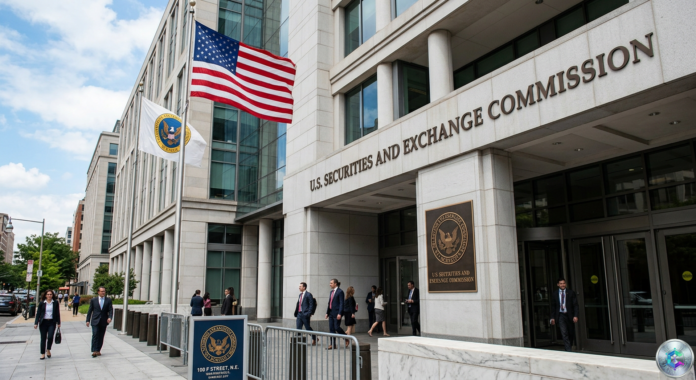
SEC Enforcement Chief Resigns Amid Scandal: How Political Influence is Shaking Crypto Regulation in the United States
Behind the Scenes of a Resignation That’s Reshaping the Regulatory Landscape
The U.S. Securities and Exchange Commission (SEC) is navigating an unprecedented crisis. Margaret Ryan, the former Director of the SEC’s Division of Enforcement, submitted her resignation on March 16, 2026, after barely six months in office. But this seemingly ordinary departure conceals a far deeper storm: according to sources close to the matter cited by Reuters, Ryan was in major disagreement with agency leadership regarding the handling of cases involving associates of President Donald Trump, particularly crypto entrepreneur Justin Sun and Tesla CEO Elon Musk.
This affair raises fundamental questions about the independence of American financial regulators, about political influence in securities law enforcement decisions, and above all about the future of cryptocurrency regulation in the United States. As the Trump administration appears to adopt a softer stance toward the crypto industry, Democrats are crying foul over regulatory capture, and industry players are watching the evolution of this explosive situation with keen attention.
The Facts: A Resignation at the Origin of a Political Crisis
Background of Margaret Ryan’s Resignation
Margaret Ryan had been appointed to lead the SEC’s Division of Enforcement in September 2025, in a context where the agency was already under fire. Under the previous administration of Gary Gensler, the SEC had waged an aggressive campaign against the crypto industry, filing numerous lawsuits against exchange platforms, DeFi projects, and sector entrepreneurs. This aggressive approach had earned the SEC the nickname of « crypto cop » and had deeply divided the industry.
When Ryan took office, many hoped for a return to a more balanced approach, respecting both investor protection and technological innovation. But recent events suggest this transition was not as smooth as anticipated.
The SEC officially announced Ryan’s resignation on March 16 without providing details on the reasons for her departure. This discretion naturally fueled speculation and questions within the financial and crypto community.
The Role of Paul Atkins: A Controversial Chair
Paul Atkins, who was nominated as SEC Chair by Donald Trump and sworn in by him, finds himself at the eye of the storm. According to Reuters sources, Ryan was in direct disagreement with Atkins and other politically appointed Republicans regarding how the agency should handle certain sensitive cases.
Atkins, who succeeded Gensler, represents a major paradigm shift in the SEC’s regulatory approach. Unlike his predecessor who viewed most cryptocurrencies as unregistered securities, Atkins appears to take a more accommodating position toward the industry. This philosophical transition does not come without creating tensions within the agency itself.
Democrats in Congress have expressed their strong concern over what they describe as a « regulatory U-turn » under the current administration. Lawmakers have publicly criticized Atkins, accusing him of capitulating to the crypto industry and endangering the protection of American investors.
The Sensitive Cases: Justin Sun and Elon Musk
Two cases were at the center of tensions between Ryan and SEC leadership: the case of Justin Sun and that of Elon Musk.
The Justin Sun Case: A Controversial Settlement
Justin Sun, founder of the TRON blockchain platform and an influential figure in the crypto ecosystem, was at the heart of a major regulatory dispute. The SEC had initially sued Sun and three of his companies in March 2023, accusing them of selling unregistered securities and engaging in market manipulation through wash trading.
The SEC’s allegations were serious: Sun and his companies allegedly sold tokens considered as securities without complying with applicable registration rules. The agency had also accused the defendants of manipulating the market by executing fictitious trades to give the illusion of legitimate trading volume.
But in March 2026, the case took a dramatic turn. The SEC announced a settlement with Sun for only $10 million, a paltry sum given the scope of the initial allegations. Neither Sun nor his companies admitted or denied the SEC’s allegations, in accordance with the usual terms of regulatory settlements.
What is particularly interesting is the timing of this settlement. Sun became the largest investor in the Trump family’s crypto project, World Liberty Financial, in November 2024, when he purchased $30 million worth of the project’s tokens. He subsequently increased his stake to a total of $75 million in January 2025. This proximity to the Trump family naturally raises questions about the motivations behind the favorable settlement.
The Elon Musk Case: The Quest for Transparency
Elon Musk, the media-savvy CEO of Tesla and SpaceX, as well as a special advisor to the White House under the Trump administration, was also at the center of a dispute with the SEC. The agency sued Musk in January 2025, just days before the end of Gary Gensler’s term, alleging that he failed to properly disclose that he had « acquired beneficial ownership » of Twitter (now X) in early 2022.
This non-disclosure would have allowed Musk to purchase shares at lower prices. The SEC alleged that this omission constituted a violation of securities laws aimed at protecting investors against fraudulent practices.
The Musk case was a persistent source of friction for Ryan. According to sources, she believed the case was strong and had good chances of success in court. However, SEC leadership seemed less enthusiastic about pursuing the case.
On March 17, 2026, the SEC and Musk jointly filed a statement indicating they were in negotiations to settle the lawsuit. This development suggests the case could conclude without Musk admitting to any wrongdoing—an outcome that mirrors the pattern observed in the Sun case.
Implications for the Crypto Industry
A Warning Signal for Investors
This series of events sends an ambiguous signal to the crypto industry and investors. On one hand, a more lenient regulatory approach could foster innovation and attract institutional investment. On the other hand, the perception of political capture of the regulator could erode the confidence of individual and institutional investors who rely on consistent and predictable application of securities laws.
Critics point out that the timing of the settlements—with associates of President Trump benefiting from favorable treatment—suggests unacceptable political interference in regulatory processes. This perception could have lasting consequences on the SEC’s credibility as an independent regulator.
The Future of Crypto Regulation in the United States
This crisis comes at a crucial moment for the crypto industry. The U.S. Congress is working on several legislative proposals aimed at clarifying the legal status of cryptocurrencies and establishing a more coherent regulatory framework. However, recent events at the SEC highlight the challenges of implementing effective regulatory policy when the regulator itself is torn by internal political conflicts.
The industry faces a fundamental dilemma: benefiting from clearer and more predictable regulation, but at the cost of growing concerns about regulator independence. Sector players must carefully navigate this evolving landscape, balancing the pursuit of regulatory clarity with protection of market integrity.
Reactions from Industry and Politicians
The revelation of Ryan’s resignation and the circumstances preceding it provoked mixed reactions. On the Democratic side in Congress, indignation was palpable. Several lawmakers called for independent investigations into the circumstances of Ryan’s departure and the factors that led to the favorable settlements for Trump’s associates.
On the crypto industry side, reactions were more nuanced. Some players, particularly those who had been targeted by the SEC’s aggressive actions under Gensler, saw the change in approach as an opportunity for healthier industry development. Others, however, worried about long-term implications for American regulatory credibility.
Securities law experts highlighted that the cases against Sun and Musk appeared legally solid. Lawyers closely following the cases indicated the SEC would have had good chances of success if it had pursued the cases to trial. The settlement for relatively modest amounts and without admission of fault suggests, according to these experts, an approach prioritizing political considerations over investor protection.
Analysis: The Question of Regulatory Independence
The Principle of Regulator Independence
The independence of financial regulators is a fundamental pillar of democratic systems. Agencies like the SEC are designed to function with a certain degree of autonomy from daily political pressures, allowing decisions to be based on long-term public policy considerations rather than immediate partisan interests.
This independence is not absolute—presidents appoint agency leaders, and Congress exercises budgetary and legislative oversight. But the principle holds that once in office, these officials should make decisions based on law and facts, not on the political preferences of the sitting government.
Recent events raise legitimate doubts about the extent to which this principle is being honored at the SEC. If the information reported by Reuters is accurate, the fact that a division director was overridden on cases involving the president’s associates suggests inappropriate political interference in enforcement processes.
Long-Term Consequences
The implications of this crisis could manifest over several years. First, the international credibility of American regulators could be affected. Foreign counterparts to the SEC—whether the European Securities and Markets Authority in Europe or the Financial Services Agency in Japan—are likely observing these developments with concern, wondering whether their American counterparts can still be considered reliable partners in international regulatory cooperation.
Second, the SEC’s ability to attract top talent could be compromised. Specialized securities prosecutors and attorneys might hesitate to join an agency where they could find themselves at odds with leadership on matters of principle and be marginalized.
Third, and perhaps most importantly, the precedents created by these settlements could have lasting consequences for the future enforcement of securities laws. If market participants conclude that government associates can receive favorable treatment, this could create perverse incentives that undermine the equal protection under the law that is supposed to protect all market participants.
Outlook and Conclusions
What the Future Holds
As the dust settles after this crisis, several questions remain unanswered. Will the position of Director of the SEC’s Division of Enforcement remain vacant, or will Atkins appoint a successor sharing his vision of a more accommodating approach to the crypto industry? Will Congress react with legislation aimed at strengthening regulator independence? Will Democrats call for independent investigations into the circumstances of the settlements?
For the crypto industry, these developments represent both an opportunity and a challenge. On one hand, an administration sympathetic to the industry could create a more favorable environment for innovation and growth. On the other hand, legitimate concerns about regulatory integrity could eventually erode investor confidence and create long-term reputational risks.
The Importance of Vigilance
For investors and crypto industry participants, this series of events underscores the importance of remaining vigilant and informed. Regulatory developments in the United States have implications that far exceed American borders. As the world’s largest financial market, American policies regarding cryptocurrencies influence regulatory approaches worldwide.
It is crucial to follow the evolution of this situation and its potential implications for the industry’s future. The coming weeks and months will reveal whether this crisis represents a one-time turning point or the sign of deeper changes in the way cryptocurrencies will be regulated globally.
Sources: Cointelegraph, Reuters, SEC.gov
Published: March 24, 2026
Tags: SEC, Donald Trump, Justin Sun, Elon Musk, crypto regulation, United States, Margaret Ryan, Paul Atkins, World Liberty Financial, Bitcoin, Ethereum, cryptocurrencies

