


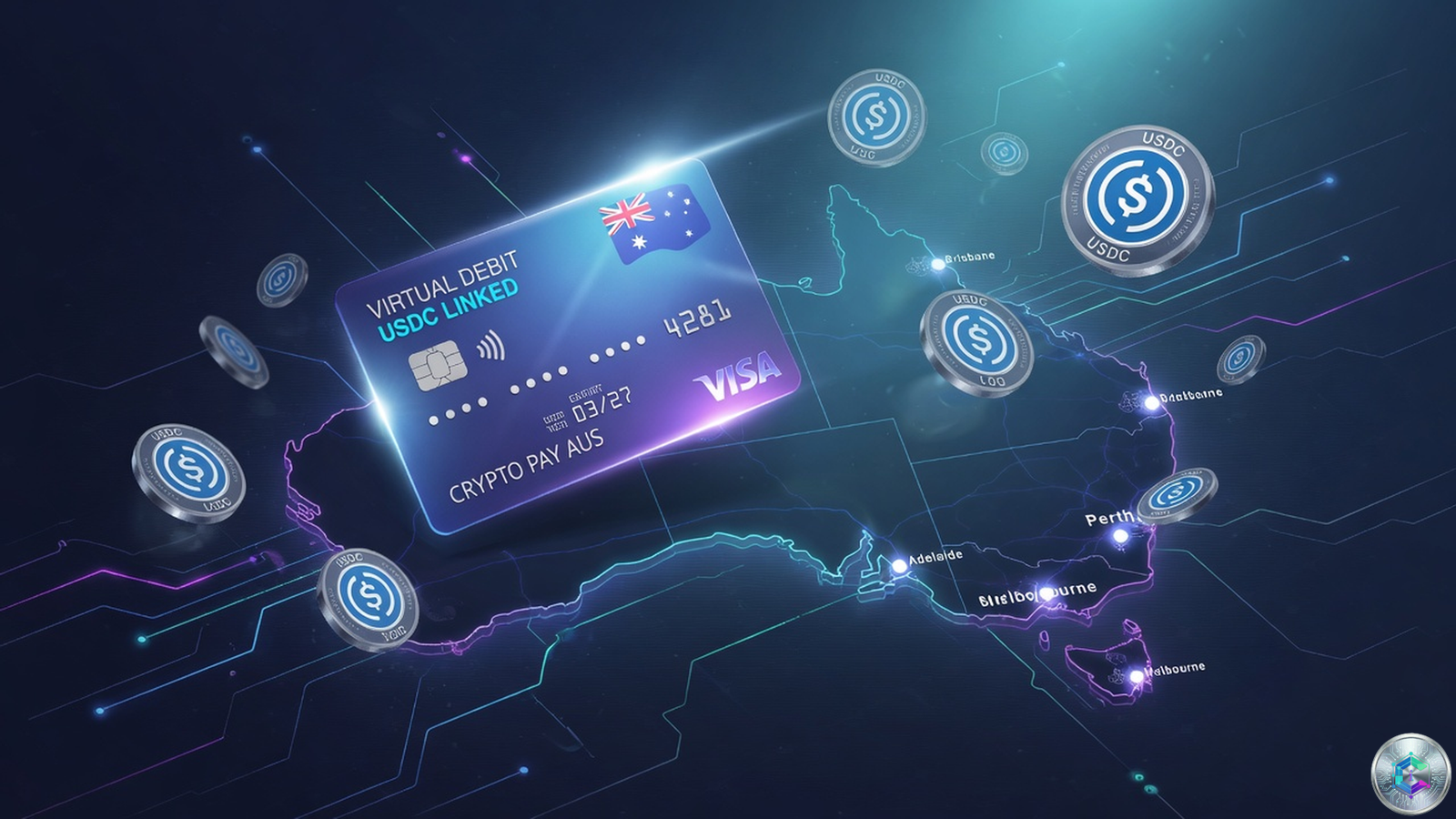
KuCoin officially launched KuCard in Australia on April 24, 2026, a Mastercard-powered virtual debit card that lets users spend digital assets at any merchant accepting the network. The rollout caps a regulatory and commercial build-up in a country where 22 % to 33 % of adults already hold crypto, but only 2 % actually use it to pay.
🔑 Key takeaways
- KuCard is a Mastercard virtual debit card launched by KuCoin in Australia on April 24, 2026.
- It supports USDC and 37 USDC trading pairs, with Apple Pay and Google Pay integration.
- The launch rests on AUSTRAC registration secured in November 2025 and a partnership with Immersve.
- 22 % to 33 % of Australian adults hold crypto assets, yet only 2 % used them for a payment last year.
A regulatory foothold built since November 2025
KuCoin prepared its Australian entry methodically. In November 2025, the exchange secured registration with AUSTRAC, the country’s anti-money laundering (AML) and counter-terrorism financing watchdog. The registration allows KuCoin to operate as a digital currency exchange under formal supervision nationwide, opening access to a potential pool of more than 20 million adults.
In parallel, KuCoin opened a Sydney office and appointed James Pinch as country general manager for Australia. The local build-out operationalizes a vision articulated by BC Wong, CEO of KuCoin:
“Securing AUSTRAC registration is a key step in strengthening KuCoin’s global compliance architecture.”
BC Wong, CEO of KuCoin
James Pinch added that platforms must remain “agile and adaptive” to keep pace with regulatory frameworks that vary sharply across jurisdictions.
The Australian market: high ownership, marginal usage
Australia looks like a promising testing ground. KuCoin’s internal research puts crypto ownership among Australian adults at around 22 %; a separate study cited by BeInCrypto lifts that figure to 33 % of investors or holders. Either way, the country ranks among the highest per-capita adoption rates globally.
Real-world usage for payments, however, lags far behind. The Reserve Bank of Australia’s Consumer Payments Survey 2025 reports that only 2 % of respondents used a cryptocurrency to make a payment in the past year. The funding rails into crypto accounts also remain stubbornly traditional:
| Funding method for crypto accounts | Share of users |
|---|---|
| Bank transfers | 52.4 % |
| Credit and debit cards | 40.1 % |
| Digital wallets | < 33 % |
| Peer-to-peer trading | < 25 % |
That gap between ownership and use is exactly the territory KuCard is designed to capture.
KuCard: automatic conversion and mobile integration
Launched on April 24, 2026, KuCard is a Mastercard virtual debit card issued by Immersve Pty Ltd, with Axis One Markets Pty Ltd acting as authorised representative for certain financial services tied to the card. At launch, the service accepts the USDC stablecoin alongside 37 USDC trading pairs. At the point of sale, digital assets are automatically converted into fiat currency, with no manual swap required.
The card is also tokenizable into Apple Pay and Google Pay, enabling contactless payments directly from a smartphone. The goal is to align with the payment habits Australians already use day to day.
The rollout relies on a technology partnership with Immersve, a principal member of the Mastercard network, whose issuance platform lets exchanges and DeFi protocols plug into Mastercard’s APIs and smart contracts. Jerome Faury, CEO of Immersve, called the collaboration a “major step toward mainstream adoption of digital assets for everyday purchases.” Christian Rau, senior vice-president of digital commercialisation at Mastercard, added that the partnership helps make digital assets “truly usable in everyday life” through a conversion that is “safe, secure and compliant.”
A platform strategy beyond trading
For KuCoin, KuCard is not a standalone product but a step in a broader utility expansion. BC Wong summed up the philosophy: “making digital assets useful in the real world requires trusted infrastructure, secure rails, clear compliance standards and user-centric protections.” James Pinch added that “for everyday users, utility is the tipping point.”
Founded in 2017, KuCoin claims more than 40 million users across 200+ countries and territories, with access to over 1,000 digital assets. The platform holds SOC 2 Type II and ISO certifications, reflecting ongoing investment in security and compliance. It plans to roll out additional regulated products in Australia, spanning trading, asset management and payment experiences.
Outside Australia, KuCoin still faces regulatory pressure. A U.S. court recently ordered its parent company to pay $500,000 to settle CFTC charges tied to operating an unregistered trading platform, following a roughly $300 million penalty paid to the DOJ in January 2025.
Conclusion
KuCard marks a milestone in turning crypto into a usable everyday payment method in Australia. KuCoin’s bet rests on three pillars: a clear regulatory foothold (AUSTRAC), a heavyweight banking partner (Mastercard via Immersve), and a market where ownership is rising fast while transactional usage is still in its infancy. If the user experience delivers, the card could help shift Australians from simple holding to actual spending. Competition from native wallets and shifts in local regulation will set the pace of that adoption.
Sources
This article is for informational and educational purposes only. It does not constitute investment advice. Do your own research (DYOR) before making any decision.

