

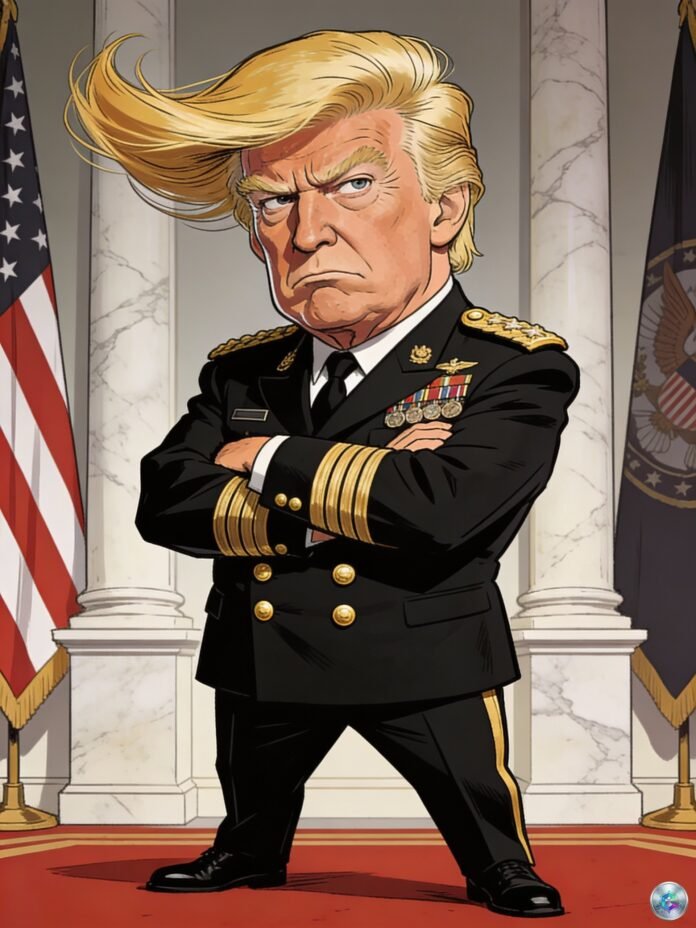
In a bombshell declaration from Davos, Donald Trump warned Europe that any massive sell-off of American financial assets would trigger « huge retaliation. » This escalation comes as several European pension funds have already begun liquidating their positions in U.S. Treasury bonds, turning American debt into a genuine geopolitical weapon.
Trump’s Threat from Davos
During an interview with Fox Business on January 22, 2026, on the sidelines of the World Economic Forum in Davos, the U.S. President issued an unequivocal ultimatum: « If that happened, we would launch big retaliation and we have all the cards in hand. »
This declaration comes in an explosive context where diplomatic tensions surrounding Greenland have reached their peak, and where several major European pension funds had just announced their intention to divest from U.S. Treasury obligations.
Europe’s Financial Arsenal: $13 Trillion at Stake
Europe holds a massive creditor position vis-à-vis the United States. According to Deutsche Bank analyses, European investors hold approximately $8 trillion in U.S. bonds and stocks. Other sources, including all financial assets, estimate this amount between $12 trillion and $13 trillion – nearly double what the rest of the world combined holds.
More specifically, Europe represents 40% of U.S. Treasury bonds held by foreign actors, approximately $3.635 trillion. This dominant position places the Old Continent as the main creditor of the United States, ahead of China whose holdings in American debt have fallen to $682.6 billion – their lowest level since September 2008.
First Warning Signals: Nordic Funds Take Action
On January 20, 2026, the Danish pension fund AkademikerPension sent a strong signal by announcing the sale of all its holdings in U.S. Treasury bonds, approximately $100 million. Anders Schelde, Chief Investment Officer, justified this decision bluntly: « The United States is fundamentally not a good credit and, in the long term, the finances of the American government are not viable. »
The next day, the Swedish pension fund Alecta revealed it had sold the majority of its Treasury bonds during the previous year, for an estimated amount between $7.7 and $8.8 billion. Pablo Bernengo, Alecta’s CIO, explained that this decision was based on « the assessment that the risk related to U.S. government bonds and the dollar has increased, due to the lower predictability of the policy being pursued. »
A Real American Vulnerability
Behind the denials of U.S. Treasury Secretary Scott Bessent, who attempted to minimize the impact of these announcements, American vulnerability is palpable. U.S. public debt reached $38.5 trillion at the beginning of 2026, representing 120% of American GDP. The country borrows at a frantic rate of $70,843 per second, and interest payments now reach approximately $1 trillion per year.
A massive sale of bonds by European creditors would lower bond prices and mechanically increase yields, significantly raising the cost of refinancing American debt. Alexandre Baradez, analyst at IG, confirms: « If the European Union were to massively liquidate its investments in U.S. loans, this would lead to an increase in borrowing rates in the United States, which would have a negative impact on the American economy. »
A Double-Edged Sword
However, this « financial weapon » carries major risks for those who would use it. A massive liquidation would also trigger a devaluation of European reserves themselves. European countries would suffer substantial losses on their financial assets even before the United States fully feels the effects.
Moreover, finding investment alternatives as liquid and vast as the American market constitutes a major challenge. As Ian Bond, Director of Research at the Centre for European Reform explains: « It would also be detrimental to themselves. A serious break with the United States would probably reduce Europe’s access to critical military, technological, and intelligence capabilities. »
European Response: The Anti-Coercion Instrument
Facing Trump’s tariff threats, the European Union has a powerful legal tool: the Anti-Coercion Instrument (ACI), adopted in 2023. Nicknamed the « commercial bazooka, » this instrument allows the EU to take retaliatory measures when a third country uses trade as a political pressure lever.
The ACI offers a range of potentially heavy measures: exclusion of American companies from European public tenders, blocking foreign direct investments, financial restrictions, suspension of intellectual property rights, and targeted increases in customs duties.
Trump’s U-Turn and the Greenland Agreement
After several days of tensions and turmoil in financial markets, Trump finally performed a spectacular U-turn on January 22 in Davos. He announced concluding « the framework of a future agreement » with Mark Rutte, NATO Secretary General, on strengthening Arctic security.
This rapid de-escalation demonstrates the potential effectiveness of European economic levers. Negative market reactions – falling stocks, rising bond yields, weakening dollar – provided immediate feedback that forced political adjustments.
A Worrying Precedent for the Future
Although the immediate crisis has been defused, the Greenland episode sets a worrying precedent for transatlantic relations. Trump demonstrated his willingness to use tariffs as a weapon of political coercion, even against long-standing allies.
For investors, the lesson is clear: the era when American assets were automatically perceived as risk-free safe havens is over. American political risk must now be integrated into all investment evaluations, with potentially profound implications for global capital allocation.
Europe, for its part, will need to accelerate its path toward genuine strategic autonomy in defense, technology, finance, and energy if it wishes to negotiate as equals with an increasingly unpredictable and transactional America.

