


The yen has fallen to 162.41 per dollar, a 40-year low, plunging Japan into an unprecedented monetary crisis. Despite record interventions and a historic rate hike, options are dwindling as the interest rate gap with the U.S. Federal Reserve persists and geopolitical shocks compound the pressure.
🔑 Key Takeaways
- The Bank of Japan (BoJ) raised its policy rate to 1% in June 2026, the highest since 1995, but the gap with the Fed remains wide.
- Japanese authorities spent ¥11.7 trillion (approximately $72.8 billion) in foreign exchange intervention between late April and late May 2026.
- The Nikkei 225 index surged past 72,000 points, driven by AI enthusiasm, but generates mechanical yen selling via foreign investor hedges.
- Japan’s core inflation hit 1.5% in May 2026, fueled by energy prices linked to Middle East conflict.
- Prime Minister Sanae Takaichi unveiled a ¥370 trillion (about $2.3 trillion) investment plan over 14 years, raising debt sustainability concerns.
The Interest Rate Gap: The Engine of Yen Weakness
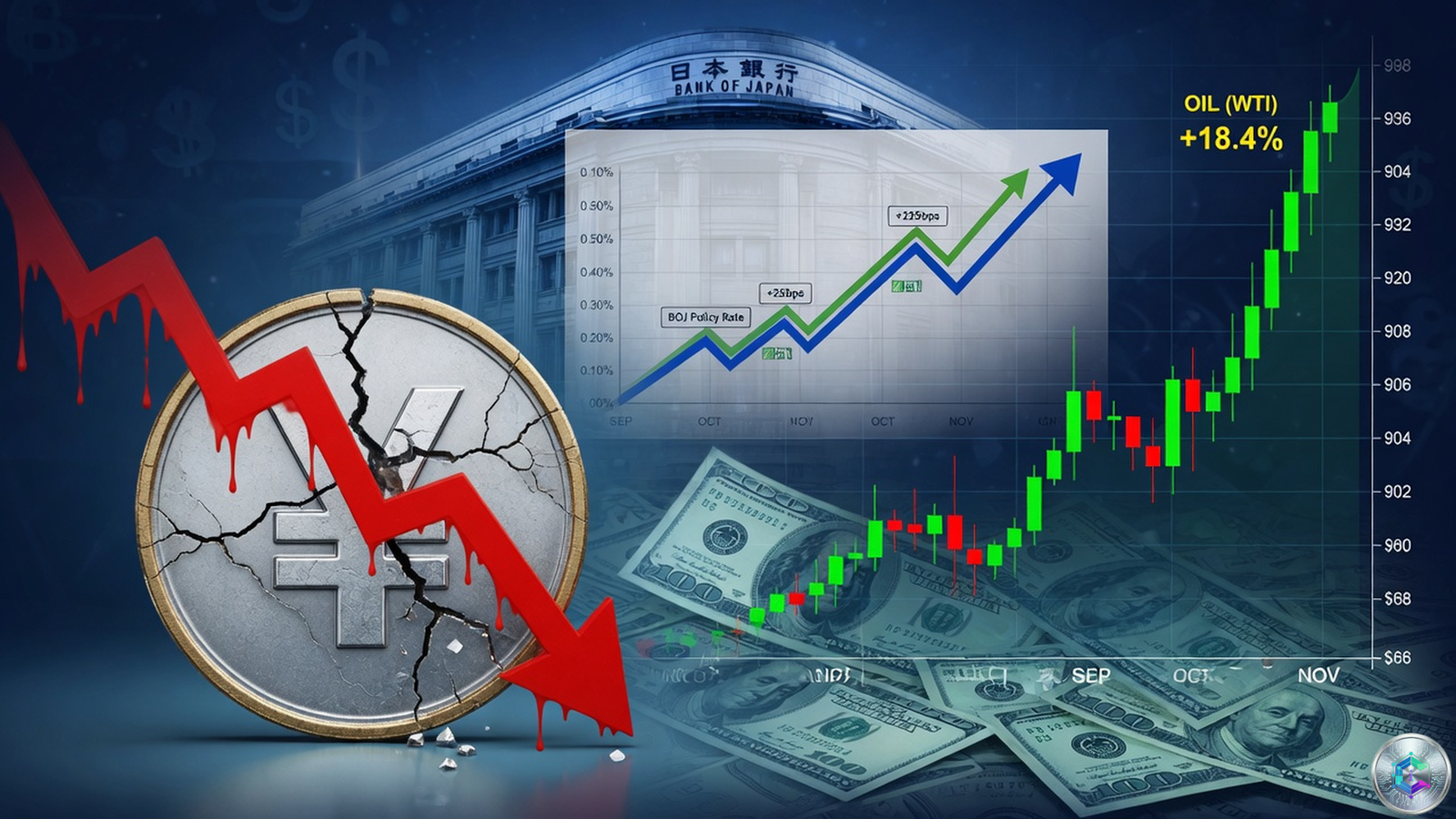
The yen’s decline is fundamentally driven by yield differentials between the dollar and the yen. The BoJ raised its rate to 1% on June 16, 2026, a historic step after decades of ultra-loose policy. However, the U.S. Federal Reserve holds rates in a range of 3.5% to 3.75%, with signals of further tightening under Chair Kevin Warsh. This spread incentivizes capital to flow toward the dollar, structurally weakening the yen.
The dynamic intensified in mid-2026 as the pace of Fed hawkishness accelerated, combined with restrictive communication, widening the gap despite the BoJ’s move. The yen continued to slide even as Japanese policy normalized.
| Institution | Rate in June 2026 | Rate in January 2024 | Current Spread |
|---|---|---|---|
| Bank of Japan | 1.00% | -0.10% | — |
| Federal Reserve | 3.50-3.75% | 5.25-5.50% | +2.50-2.75 points |
The Iran War’s Inflation Shock to Japan
U.S.-Iran hostilities and risks to the Strait of Hormuz pushed oil prices sharply higher, particularly impacting Japan, an economy heavily dependent on energy imports. Core inflation climbed to 1.5% in May 2026, a meaningful shift for a nation long battling deflation. This imported inflation creates a dilemma for the BoJ: raising rates to curb inflation risks choking the recovery, while inaction may erode credibility.
« The rise in oil prices is filtering through to business-to-business transactions, potentially pushing prices higher across a wide range of items. »
Bank of Japan statement, June 2026
Japan’s Fiscal Ambitions: The $2.3 Trillion Spending Plan
In June 2026, Prime Minister Sanae Takaichi unveiled an investment roadmap calling for more than ¥370 trillion (about $2.3 trillion) over fourteen years, with ¥101.6 trillion earmarked for AI and semiconductors. The scale aims to boost technological competitiveness, but the lack of financing details rattled bond markets, given Japan’s already high public debt-to-GDP ratio.
« Injecting massive fiscal stimulus without a corresponding monetary adjustment risks overheating the economy. »
Ed Al-Hussainy, Currency Strategist, Columbia Threadneedle
The Nikkei Paradox: Record Stocks, Weakening Currency
The Nikkei 225 index crossed 72,000 points on June 22, 2026, driven by euphoria around AI and semiconductors. However, foreign investors, the main drivers of this rally, typically hedge their currency exposure by selling yen forward. This hedging practice generates mechanical selling pressure on the yen, exacerbating the situation authorities are trying to combat.
Record Intervention: Billions Spent, Trend Intact
Japan’s Ministry of Finance disclosed deploying ¥11.7 trillion (approximately $72.8 billion) in reserves between late April and late May 2026 to prop up the yen, a record amount. Finance Minister Satsuki Katayama repeatedly stated readiness to act against excessive moves, but intervention without a change in the underlying interest rate differential remains a delaying tactic.
« Further intervention is a question of when, not if, but no single action will reverse the fundamental trend as long as the interest rate gap remains unfavorable to the yen. »
Carol Kong, Currency Strategist, Commonwealth Bank of Australia
The July BoJ Meeting: The Last Credible Tool
The BoJ’s next policy meeting on July 31, 2026, is seen as crucial. A further rate hike, potentially larger than the usual 25-basis-point increments, could slow yen depreciation and signal a more aggressive normalization path. However, the BoJ faces a dilemma: tightening too quickly could cool the equity market rally and stifle the consumer recovery, given corporate reliance on cheap credit.
For Japanese Households: The Hidden Cost of a Weak Yen
Beyond financial markets, the yen’s decline imposes real costs on ordinary citizens. Japan imports most of its food, energy, and raw materials, and a weaker yen makes these imports more expensive in domestic terms. The government has introduced subsidies, including a supplementary budget of approximately ¥3 trillion ($19 billion), to cushion the blow, but these are temporary fixes. The risk is that prolonged weakness erodes purchasing power and embeds inflation expectations, making the BoJ’s task harder.
Broader Implications for Asian Markets
The yen’s depreciation has implications for the entire Asian currency complex. It creates competitive pressure on export-driven economies like South Korea, Taiwan, and Vietnam, as Japanese exports become relatively cheaper. This could trigger competitive devaluations or defensive rate responses across the region. The won, Taiwan dollar, and yuan have shown sensitivity to yen movements, raising the risk of a broader Asian currency conflict.
Conclusion
The window for a painless solution has essentially closed for Japan. The interest rate gap is wide, the geopolitical environment continues to exert upward pressure on energy prices, and fiscal ambitions add inflationary layers. The July BoJ meeting represents a decisive test: a more aggressive rate hike could signal commitment to defending the yen, but with significant risks to growth and financial stability. The path to a stable yen now hinges on future monetary policy decisions in an environment where traditional tools are losing efficacy.
Sources
- CoinAcademy: Yen at 40-year low vs dollar
- Reuters: Yen teeters on cusp of 40-year low
- CNBC: Bank of Japan hikes rates to 1%
- CNBC: Why Japan’s intervention didn’t prop up the yen more
- The Star: Japan’s Nikkei rises past 72,000
- TechTimes: Nikkei 225 Crosses 72,000
- Bloomberg: Takaichi Unveils $2.3 Trillion Japan Spending Plan
- Japan Times: Katayama restates readiness to act on yen
- Al Jazeera: Japan’s central bank raises interest rates
- Morningstar: Japan’s $2.3 Trillion Investment Plan
This article is published for informational and educational purposes only. It does not constitute investment advice. Conduct your own research (DYOR) before making any decisions.

