


As Bitcoin hovers around $87,800, markets are holding their breath ahead of the Bank of Japan’s (BOJ) critical decision expected this Friday. This monetary policy meeting could mark a historic turning point for cryptocurrencies and risk assets in general.
Deceptive Calm in the Markets
Bitcoin shows a slight 1% increase over the last 24 hours according to CoinGecko, but this apparent stability masks palpable nervousness among institutional traders. The reason? A potential hike in Japanese interest rates to their highest level in 30 years.
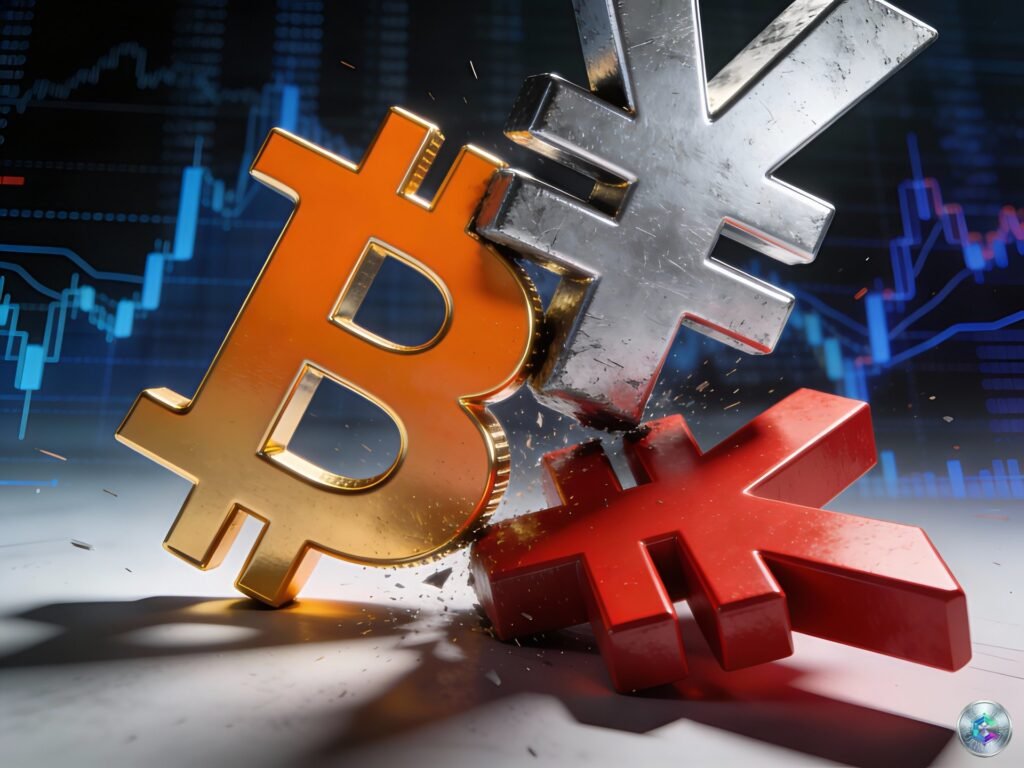
The BOJ is preparing to conclude its two-day meeting with an announcement that could raise rates to 0.50% or even 0.75%. While these rates remain modest compared to Western standards, this move would mark a major break from decades of ultra-accommodative policy.
The « Yen Carry Trade »: A Money Machine About to Break Down
To understand the stakes, one must grasp the mechanics of the « Yen Carry Trade, » a strategy that some analysts call Wall Street’s « infinite money glitch. » For years, investors have borrowed yen at near-zero rates to invest in high-yield assets: U.S. stocks, bonds, and Bitcoin.
According to Czhang Lin, head at LBank Labs, Japanese monetary normalization « reverses the fuel that has powered risk assets for years. » He warns that this environment heralds « dollar strength, stock market turbulence, and a brake on crypto. »
Here’s how the trap closes:
- If the BOJ raises rates, the cost of yen borrowing increases
- The yen appreciates against other currencies
- Investors must sell their risky assets (like BTC) to repay their yen debts that have become more expensive
- Result: a massive drain of global liquidity
Worrying Precedents
Recent history offers little optimism. Technical analyses show a direct correlation between BOJ interventions and Bitcoin corrections. Every rate hike since 2024 has coincided with drops of over 20% in Bitcoin.
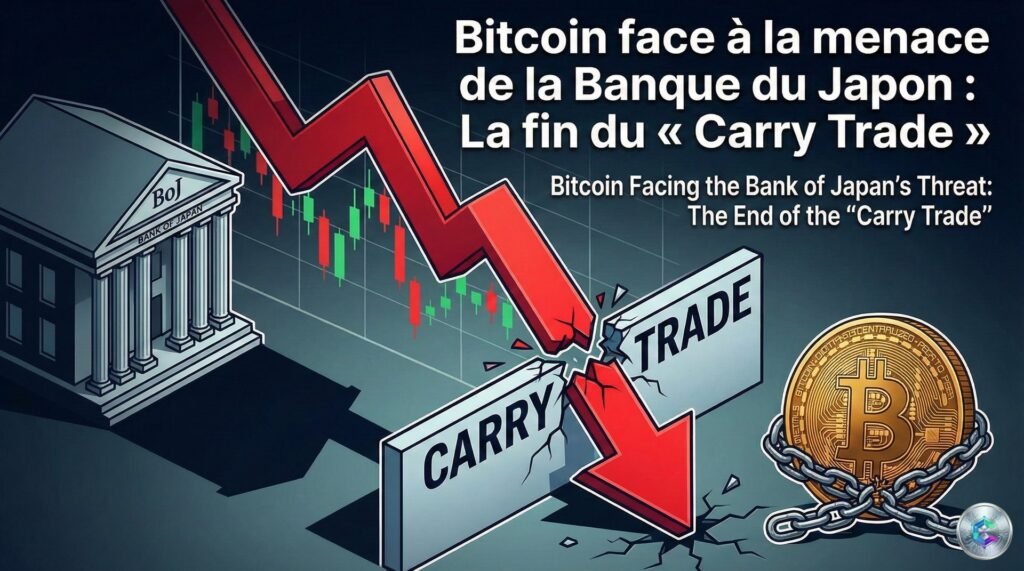
The data is unequivocal: in March and July 2024, as well as in January 2025, BTC suffered corrections ranging from 23% to 31% following Japanese monetary tightening. Some analysts even fear that this move could trigger cascade margin calls, forcing massive liquidations on leveraged positions.
A « Mixed and Confusing » Macro Environment
However, not everything is dark. Matt Hougan, CIO of Bitwise, nuances the picture by highlighting a unique situation: « You have Japan raising rates (bad for crypto) and the United States lowering them (good for crypto). »
For Hougan, these opposing forces could cancel each other out in the long term. Nevertheless, significant volatility is expected in the short term as markets oscillate between enthusiasm for Fed rate cuts and fear of yen position unwinding.
Investors Remain Hopeful
Despite these headwinds, optimism persists. On prediction markets like Myriad, the probability that Bitcoin retests $100,000 remains high at 66%, although slightly down from the previous week’s 72%.
Lin from LBank Labs warns, however, that Bitcoin might better resist thanks to its scarcity, but « altcoins are likely to suffer more » in this context of liquidity stress.
Conclusion: A Decisive Test
Friday’s decision will constitute a major test for Bitcoin’s resilience in the face of a structural change in global finance. The low liquidity typical of the holiday period could amplify movements, transforming each announcement into a catalyst for major volatility.
The coming hours will be crucial in determining whether Bitcoin can maintain its current level or whether we are witnessing the prelude to a deeper correction. One thing is certain: the era of easy Japanese money may be coming to an end, and crypto markets will have to learn to navigate these new waters.

