


The Chicago Mercantile Exchange has filed a lawsuit against the Commodity Futures Trading Commission, challenging the approval of crypto perpetual futures for Kalshi and Coinbase. This legal battle could redefine the boundaries between futures and swaps regulation in the U.S., with far-reaching implications for the derivatives market.
🔑 Key Takeaways
- CME argues that perpetual futures should be classified as swaps, not futures, under the Commodity Exchange Act.
- The lawsuit cites violations of the Administrative Procedure Act due to lack of proper rulemaking.
- TD Cowen analysts believe CME has the upper hand, with a preliminary injunction expected.
- Outcome could determine the future of a multi-trillion-dollar product category in U.S. markets.
The Core of the Dispute
Perpetual futures, commonly known as ‘perps’, are derivatives contracts that track an underlying asset without an expiration date. Traders pay or receive periodic funding to keep the contract price aligned with the spot market. This feature has made perps the dominant trading instrument on offshore crypto exchanges, with global volume reaching $61.7 trillion last year.
In May 2026, the CFTC approved two decisions: one allowing Kalshi to list a Bitcoin perpetual futures contract, and another clearing Coinbase to connect U.S. customers to offshore perpetual futures trading. CME, operating the world’s largest derivatives exchange, filed a lawsuit on June 18, arguing that perpetual futures are swaps, not futures, under the Commodity Exchange Act.
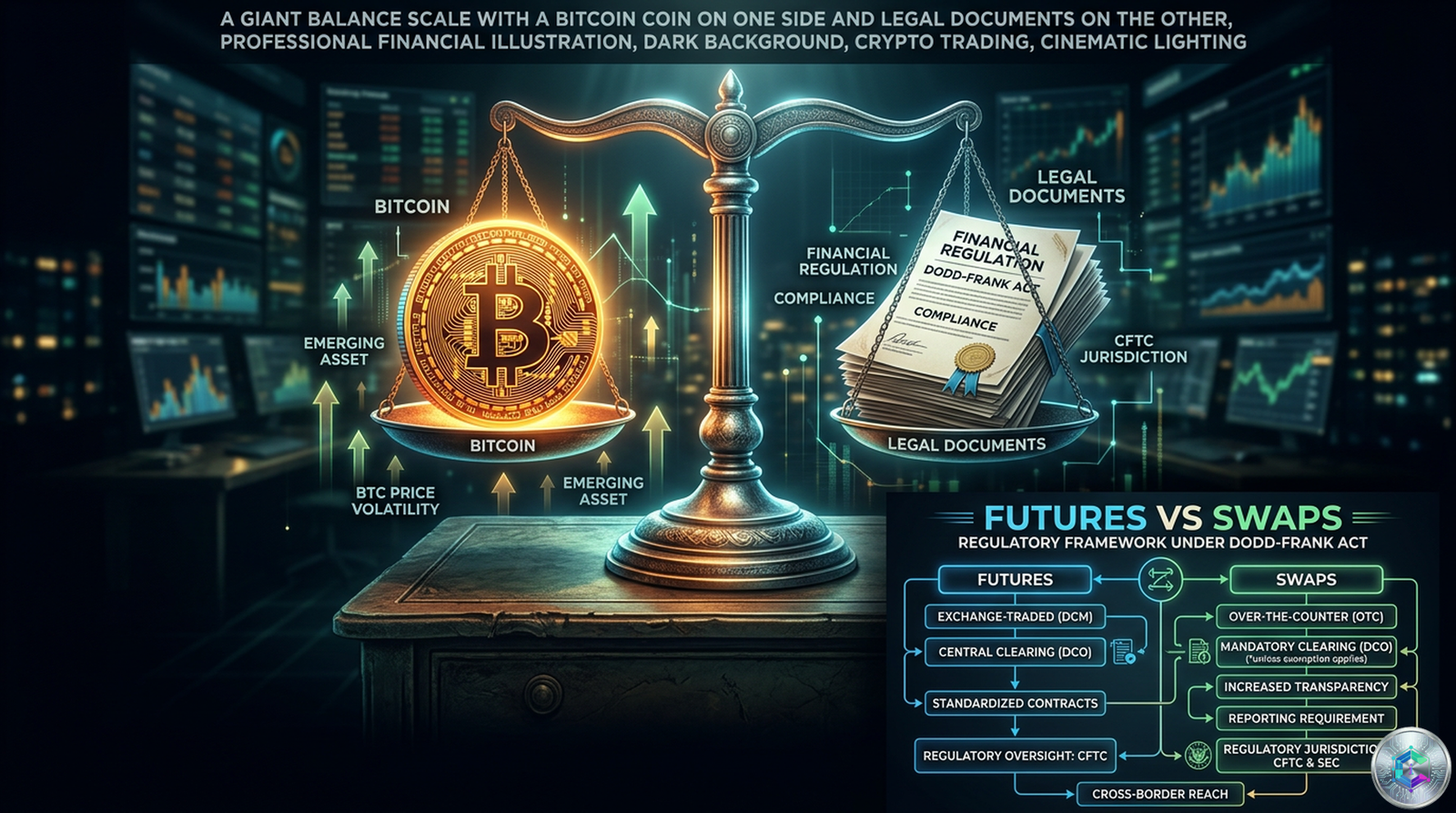
| Feature | Futures | Swaps |
|---|---|---|
| Expiration Date | Set date | Often no expiration |
| Regulatory Framework | Lighter, DCM oversight | Heavier, Dodd-Frank rules |
| Mandatory Clearing | Varies | Required |
| Reporting Requirements | Less extensive | Extensive |
CME’s Legal Arguments: APA Vulnerabilities
CME’s legal team has identified at least three distinct APA vulnerabilities in the CFTC’s approval. First, the agency had previously treated perpetual contracts as swaps, and its abrupt reversal without formal rulemaking may be arbitrary and capricious. Second, the approval for Kalshi was unusually fast, in a single day, without public comment. Third, the application relied on outdated case law predating Dodd-Frank.
« We believe CME has the upper hand in the litigation. »
Jaret Seiberg, Managing Director, TD Cowen Washington Research Group
Regulatory Background and Industry Responses
The CFTC’s requests for comment, the Blockchain Association petition, and the CFTC Chair’s defense illustrate the evolving regulatory landscape. The CFTC issued requests in April 2025, and the Blockchain Association filed a petition in February 2026 to exempt perpetual futures from swap requirements.
« It is time to approve regulated futures contracts that have no expiration date. We are going to make sure the product is available, but it is well regulated here in the U.S. »
Michael Selig, CFTC Chair
Market Context and Stakes
CME’s share price declined approximately 9% following the CFTC ruling, reflecting investor concern. Perpetual futures have become the primary trading vehicle for digital asset speculation globally, with leverage up to 50-to-1. Their introduction to U.S. markets represents a significant expansion of available leverage.
What Happens Next
The immediate question is whether CME will obtain a preliminary injunction. If granted, Kalshi and Coinbase would suspend their offerings. The case could take twelve to eighteen months. A CFTC-SEC joint rulemaking process might render the lawsuit moot, but would itself be subject to APA challenge.
Conclusion
The CME lawsuit has transformed a regulatory disagreement into a full-fledged legal confrontation. The outcome will determine whether the U.S. derivatives framework can accommodate products invented after its enactment, and signal how incumbent exchanges can resist regulatory changes. This case will be studied by derivatives lawyers and market structure experts for years to come.
Sources
- The Block: TD Cowen says CME has the upper hand in lawsuit against CFTC over crypto perpetual futures
- Yahoo Finance: CME Sues CFTC to Stop Kalshi From Offering Crypto-Style Perpetual Futures
- Bitcoin Magazine: CME Group to Sue CFTC Over Bitcoin Perpetual Futures Approval
- Reuters: CME sues US CFTC over letting Kalshi, Coinbase offer perpetual futures
- Seeking Alpha: CME sues CFTC over Kalshi, Coinbase perpetual futures offerings
- Gibson Dunn: Derivatives, Legislative and Regulatory Weekly Update (May 29, 2026)
This article is published for informational and educational purposes only. It does not constitute investment advice. Conduct your own research (DYOR) before making any decisions.

