

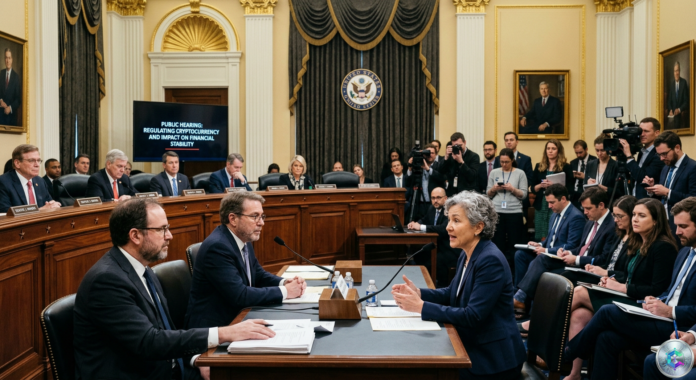
CLARITY Act: The US Crypto Bill Blocked by a Four-Way Standoff
The CLARITY Act, intended to establish clear regulatory framework for cryptocurrencies in the United States, is now at the center of a conflict involving four camps with diverging interests. The fate of stablecoins deeply divides the ecosystem.
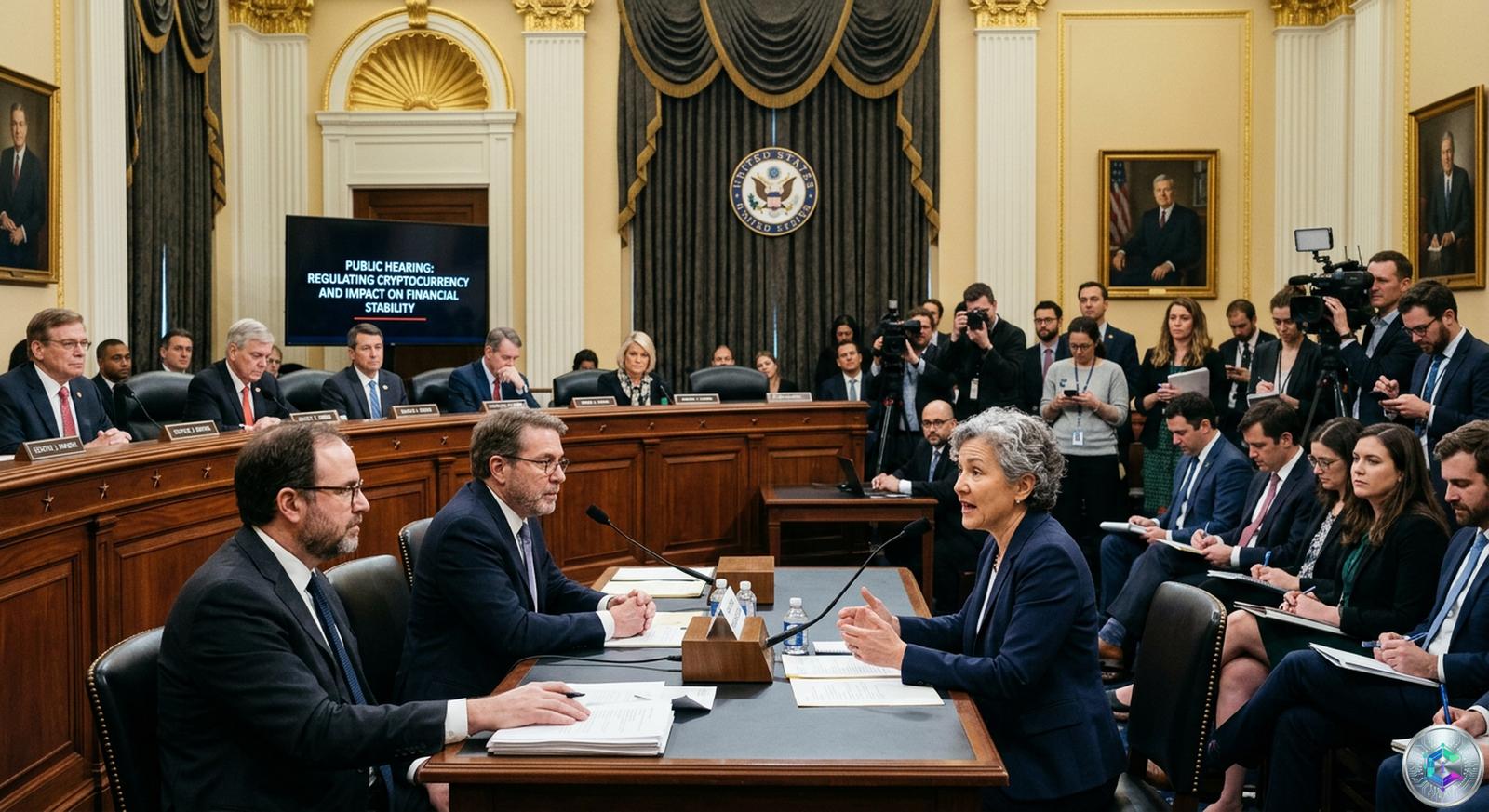
A Text Meant to Clarify… Become a Battleground
The CLARITY Act was supposed to bring lasting regulatory clarity to the American crypto sector. After years of legal uncertainty and case-by-case enforcement by the SEC and CFTC, this bill aimed to establish clear market structure for exchanges, tokens, and custody. But the text is now hitting a four-way confrontation where each party can slow the process and where stakes go far beyond simple regulation.
The bill still contains broad language for jurisdictional clarity, with a framework outlined by the Senate Banking Committee majority that draws lines between the SEC and CFTC while adding tailored disclosure requirements and anti-fraud protections.
The Four Camps in Conflict
Camp 1: The Crypto Industry and the Senate
The first camp consists of Senate Republicans who have spent months arguing that the industry needs rules written through Congress rather than through case-by-case enforcement. This group includes a large swath of the industry that wants a lawful path for token issuance, exchange activity, brokerage, custody, and participation in decentralized networks.
For crypto firms, the appeal runs deeper than process. A statutory framework offers the prospect of capital formation under rules that institutions can underwrite, boards can sign off on, and legal teams can defend without having to rebuild the analysis around every enforcement cycle.
Camp 2: Banks and Their Allies
The second camp has focused the fight around stablecoin rewards and the economics of digital dollars. The Bank Policy Institute has made the bank-aligned position unusually plain: lawmakers need to prevent stablecoin structures from recreating deposit-like products outside the traditional banking perimeter, especially if those products begin offering rewards or yields that look and feel like interest.
If tokenized dollars can offer returns or functionally similar incentives at scale, then commercial bank deposits face a new form of competition, payments activity migrates, and the prudential perimeter gets thinner exactly where regulators spent years trying to harden it.
Camp 3: Regulators in Action
The third camp, located within the regulatory apparatus itself, introduced a fresh complication by moving ahead with practical coordination and interpretive guidance. In March 2026, the SEC and CFTC announced a new memorandum of understanding designed to improve coordination on crypto oversight.
Days later, the SEC issued a new interpretation clarifying how federal securities laws apply to crypto assets, with the CFTC publicly aligning with the effort. These actions did not write a statute, but they changed the terrain around CLARITY in a way lawmakers can feel.
Camp 4: Structural Critics
The fourth camp continues to ask the question that lies beneath every crypto bill in Washington: Does this framework integrate the sector into existing law, or does it carve out a special lane that weakens protections the rest of finance still carries?
This concern has animated groups such as Better Markets and appeared in prior testimony from former CFTC Chair Timothy Massad, who argued that proposals like CLARITY can create artificial distinctions between securities and commodities in ways that reduce the reach of investor protections.
The Friction Point: Stablecoin Rewards
The fight over stablecoin rewards has become the central pressure point in the bill, with public reporting and congressional chatter converging on the same conclusion: a framework bill could move forward only if lawmakers found a way to reconcile crypto’s push for broader utility with banking concerns about disintermediation and deposit competition.
The latest revised draft text, negotiated by Senators Thom Tillis and Angela Alsobrooks, prohibits offering yield directly or indirectly on stablecoin balances. This closes the structural workarounds that had kept the door open for platforms like Coinbase to continue passing stablecoin rewards to users even after the GENIUS Act restricted issuers directly.
A Subtle But Powerful Dynamic
Every increment of clarity delivered through regulatory action reduces the pool of uncertainty that once made CLARITY so valuable. A bill under pressure usually gains energy from scarcity. Once regulators start producing partial substitutes, lawmakers face a harder sell when they ask wavering factions to make politically costly concessions in the name of a breakthrough.
For some senators, that can feel like prudence. For some industry players, it can feel like the center of the bill is being negotiated away in real time.
The Consequences of Failure
If CLARITY stalls or narrows, firms remain in a patchwork regime shaped by enforcement and agency guidance, while banks retain tighter control over dollar-based financial activity. The outcome will determine whether crypto can compete directly with traditional deposits and payment rails, or operate inside a more constrained perimeter.
The calendar has also tightened. In January, Senate Banking Chairman Tim Scott said the committee would postpone its markup while bipartisan negotiations continued. FinTech Weekly analyzed that crypto firms and their executives made direct contributions to several of the senators deciding the bill’s fate in the Senate Banking Committee, a pattern that extends to the Fairshake PAC operation.
Conclusion
The CLARITY Act perfectly illustrates the challenges of crypto regulation in Washington. Four camps with diverging interests — industry, banks, regulators, and critics — each holding blocking power and valid arguments about consumer protection. The fate of stablecoin rewards has become the central sticking point, where market structure meets balance-sheet politics.
Meanwhile, regulators are progressively filling the void left by the absence of legislation, making the bill potentially less indispensable than it was. The question remains whether Congress will find an agreement or if crypto sector regulation will remain the domain of regulatory agencies.

