

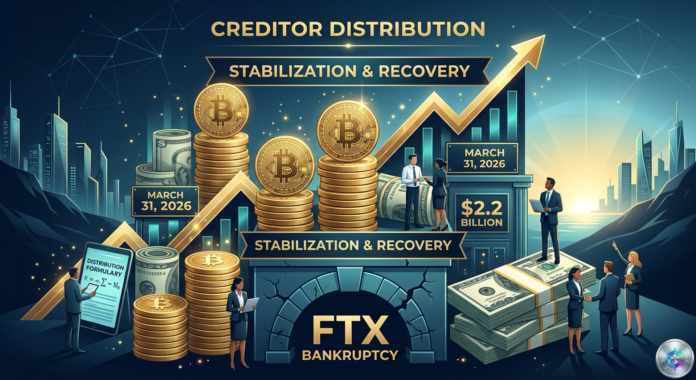
FTX, the cryptocurrency exchange that collapsed in November 2022 in one of the most devastating scandals in the history of digital assets, is about to make its fourth massive distribution of recovered funds. On March 31, 2026, the FTX Recovery Trust will send $2.2 billion to eligible creditors — an event that could influence the crypto market in the weeks to come.
FTX filed for bankruptcy on November 11, 2022, leaving behind approximately $8 billion in deficits and hundreds of thousands of stranded customers. Sam Bankman-Fried, its star founder who had built his reputation on last-minute financial rescue operations during the crash, was sentenced in 2023 to 25 years in prison for fraud and money laundering.
Three and a half years later, the repayment process is entering a decisive phase. The FTX Recovery Trust confirmed on March 18, 2026 that a fourth distribution of $2.2 billion would be made on March 31. This is the fourth payment since repayments began in February 2025, bringing the total funds returned to creditors to approximately $10 billion.
The Biggest Payment Since the Bankruptcy
FTX’s collapse was rapid and spectacular. Within a few days in November 2022, the platform went from one of the world’s largest cryptocurrency exchanges to a controversial bankruptcy proceeding. Court documents revealed that FTX had used customer deposits to fund risky speculative operations via Alameda Research, its affiliated trading firm.
The missing amount was estimated at approximately $8 billion. Since then, trustees have worked tirelessly to recover assets worldwide — real estate, digital tokens, and stakes in technology startups. The portfolio recovered by the FTX Recovery Trust notably includes significant stakes in Anthropic (the company behind Claude), as well as reserves in Bitcoin and Ethereum.
Progressive asset sales — notably the sale of part of Anthropic shares for hundreds of millions of dollars — have funded the trust’s coffers and accelerated repayments well beyond what many analysts predicted at the time of bankruptcy.
The Complete Distribution Timeline
- February 2025 — First distribution: approximately $1.2 billion (Convenience Class, claims under $50,000)
- May 2025 — Second distribution: approximately $5 billion (the largest to date)
- September 2025 — Third distribution: approximately $1.6 billion
- March 31, 2026 — Fourth distribution: approximately $2.2 billion (we are here)
- May 29, 2026 — Fifth distribution: already confirmed, amounts to be determined
This progression demonstrates the judicial process’s ability to generate significant returns for creditors — a remarkable outcome for a bankruptcy of this magnitude. Many analysts expected much lower recoveries at the time of the initial filing.
Who Receives What? Breakdown by Creditor Class
For US Customer Entitlement Claims (Class 5B): a 5% distribution in this fourth round brings total recovery to 100% of the original claim. In other words, American retail creditors recover the entirety of what they had deposited on FTX — at least in theory.
For General Unsecured Claims (Class 6A): an additional 15% distribution brings the cumulative recovery rate to 100%.
For Digital Asset Loan Claims (Class 6B): same scheme, with an additional 15% and a total of 100%.
For Convenience Claims (Class 7): creditors in this category — generally the smallest — receive up to 120% of their original claim value, including interest. This is the only class that exceeds the original amount thanks to the addition of interest.
For Dotcom Customer Claims (Non-US accounts): an 18% distribution in this fourth round complements previous payments, bringing cumulative recovery to 96%.
To receive these payments, creditors had to complete their KYC verification, submit tax documents, and select a distribution provider among the three authorized: BitGo, Kraken, or Payoneer. Funds are paid in US dollars, with a receipt time of 1 to 3 business days after the sending date.
The November 2022 Price Trap
The 100% recovery figure hides a more nuanced reality. All payments are calculated based on cryptocurrency prices as of November 11, 2022 — the date of FTX’s bankruptcy filing.
At that time, Bitcoin was trading around $16,871. Ethereum was trading around $1,258. Today, as we write these lines in March 2026, BTC is oscillating around $71,000 and ETH is close to $2,150.
This means a creditor who had 1 Bitcoin frozen on FTX receives approximately $16,871 in cash — not $71,000. The gap is considerable, and the frustration of many creditors is legitimate.
The FTX estate’s legal argument is that the bankruptcy date provides a legally consistent and stable valuation baseline. Payments in USD, rather than cryptocurrency, also ensure that distributed funds do not create direct selling pressure on the crypto market.
What Impact on the Crypto Market?
This is THE question all traders are asking: can $2.2 billion in liquidity hitting the market move prices? The honest answer is that no one can predict it with certainty, but several scenarios are worth analyzing.
Scenario 1: Potentially Bullish Liquidity Injection
FTX creditors are, by definition, former cryptocurrency users. Many of them still believe in the ecosystem — that’s precisely why they had funds deposited on an exchange. If a significant portion of this $2.2 billion returns to Bitcoin, Ethereum, or other digital assets, it’s new demand on a market currently navigating extreme fear.
The Fear & Greed Index is currently around 11, a level of Extreme Fear that suggests maximum pessimism. Historically, this type of configuration can generate spectacular rebounds when positive catalysts appear.
Another encouraging element: the February 2025 distribution of approximately $1.2 billion coincided with a period of renewed optimism in the crypto market. Correlations are not perfect, but they are worth watching.
Scenario 2: Cash Out and Move On
Several factors work in the opposite direction. First, many creditors spent three years watching the crypto market recover without them — a period of lost opportunity that may have created a desire for diversification or outright exit. Second, the current macroeconomic environment is not favorable for risk assets: oil is above $100 per barrel, US bond yields are elevated, and the US dollar is strengthening. All of this weighs on cryptocurrencies.
Third, and importantly: payments are made in US dollars, not cryptocurrencies. There is no mechanical « dump » of tokens on the market. Each creditor makes their own decision about conversion or not, in a decentralized and individual way.
The most probable scenario sits somewhere in the middle: some funds return to the market (BTC, ETH, or other purchases), while another portion is simply cashed out and leaves the crypto ecosystem. The net effect could be slightly positive to neutral over the coming weeks.
What Comes After March 31?
The fifth distribution — May 29, 2026: the next payment is already confirmed. The record date for preferred equity holders is April 30. They must complete their ownership certification, KYC procedures, and tax documents to be eligible.
The lawsuit against Genesis Digital Assets: the FTX estate is claiming approximately $1 billion from Genesis Digital Assets as part of clawback actions. Genesis is contesting the proceedings and seeking dismissal. If the estate wins, this could fuel a sixth distribution or even additional payments for existing creditors.
Sam Bankman-Fried’s appeal: SBF is serving his 25-year sentence in a California prison. He continues to contest his 2023 conviction, and speculation has circulated about a possible presidential pardon. The White House has shut down these rumors: no pardon is planned. SBF’s legal fate seems sealed, but his case continues to haunt the industry as a permanent reminder of the risks of excessive centralization.
The Self-Custody Lesson
Beyond market considerations, this event is a powerful reminder of the importance of self-custody in the cryptocurrency ecosystem. FTX creditors lost years of gains because their assets were in the hands of a third party. The « not your keys, not your coins » maxim has never been more relevant.
If you use farming, staking, or yield farming platforms, the question of where your funds are stored is not secondary. Decentralized protocols and self-custody solutions offer an alternative to these risks — even if they introduce their own complexities in terms of personal security.
Conclusion: A Chapter Closing, a Market Waiting
March 31, 2026 is an important date in the history of cryptocurrency. Nearly $10 billion will have been returned to creditors from a collapse that many thought would be the death of the industry. It is, in a way, a remarkable sign of resilience for a sector that has known how to rebuild after major scandals.
Whether this money returns to the market or is cashed out, it closes another chapter on one of the greatest financial catastrophes in the history of cryptocurrencies. With market sentiment at Extreme Fear and a multi-billion dollar liquidity event just days away, the coming weeks look decisive for the tone of the market in Q2 2026.
Traders and savvy investors will note March 31 on their calendars. The sequel, as always, will be written by the market itself.

