


Institutional traders deployed $2.5 billion in bitcoin call spreads targeting the $72,000 level by July 31, precisely two days after the Federal Reserve’s monetary policy decision. The flow, identified on Deribit, the world’s largest crypto options exchange, reveals a high-conviction bet on the continuation of the BTC rally despite the hawkish turn signaled by Kevin Warsh’s appointment as Fed Chair.
🔑 Key Takeaways
- $2.5B in BTC bull call spreads targeting $72,000, expiring July 31
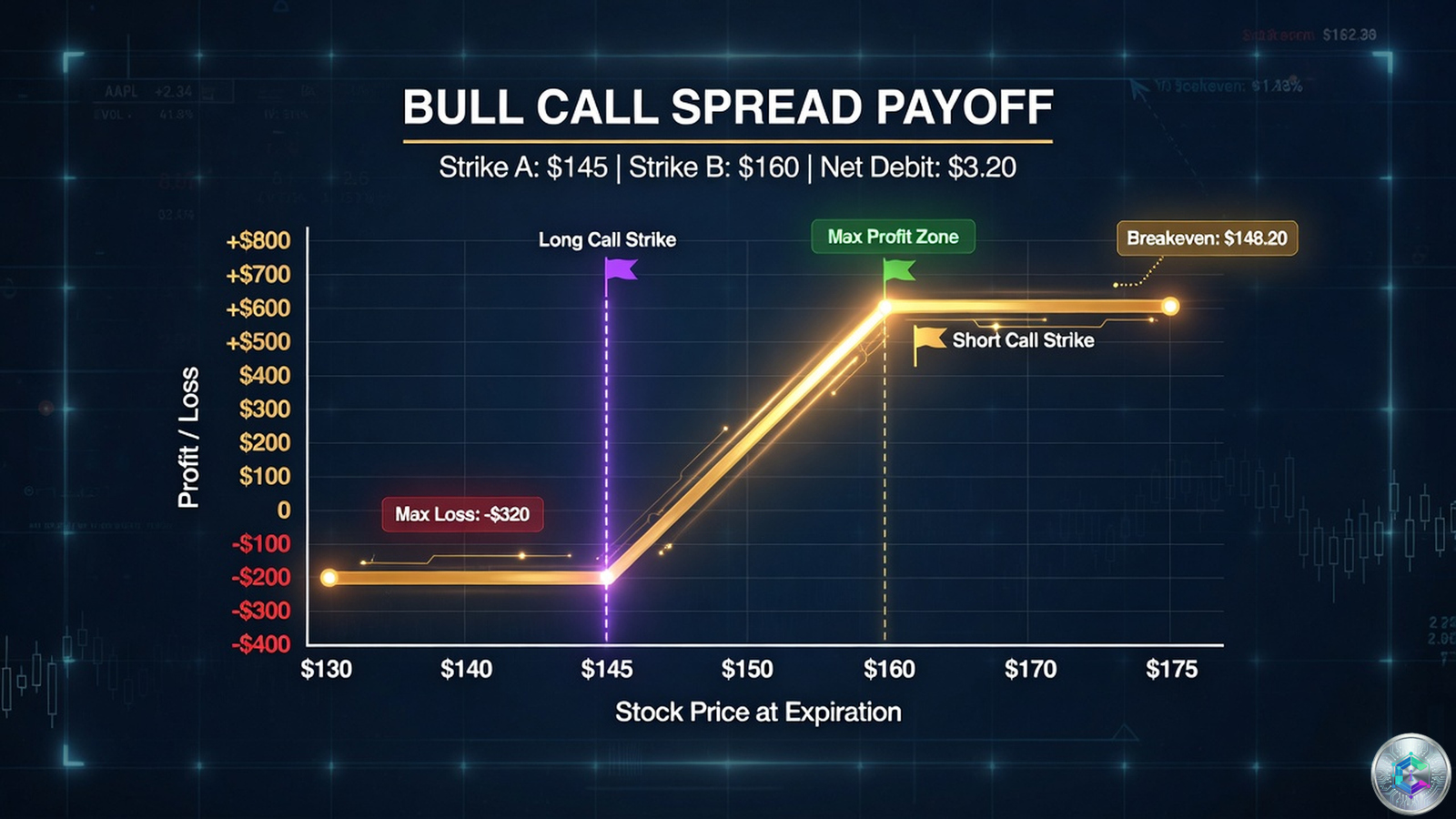
- 20,000 calls purchased at $70,000 / 20,000 calls sold at $72,000
- FOMC decision scheduled for July 29, rates expected to hold at 3.50-3.75%
- Bitcoin recovered to around $64,000 after dropping below $58,000 earlier this month
- $10.5B in BTC options expire Friday on Deribit, put/call ratio at 0.83
Anatomy of a $2.5 billion bull call spread
The structure detected on Deribit combines 20,000 call option contracts purchased at the $70,000 strike and 20,000 call contracts sold at the $72,000 strike, all expiring July 31. Known as a bull call spread, this configuration reduces the net premium paid through the sale of the upside call while capping the downside loss if bitcoin retraces and capping the upside gain if bitcoin exceeds $72,000.
The $2.5 billion notional volume underscores the institutional dimension of the flow: for context, buying an at-the-money (ATM) call at $70,000 typically costs between $2,000 and $3,000 per contract depending on implied volatility. The cumulative size and repetition of blocks at the same strikes point to discretionary asset management or hedge fund activity rather than retail trading, as noted by Jean-David Péquignot, Chief Commercial Officer at Deribit.
Fed timing and the macroeconomic backdrop
The July 31 expiry is no coincidence: it falls two days after the Federal Open Market Committee (FOMC) meeting scheduled for July 29. Fed funds futures currently price a 75% to 80% probability that the Fed will keep its policy rate in the 3.50% to 3.75% range. According to the operators behind this structure, that status quo expectation is sufficient to push bitcoin toward $72,000.
Yet the macroeconomic backdrop remains fragmented. June inflation data confirmed a marked slowdown in price pressures, partly thanks to a sharp decline in oil prices linked to the US-Iran ceasefire. However, tensions reignited this week: new attacks disrupted oil flows through the Strait of Hormuz, sending WTI and Brent to their largest daily gains since March.
On the monetary side, bitcoin recovered to around $64,000 after falling below $58,000 earlier this month, showing notable resilience despite the renewed risk aversion. The Personal Consumption Expenditures (PCE) index, the Fed’s preferred inflation gauge, is due Friday and could confirm or invalidate the disinflationary path observed in June.
« This week we have seen some large blocks in BTC call spreads at the top end. The size and repetition of these option flows suggest institutional positioning rather than retail activity. »
Jean-David Péquignot, Chief Commercial Officer at Deribit
Warsh’s hawkish turn and the collapse of the debasement narrative
Kevin Warsh’s nomination as Fed Chair, announced January 30, has reshuffled the cards of the debasement narrative (loss of value of fiat currencies) that had supported gold and bitcoin since 2022. Warsh, known for his inflation-fighting credentials, has prompted many investors to cut their exposure to non-yielding safe-haven assets.
« Anyone who thinks he is some kind of patsy placed there to cut rates regardless of inflation is going to be very, very disappointed with Kevin Warsh. He is not that kind of Chair. »
Gavyn Davies, Co-founder and Chairman of Fulcrum Asset Management
Higher real rates, mechanically fueled by the prospect of a more restrictive Fed, raise the opportunity cost of holding non-yielding assets. Deutsche Bank cut its gold price forecast by up to 22%, while Goldman Sachs trimmed its year-end target by $500 to $4,900 per ounce. Nearly $1 billion left the SPDR Gold Shares this month, bringing cumulative outflows since end-February to $12 billion, the largest four-month drawdown since 2013.
In FX markets, investors now price in two rate hikes by end-Q1 2027 versus only one previously. JPMorgan Chase raised its USD forecast against the EUR and recommended long USD positions against a basket of low-yielding currencies, including the Swiss franc and the New Zealand dollar.
$10.5 billion in options expiring Friday
Alongside these targeted flows, approximately $10.5 billion in bitcoin options expire Friday on Deribit, representing one of the largest expiries of the year. Overall positioning remains balanced with a put/call ratio of 0.83, indicating a slightly bullish sentiment. The heaviest put concentration sits at the $60,000 strike, while the largest call open interest clusters at $80,000.
| Strike | Type | OI Concentration | Market Read |
|---|---|---|---|
| $60,000 | Puts | Highest | Key support level |
| $70,000 | Calls (long) | Active spread | Bull spread entry |
| $72,000 | Calls (short) | Active spread | Bull spread target |
| $80,000 | Calls | Highest | Long-term bullish target |
According to Glassnode, an accumulation cluster (a zone of sustained on-chain buying) is currently forming in the $62,000 to $72,000 range, although its intensity remains modest compared to earlier phases that preceded sustained expansions. Other analysts note that bitcoin has outperformed most macro assets since the start of Iran-related events, successfully passing the geopolitical stress test.
Conclusion
The $2.5 billion institutional bet on a BTC bull call spread at $72,000 illustrates the growing sophistication of the crypto derivatives market and its ability to articulate a monetary thesis around a specific calendar event. If the Fed confirms a status quo and PCE data validates the disinflationary trend, the bullish scenario has both technical and macroeconomic foundations. Conversely, renewed oil-related tensions or a more pronounced hawkish signal from Warsh could quickly push bitcoin below the $60,000 threshold, activating the massive put defense at that strike.
In either case, implied volatility should remain elevated approaching the July 31 expiry, offering hedging and directional positioning opportunities for savvy investors.
Sources
- CoinDesk – Massive Bitcoin Call Spreads Target $72,000 by Month-End
- Bloomberg Línea – Under Warsh, the Fed Prioritizes the Inflation Fight
- TradingView – Cointelegraph News
- Portal do Bitcoin – BTC Holds Around $64K Amid US-Iran Deal and Options Expiry
- Valor Econômico – Bitcoin Tops $91K on FOMC Bets and Strategy Buys
- XP Morning Call – Markets Higher as US-Iran Ceasefire Extended
This article is for informational and educational purposes only. It does not constitute investment advice. Do your own research (DYOR) before making any decision.

